Navigation
1. Concept
2. Masquerade and Mimicry
3. Body Transformation
4. Claustrophobia and the Hand Motif
5. Gothic Chiaroscuro
6. Tropical Noir and Corporeal Helplessness
7. Conclusion
Concept
Todd Browning was one of the pioneers in creating horror films. At sixteen, he ran away from a comfortable family in Kentucky and joined a traveling circus, immersing himself in the colorful and brutal world of fairs and sideshows. Working as an announcer, clown, and magician in deadly attractions, Browning absorbed the primary law of spectacle: what fascinates an audience most is what frightens, shocks, and transcends the ordinary. He began his career in cinema in 1910, and through several fateful collaborations, he found a way to translate his youthful circus experiences onto the screen. Thus, Todd Browning developed his signature visual style: he built his horror around the aesthetics of the macabre, the criminal underworld, and corporeal grotesquerie. In his silent films, physical deformity, mutilation, and masquerade ceased to be mere attractions; they transformed into a visual metaphor for a fractured human psyche, obsessed with vengeance and passion.
The work is divided into six sections: the first five are dedicated to the visual techniques of Todd Browning, and the final section is a conclusion, which synthesizes reflections on the unique quality of the renowned director’s style.
This study examines five acclaimed films by the director: «The Unholy Trinity, ” „Blackbird, ” „The Unknown, ” „London After Midnight, ” and „West or Border.“ The drama „The Unknown”—one of these films—was considered a masterpiece of his silent period by critics and the director himself. In his works, Browning acted not only as the directing force but also as a co-creator of narratives, working closely on the screenplay and physical staging in tandem with actor Lon Chaney, which allows for a deep and comprehensive examination of his artistic method. These films vividly reflect not only the visual techniques inherent to Browning but also characterize him as an uncompromising genre innovator while immersing the viewer in the dark depths of the creator’s consciousness. Through the director’s unique approach to cinematography, his personal experiences—linked to his past in a traveling circus and his specific perception of human nature—are demonstrated.This work illustrates the distinctive features of the director’s worldview, the characteristic hallmarks of which include the aesthetic of carnival macabre, corporeal grotesque, claustrophobia of confined spaces, stark chiaroscuro, and a focus on physical deformation as a mirror for psychological fracture. These elements compel us not just to watch the silent films of Tod Browning, but to physically experience their unsettling, hypnotic atmosphere.The research utilized several monographs: David Slade’s biography and Elias Savady’s work help connect the director’s personal circus experiences with his consistent visual motifs, while Stuart Rosenthal’s essay provides a foundation for analyzing the psychological mechanics of his films—such as frustration, self-destructive vengeance, and symbolic mutilation. A collection edited by Bernd Herzogentrat aids in comprehending the phenomena of „tropical noir, ” masquerade, and corporeal helplessness as complex visual tropes. Collectively, these works establish a cohesive methodological framework—from the origins of the director’s method to the contemporary interpretation of his cinematic language.
In my visual research, I address a key question: Through what visual techniques did Tod Browning transform the human body and the fairground grotesque into the primary instrument of horror in Hollywood silent cinema of the 1920s?
The work posits that in 1920s Hollywood silent cinema, Tod Browning shifted the focus of horror from the supernatural to the corporeal, transforming the human body into the primary source of fear through masquerade and mimicry, claustrophobia, the motif of hands, body transformation, Gothic chiaroscuro, and bodily helplessness. The director constructed a visual language wherein physical monstrosity becomes a direct reflection of human mania and psychic fracture.
Masquerade and Mimicry
In the world of Browning, the human body is never fixed—it functions merely as a pliable surface for constant transformation, deception, and masquerade. Through this carnival, the director erases the conventional boundaries between identities: male and female, young and old, virtue and the criminal underworld merge into a single grotesque image. Dressing up is a means of questioning the very stability of the human «self.»
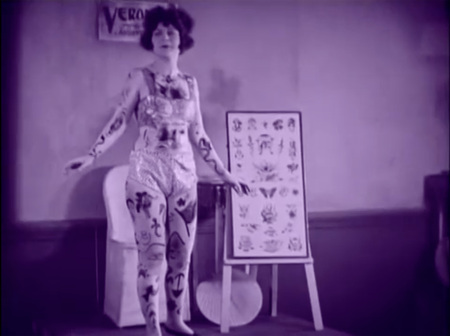
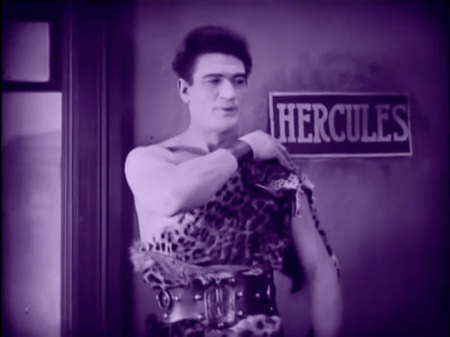
Stills from the film «The Unholy Three.» Directed by Tod Browning. 1925.
A still from the film «The Unholy Trinity.» Directed by Tod Browning. 1925
In scenes from the fairground show, Professor Echo, played by Lon Chaney, masterfully manipulates the audience. On stage, he wears a classic suit and a puppeteer’s mask, but behind this theatrical façade lurks a cynical criminal. Browning demonstrates that for his characters, the entire external world is a stage, and any social status or attire is a sham. The masquerade functions here as a revelation of human nature: every character wears a mask, yet the criminal’s true face is more terrifying than any stage persona.
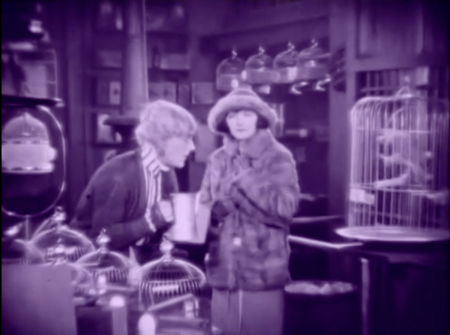
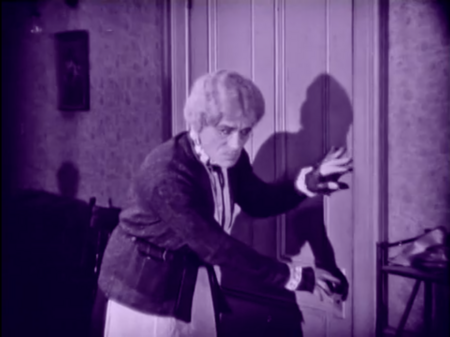
Stills from the film «The Wicked Trinity.» Directed by Tod Browning. 1925
Lorne Chaney «re-tailors» his own anatomy right on screen. Instead of the direct, commanding, and taut posture of a crime boss, he appears with a hunched back, slumped shoulders, a shuffling gait, and frantic, elderly hand gestures. His face is fixed in a grimace of cloying kindness, accentuated by round glasses and a tight cap.
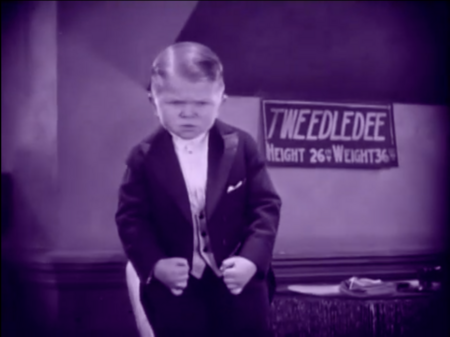
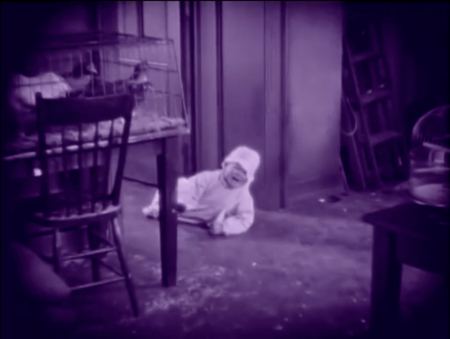
Stills from the film «The Irreverent Trio.» Dir. Tod Browning. 1925
In classical culture, the image of an infant symbolizes absolute vulnerability and innocence. Browning, adhering to the principle of the «dark carnival,» turns this symbol inside out: beneath the lace blanket lies an adult, cynical, and calculating criminal. The visual effect is built on the unsettling contrast between the childlike props (rattles, bonnet, carriage) and the adult, predatory facial features, as well as Twiddledy’s deliberate, cold gaze. When the camera captures him in close-up, the viewer experiences the «uncanny valley"—the external shell of a child conflicts sharply with non-childlike expressions and coarse gestures.
Browning argues that the most effective masquerade is the exploitation of social stereotypes. The director deliberately selects archetypes that inspire trust and pity (old age and infancy), infusing them with criminal, predatory energy. Thus, a fairground trick involving costume changes transforms into a dark visual metaphor for human hypocrisy.
Body Transformation
Lona Chaney and Todd Browning were obsessed with the idea of plastic variability. In an era when movie stars were valued for symmetrical beauty and Hollywood polish, Browning and Chaney made physical imperfection, ugliness, and trauma the center of attention. The physical pain and transcendence of anatomical limits in Chaney’s on-screen performances always looked frighteningly convincing because the actor literally «broke» his body for the role (restraining his arms with straps, sitting for hours in unnatural poses to portray paralysis or amputation).
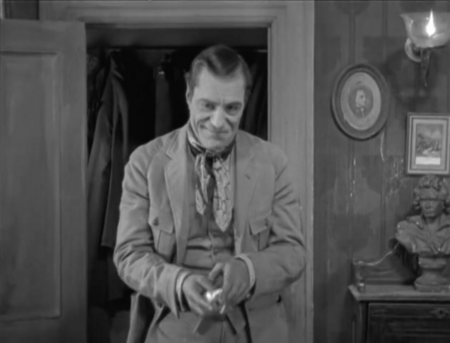
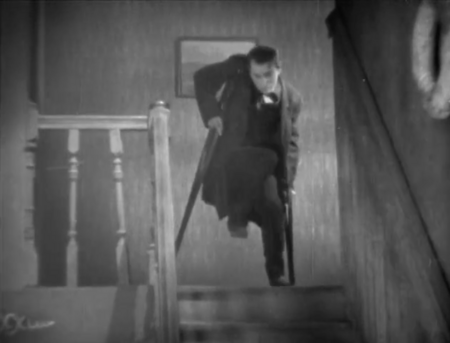
Stills from the film «The Blackbird.» Directed by Tod Browning. 1926
A still from the film «Blackbird.» Dir. Tod Browning. 1926
The hero dons rags, but more importantly—how his anatomy changes. The criminal’s straight back hunches, the shoulder rises, and the arm and leg begin to drag unnaturally. Chaney demonstrates to the audience the transformation of a healthy person into a pathetic cripple.
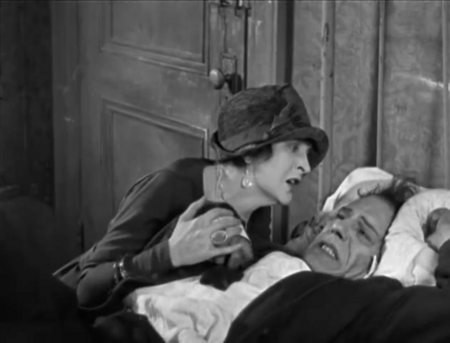
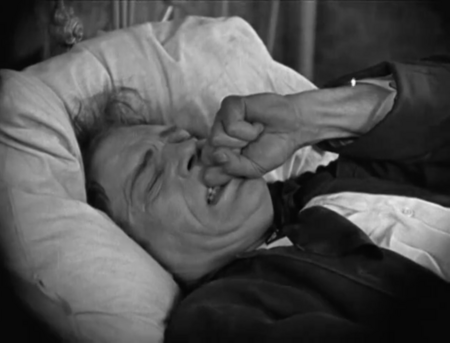
Stills from the film «Blackbird.» Dir. Tod Browning. 1926
The Browning camera submits to Cheney’s plasticity. In scenes where the protagonist moves as a cripple through the narrow, grimy streets of London or crawls into his shelter, the angles are constructed to emphasize physical inadequacy and helplessness against the backdrop of a vast, indifferent city. Low camera angles and deep shadows cause the hero’s spasmodically contracted body to look like a grotesque spider ensnared in its own web of deception.
Claustrophobia and the Motif of Hands
In his youth, Browning worked as an assistant to magicians and street performers. He knew that all magic and deception hinged on sleight of hand and misdirection. Consequently, in his films, hands are always concealing, substituting, or imitating something. Browning organically disliked open horizons or «air» in the frame. His characters almost always exist in tight, stifling, enclosed locations. The space does not offer his characters refuge; rather, it physically pressures them, constricting into the dimensions of a trap.
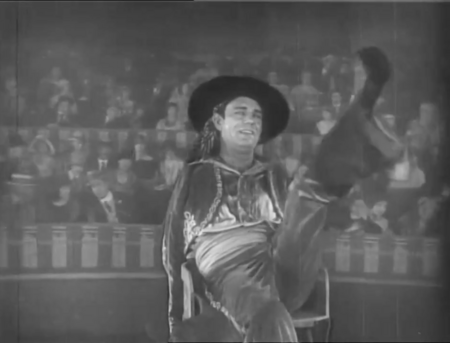
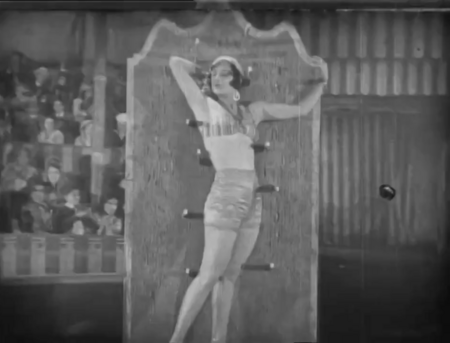
Stills from the film «The Unknown.» Dir. Tod Browning. 1927
The camera provides close-ups of Alonso’s feet, which perform the work of his hands with virtuosity: he lights a cigarette, pours wine, holds a knife, and throws it with surgical precision toward the heroine, who is tied to the target. Here, the feet replace the hands, creating a chilling, perverse focus on the body.
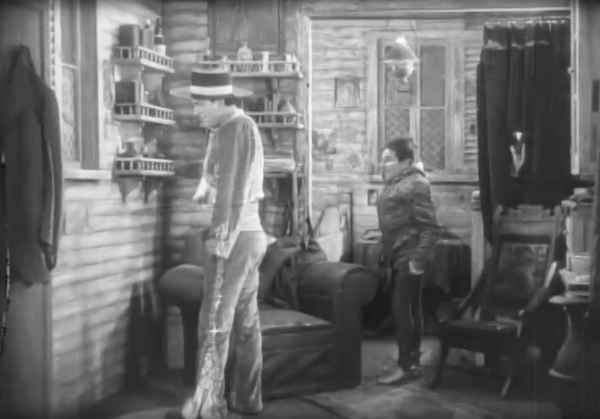
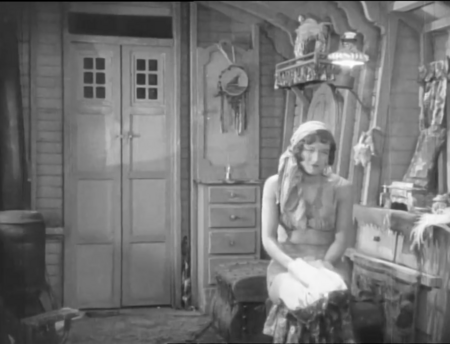
Stills from the film «The Unknown.» Dir. Tod Browning. 1927