Topics
Concept
1. The Yūrei Archetype in Early Japanese Cinema 2. The First Bloom of J-Horror (1950s–1960s) 3. The Second Bloom of J-Horror (1990s–2000s) 4. Conclusion
Filmography Bibliography
Concept
From its inception, Japanese cinema has been significantly influenced by theatrical arts—principles and techniques that remain visible in film to this day. Although elements of horror and mysticism were present in early Japanese cinema, the true flourishing of Japanese horror films occurred in the 1960s. Traditional culture and folkloric motifs served as the inspiration for Japanese horror. The history of Japanese horror traces back to the oral folk traditions of the Edo period, characterized by the flourishing of the traditional genre kaidan, which literally translates to a strange, mystical, or captivating tale or parable about ghosts or unusual superstitions. Kaidan often served as the basis for plays in the traditional Kabuki theater. The most common figure encountered in Japanese legends is the onryō—a spirit that died as a result of a person’s tragic events and is capable of causing harm in the living world. Most often, the image of an onryō is presented as a yūrei—a spirit, typically a woman who died violently or who was subjected to a ritual.
Thus, the driving motive for the heroine’s actions becomes revenge and fury, which they aim to unleash upon this world [1].
It can be hypothesized that the depiction of various spirits and ghosts—in visual arts, as well as in literature and oral traditions—is a phenomenon rooted in the very formation of Japanese identity. This is because it is inextricably linked to their religious and philosophical traditions, specifically Buddhism, within whose belief system there is the idea that the immortal essence of the living—the spirit—is constantly reborn in a new body. Consequently, the afterlife (the past) and the living world (the present) constantly interact with one another.
«Part of the Japanese identity is their unquestioning and even nonchalant acceptance of the past as a certain part of modern life» (Donald Richie, Japanese Cinema, 1961)
With the development of Japanese cinema, urban legend plots and elements in the form of apparitions found their expression on screen and were actively utilized by Japanese directors, leading to the creation of iconic films that greatly influenced the genre’s evolution.
In this visual study, the author will examine two waves of J-horror flourishing—the 1950s–1960s and the 1990s–2000s—using films by directors such as Teinosuke Kinugasa, Kaneto Shindo, Masaki Kobayashi, Hideo Nakata, and Takashi Shimizu as examples. Employing film theory, semiotic, and comparative analyses, the author will investigate the representation of the Yūrei in Japanese cinema, identifying commonalities and changes that have occurred in the visual and symbolic depiction of the Onryō spirit in Japanese filmmaking.
The Image of the Yūrei in Early Japanese Cinema
Madness Page | 狂った一頁
«The Madness Page» is about an elderly guard at a psychiatric hospital who works there to be near his wife, who suffers from a mental illness.
Tetsunosuke Kinugasa’s film «is the most striking example of the use of horror elements in early Japanese cinema. The director departs from the traditional principles of Kabuki theater, drawing inspiration from the plots of German Expressionist cinema to portray themes of madness and anxiety.
The Madness Page (directed by Teinosuke Kinugasa, 1926)
Although the plot of «Pages of Madness» is not an adaptation of the classic Kaydan story mentioned earlier, it nevertheless possesses a mystical element, expressed through the characters' psychological states. The concept of interaction between the living world and supernatural forces is reflected in the obsession that grips the main character. In the context of various religious doctrines, obsession is viewed as a state of mania where the mind is subjugated to an evil spirit or demon.
Country of Madness (Dir. Teinosuke Kinugasa, 1926)
«The Page of Madness» is abundant with various visual devices, each aimed at immersing the viewer in a state of anxiety and chaos. The rhythm in the framing and editing—where slow, almost static camera movements contrast with the sharp, dynamic actions of the characters—emphasizes the surreal nature of the events.
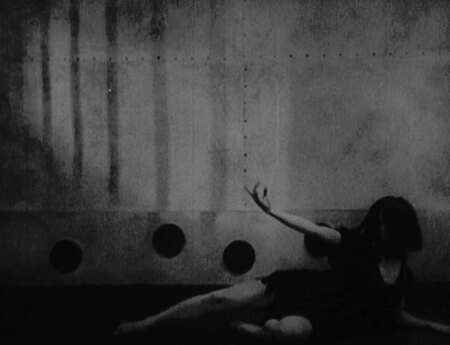
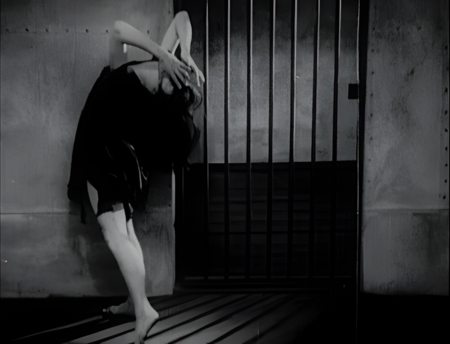
The Sea of Madness (directed by Teinosuke Kinugasa, 1926)
Page of Madness (directed by Teinosuke Kinugasa, 1926)
Distortion and blurring of frames constantly play upon the perception of objective and subjective reality, increasing emotional load and immersing the viewer in a kind of disorientation, which also creates a duality of worlds.
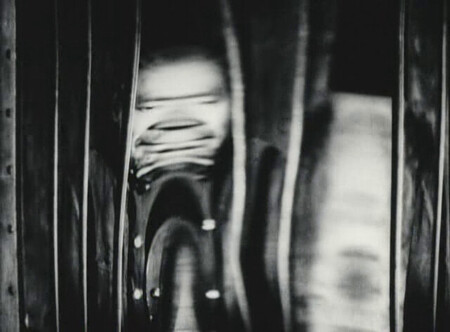
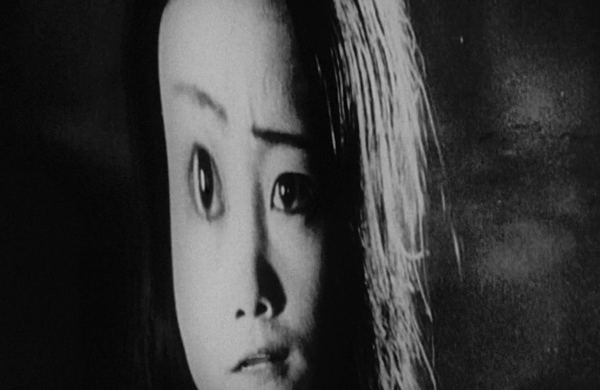
Mad Page (Directed by Teinosuke Kinugasa, 1926)
Ghost Cat and the Mysterious Shamisen | 怪猫謎の三味線
In the 1930s and 1940s, a large number of films emerged, based on folkloric legends of the demon cat, the bakeneko [2]—a motif that would reappear frequently in Japanese cinema. One such film is Kiyohiko Ushihara’s The Ghost Cat and the Mysterious Shamisen, which tells the story of a theatrical actress who, consumed by jealousy of her partner, murders a young woman and her cat, whose souls merge to exact revenge.
Ghost Cat and the Mysterious Shamisen (Dir. Kiyohiko Ushihara, 1938)
The urēi figure in this film is a result of the merging of human and animal spirits. Here, we see the most canonical adaptation of the kaidan, where the revenge of the deceased heroine acts as the trigger and the main driving force of the narrative.
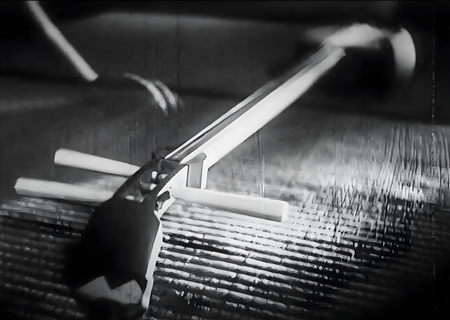
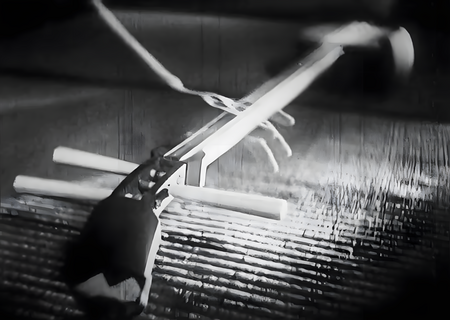
Ghost Cat and the Mysterious Shamisen (Dir. Kiyohiko Ushihara, 1938)
If, in the first case, the image of the evil spirit is purely symbolic, here it gradually acquires the characteristics of a real entity; however, its presence is conveyed through various visual effects—such as mist, blurred figure outlines, and the interplay of light and shadow—which lends a sense of the supernatural.
The Ghost Cat and the Mysterious Shamisen (Dir. Kiyohiko Ushihara, 1938)
The most striking element of the film is the recreated kaleidoscope effect, which hypnotizes the viewer and transforms the perception of reality.
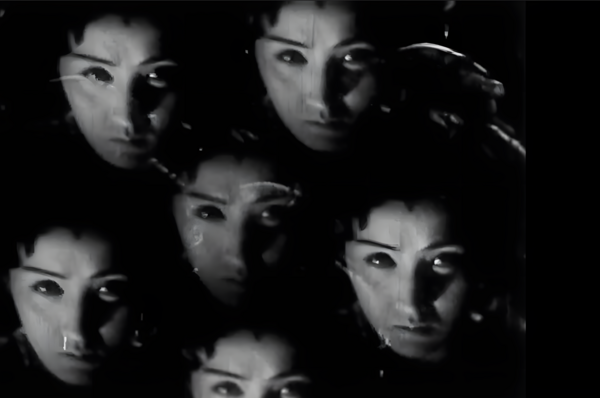
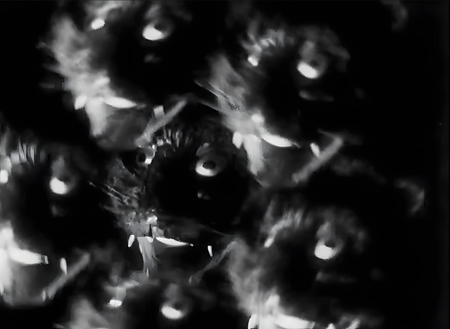
The Ghost Cat and the Mysterious Shamisen (Dir. Kiyohiko Ushihara, 1938)
The First Bloom of J-Horror (1950s–1960s)
In this chapter, I would first like to establish that the term J-horror was first mentioned only in the late 1990s in Great Britain, but it is mistakenly applied to all horror films made in Japan [3].
Onibaba | 鬼婆