Navigator
Concept
Demon Days: A Portrait of a Virtual Group
Plastic Beach: Space Instead of a Portrait
Humanz: Returning to Participant Imagery
Comparison of Visual Solutions
Image Continuity in Music Videos and Concerts
Conclusion
Sources
Concept
Gorillaz is a musical project featuring four fictional members: 2-D, Murdoc Niccals, Noodle, and Russel Hobbs. Their visual personas were created by artist Jamie Hewlett. In an interview with Juxtapoz magazine, he explains that the virtual band allows creators to experiment with music and collaborate with various artists. [1]
This study focuses on the album covers for Demon Days, Plastic Beach, and Humanz. The interest lies in the relationship between two elements: the characters representing the band and the space of its fictional world.
The main material is limited to three covers, which are compared based on common parameters: composition, perspective, color, and the role of the environment. For Plastic Beach, the version with a sunset view of the island is considered, while Humanz uses the standard cover. Music videos and concert design elements are used as supplementary examples.
Research Question:
How do the visual representations of Gorillaz change from one release to the next?
Hypothesis:
In the selected covers, two methods of presenting the project alternate—through participants' portraits and through imagery of an imagined space.The work is structured chronologically by album. After analyzing individual covers, a comparison is made, followed by a review of music videos and concert staging.
To clarify the artistic intent, interviews with Hulett are utilized. Production descriptions are sourced from Passion Pictures and Block9 studios. The interviews are examined as testimonies to the artists' stated intentions; visual observations pertain directly to the selected imagery.
Demon Days: A Portrait of a Virtual Group
Gorillaz. Album cover for Demon Days, 2005. Artist: Jamie Hewlett.
The cover for Demon Days is divided into four panels, featuring profile portraits of the participants. The group name is positioned at the top, and the album title is at the bottom. The composition and authorship are detailed in the People’s Graphic Design Archive card. [2]
The main space is occupied by the heads and shoulders of the characters. The surroundings are not elaborated into a distinct location—the focus remains on the participants. The repetition of the profile perspective and the uniform placement principle unify the individual images into a group portrait. This observation is based on the cover’s composition. [I1]
A dark border separates the portrait sections, while light text denotes the group and release. Color is considered here alongside composition: the frame organizes individual images within a unified square. [I1]Each participant retains their own space, but all four images adhere to a single schema. The cover represents the group through the collection of individual portraits.
Plastic Beach: Space and Narrative
Gorillaz. Album cover for Plastic Beach, 2010. Sunset island view version
On the cover of Plastic Beach, the central subject is an island adrift in the water. Buildings and palm trees are situated on its summit. The island is shown in a wide shot, allowing viewers to examine its shape and its placement within the surrounding space. [I2]The chosen version of the image utilizes warm orange and rosy hues in the sky and lighting. Unlike the segmented portrait fields of Demon Days, the water, sky, and island form a unified landscape. [I1; I2]The scale of the image shifts: instead of focusing on individual faces, the setting is presented. The environment becomes the main focus of the cover, rather than just a backdrop for the participants.
The artistic concept further clarifies the interview by Hewlett, published in Gorillaz Unofficial. The artist connects Plastic Beach to the idea of an island formed from discarded objects thrown into the ocean. According to him, the creators chose to convey the environmental theme through the characters' story. He also mentions that the island model incorporated airplanes, boats, tanks, and other discarded items. [3] Thus, the compositional center of the cover is linked to the concept described by the artist: the image depicts the island, while the interview explains its origin within the fictional world.
Humanz: The intersection of animation and scene
Gorillaz. Album cover for Humanz, 2017.
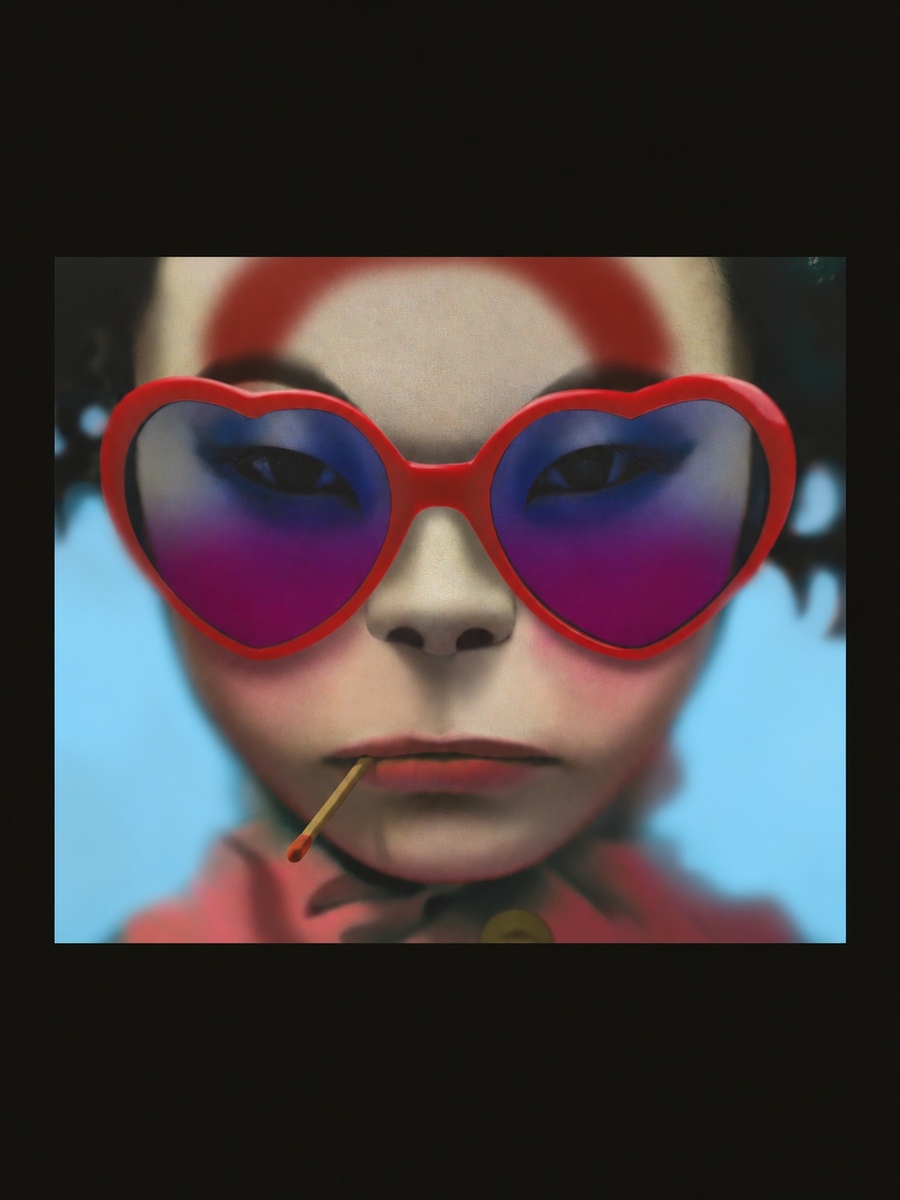
On the cover of Humanz, four participant portraits are once again featured, unified in a grid. Unlike the profile shots in Demon Days, the faces are shown predominantly frontally. Various colored backgrounds distinguish the portraits within the overall composition. [Image 3]
The covers share the principle of four separate panels, yet the angle and method of depicting the faces vary. In Demon Days, the figures are presented in profile, whereas in Humanz, the faces are turned toward the viewer. In both cases, the surroundings are subservient to the portraits and do not become an independent location. [Image 1; Image 3]
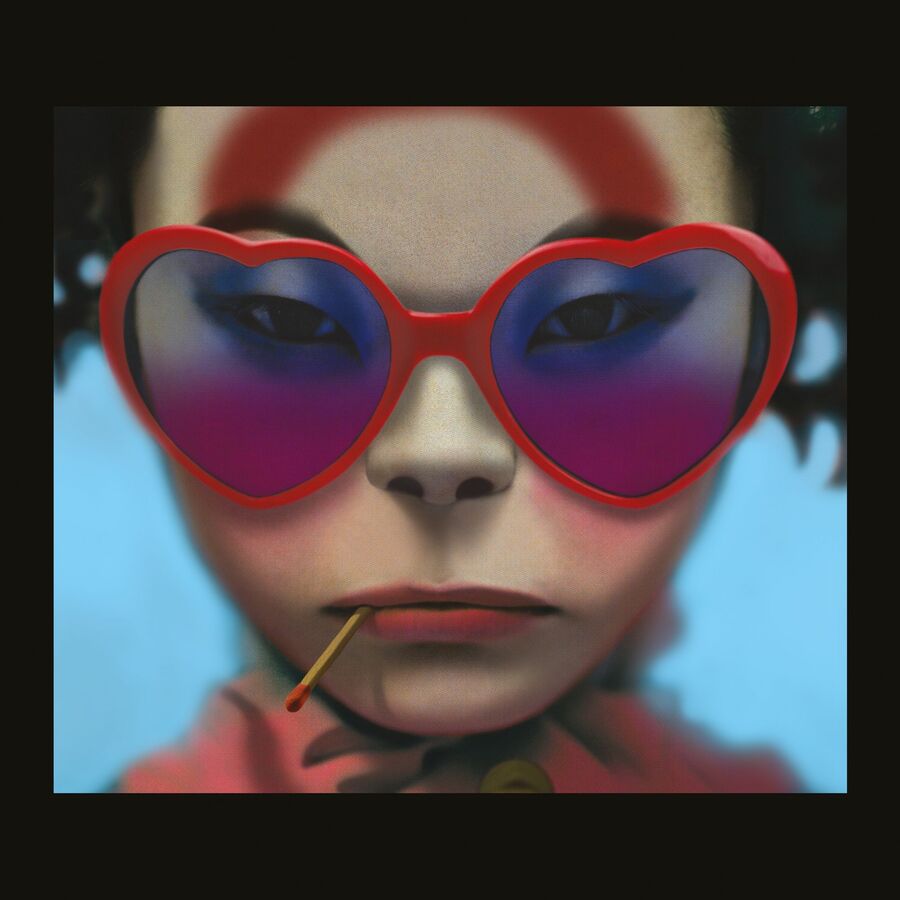
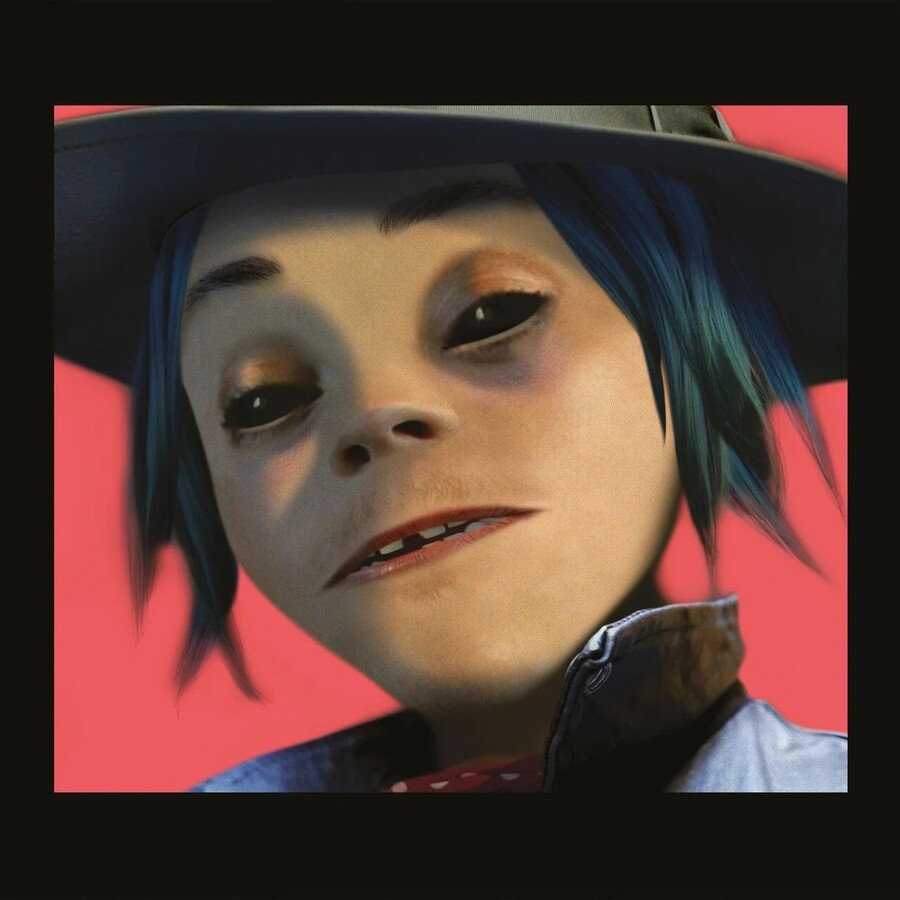
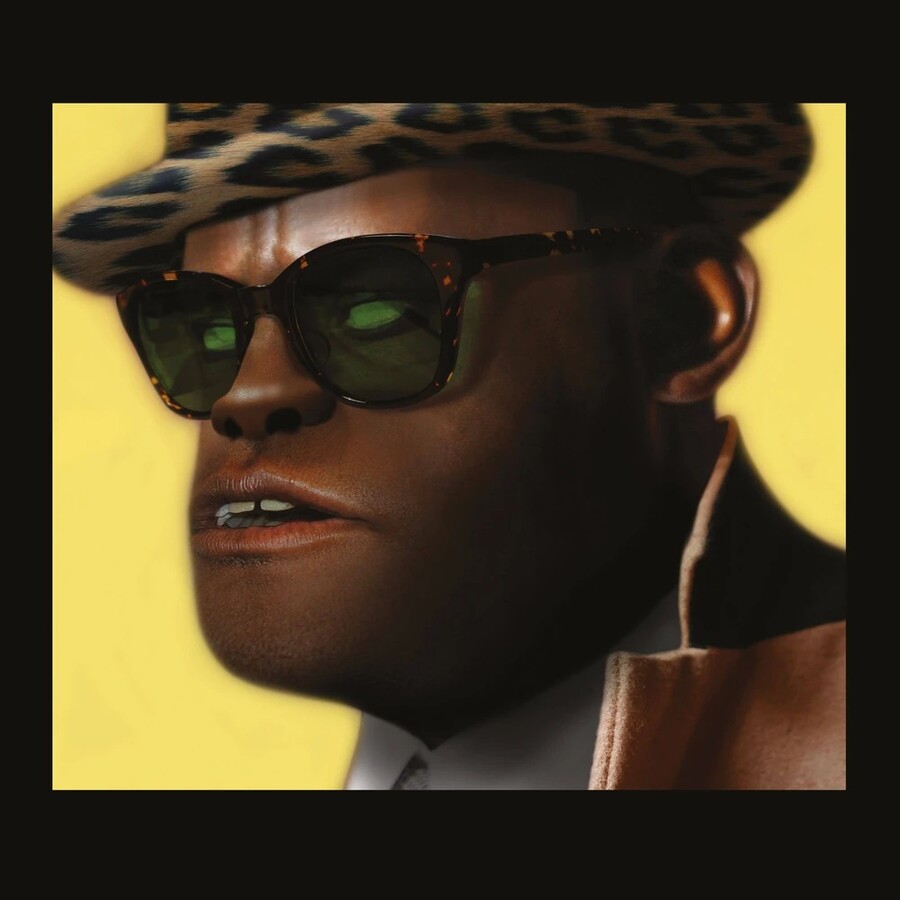
Huylett linked the more realistic depiction of Humanz participants to the question of the boundary between human and artificial. [4] Thus, the return to portrait composition is accompanied by a change in how the characters are presented. The overall grid is maintained, but the images themselves do not replicate Demon Days.
Visual Solution Comparison
Comparing the selected images allows us to identify two compositional approaches. Demon Days and Humanz present the group through participant portraits, while Plastic Beach is built around the depiction of space. [I1–I3]
The sequence of covers does not depict a consistent movement from the characters to the space: Humanz returns to a portrait composition. Within the chosen material, the ways of presenting the project alternate.
Continuing the image in music videos and concerts
The cover of Demon Days features static portraits of the participants. Feel Good Inc. combines two-dimensional animation with computer graphics—Passion Pictures notes this production feature. [5] Comparing the two reveals a difference in format: the portrait cover captures the participants' appearance, while the animated video shows the characters in motion and within their environment. This connection is explored through the imagery of a virtual group. This comparison does not establish a recurrence of the four-part composition found on the cover.
Plastic Beach: The Island as a Setting
Hulett describes the narrative connection between two videos: the chase in Stylo continues with the car transforming into a submarine and the journey to Plastic Beach in On Melancholy Hill. [3] Here, the connection between the materials is built through a specific space. The cover presents the island in a wide shot, while the video’s plot links it to the characters' journey. The place shown in the album’s design becomes part of the narrative.
Humanz: Photos of Participants on Stage
Block9 Studio announces work on the tour design in collaboration with Hewlett and Desmond Albarn. The project description indicates a combination of previously created Gorillaz imagery with new illustrations and animation. [6]The cover features the participants in a static portrait composition. The concert design incorporates their images into the space of a live musical performance. The characters remain a unifying element, while the manner in which they are presented changes.
The Block9 documentation confirms the use of group images on stage, but it does not establish the repetition of grid or colored cover backgrounds. Therefore, the relationship between these materials should be examined through the characters, without equating their compositional choices.