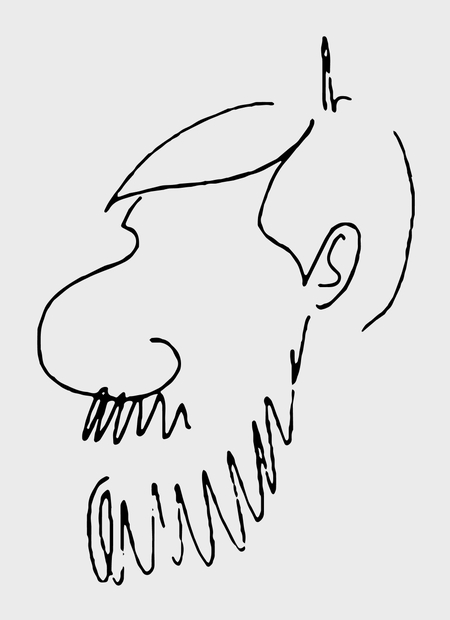
Sergey Dovlatov is one of the most recognizable Russian-language prose writers of the second half of the 20th century. His works are characterized by an ironic view of Soviet reality, attention to everyday life, domestic details, and distinctive human archetypes.
Dovlatov’s works became widely known in Russia only after the writer’s death, in the 1990s.
Concept
The visual study explores how Dovlatov’s book style evolved over time—from émigré publications to his recognition within Russia. It is important to view the development of the author’s signature style alongside how societal attitudes toward him shifted. In different periods, Dovlatov was perceived variously as an author of émigré literature, a representative of independent Russian prose, a classic of 20th-century literature, and finally, as an author whose books became part of the mainstream book market.
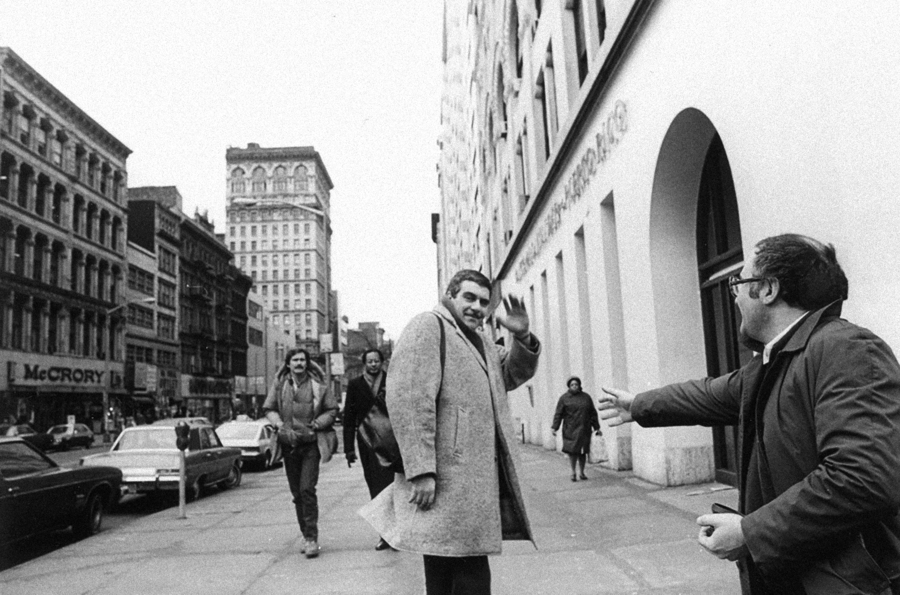
signature
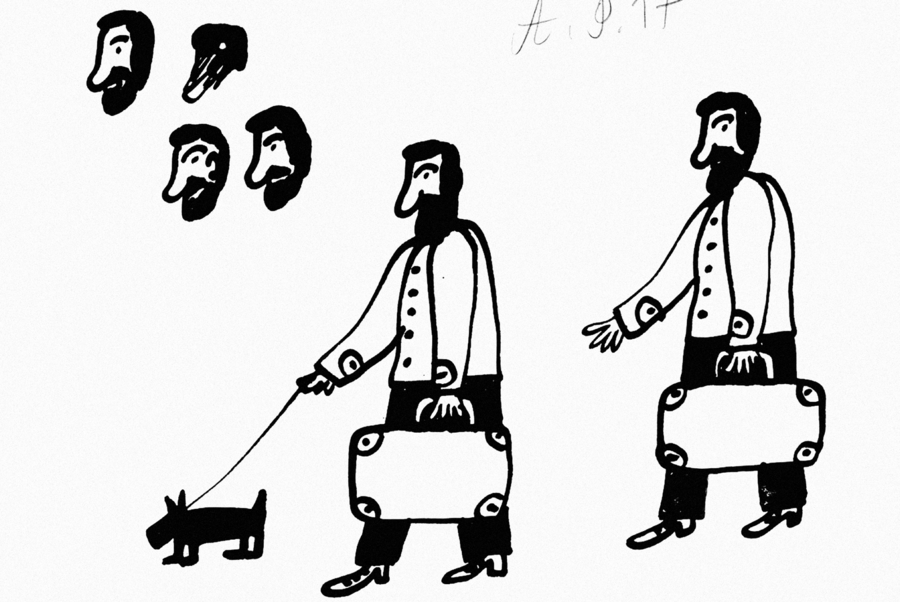
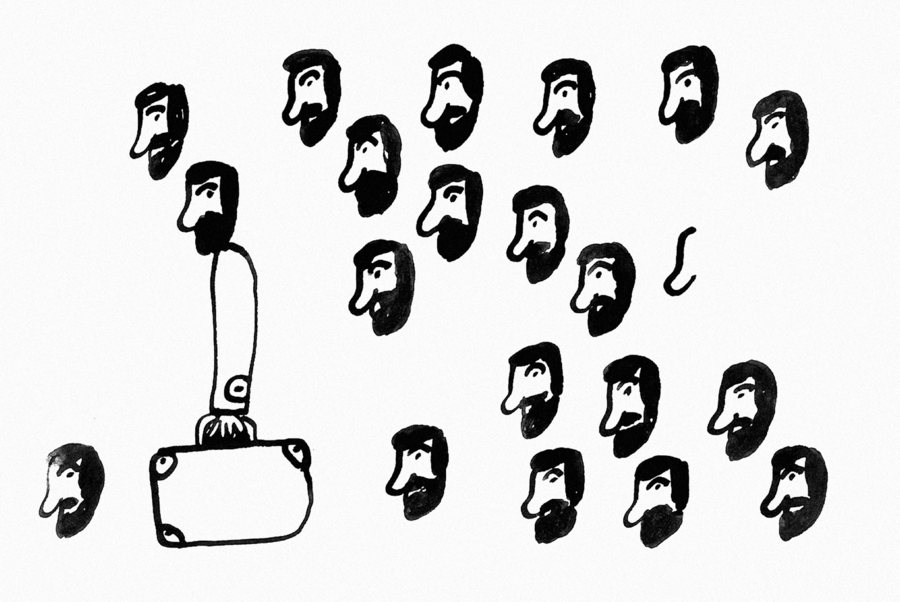
Research Hypothesis: Through work with publishers, Dovlatov’s books have developed a recognizable visual language, characterized by a limited color palette and drawn graphics. The careless, natural, and sincere black-and-white illustration, appearing as if sketched «in the margins» of a manuscript, is characteristic of Dovlatov’s own graphics as well as the book designs created by other illustrators.
The visual material consists of the covers and illustrations in Dovlatov’s books, which are divided into three categories: émigré editions, collaborations with Alexander Florensky, and contemporary book design variations.
Sergey Dovlatov
Sergey Dovlatov was a Russian writer and journalist, one of the most renowned figures in Russian-language literature of the second half of the 20th century. His prose is built upon observations of everyday life, human characters, and the absurdity of the surrounding reality. The main themes in his works include Soviet daily life, interpersonal relationships, emigration, the creative environment, and the collision between the individual and societal circumstances. Dovlatov’s hero is a creative, sensitive person forced to confront Soviet reality—often misunderstood and lonely. The writer’s literary language is characterized by simplicity, with significant attention given to dialogues that sound natural and effortless.
Signature
Dovlatov drew throughout his entire life. His graphic style resembles his literary style: quick, hand-drawn illustrations that accurately capture the author’s psychological states. These works are filled with irony and can be viewed as caricatures of everyday life. They reveal an interest in domestic details and human character.
Emigrant Publications
Illustrations by Alexander Florensky
Contemporary Publications
Conclusion
After analyzing Dovolat’s covers from émigré editions up to the present day, I find the use of hand-drawn illustrations to be the most convincing approach.
This graphic language reflects the spirit of the era, the author’s character, and the literary voice of his books. The most renowned illustrations for Dovolat’s works are either the author’s own drawings or the work of Alexander Florensky. However, there are examples of graphics by other artists that similarly capture the essence of Dovolat’s books.
S. Dovlatov A Herd of Bears 1980s https://www.sergeidovlatov.com/pics_32.html
S. Dovlatov Auto-Caricature 1980s https://www.sergeidovlatov.com/pics_26.html
S. Dovlatov Auto-Caricature 1980s https://www.sergeidovlatov.com/pics_2.html