This study examines how sports at the end of the 19th and in the first third of the 20th century transformed into a distinct sphere where boundaries were blurred and clothing gained the freedom to move.

Rubricator:1. Hemline and Leg. From long skirts to sportswear (early reforms) 2. Bicycle. Hemline on wheels 3. Tennis Court 4. Golf Course 5. The Open Body. Swimwear, suntan, and the beach 6. Gymnastics. Behind closed doors 7. Basketball. The legalization of pants 8. Equestrian Sports. A necessity 9. Urban Migration. Which athletic elements became everyday life 10. Conclusion
Hem and leg
Background. Trousers as a Political Gesture
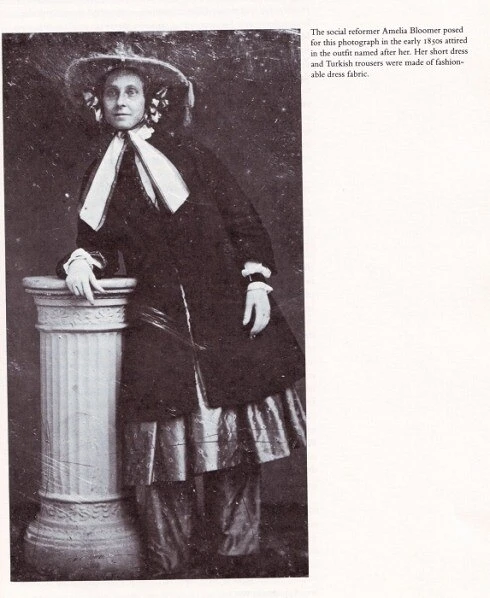
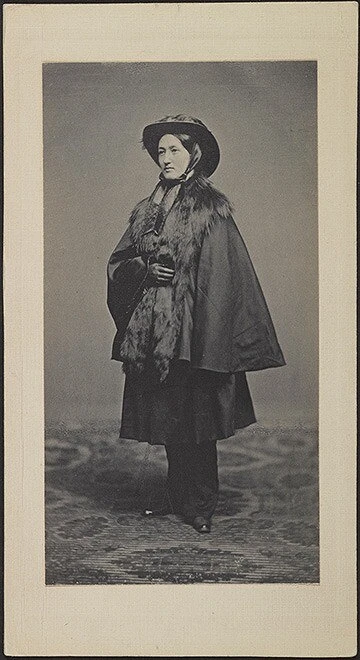
An early episode of this struggle dates back to the mid-19th century. The history of reformist dress, featuring breeches, is often associated with the names Elizabeth Smith Milller and Amelia Bloomer, and it is viewed as a tool in the fight for women’s rights.
It consisted of a short skirt or tunic, roughly knee-length, and loose trousers gathered at the ankle, and it did not require a restrictive corset or multiple petticoats. To contemporary observers, this style appeared provocative. Trousers, even when covered by a skirt, were part of the male wardrobe. By wearing them, a woman was, in the eyes of society, claiming male rights.
Амелия Блумер в революционном наряде
Элизабет Смит Миллер и придуманный ею костюм
Bicycle. A tail on wheels
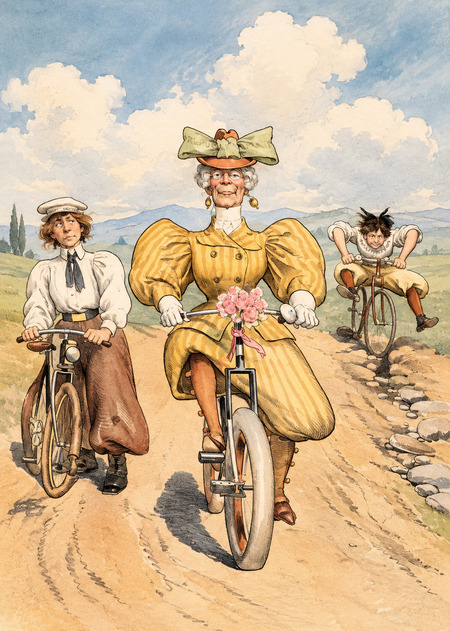
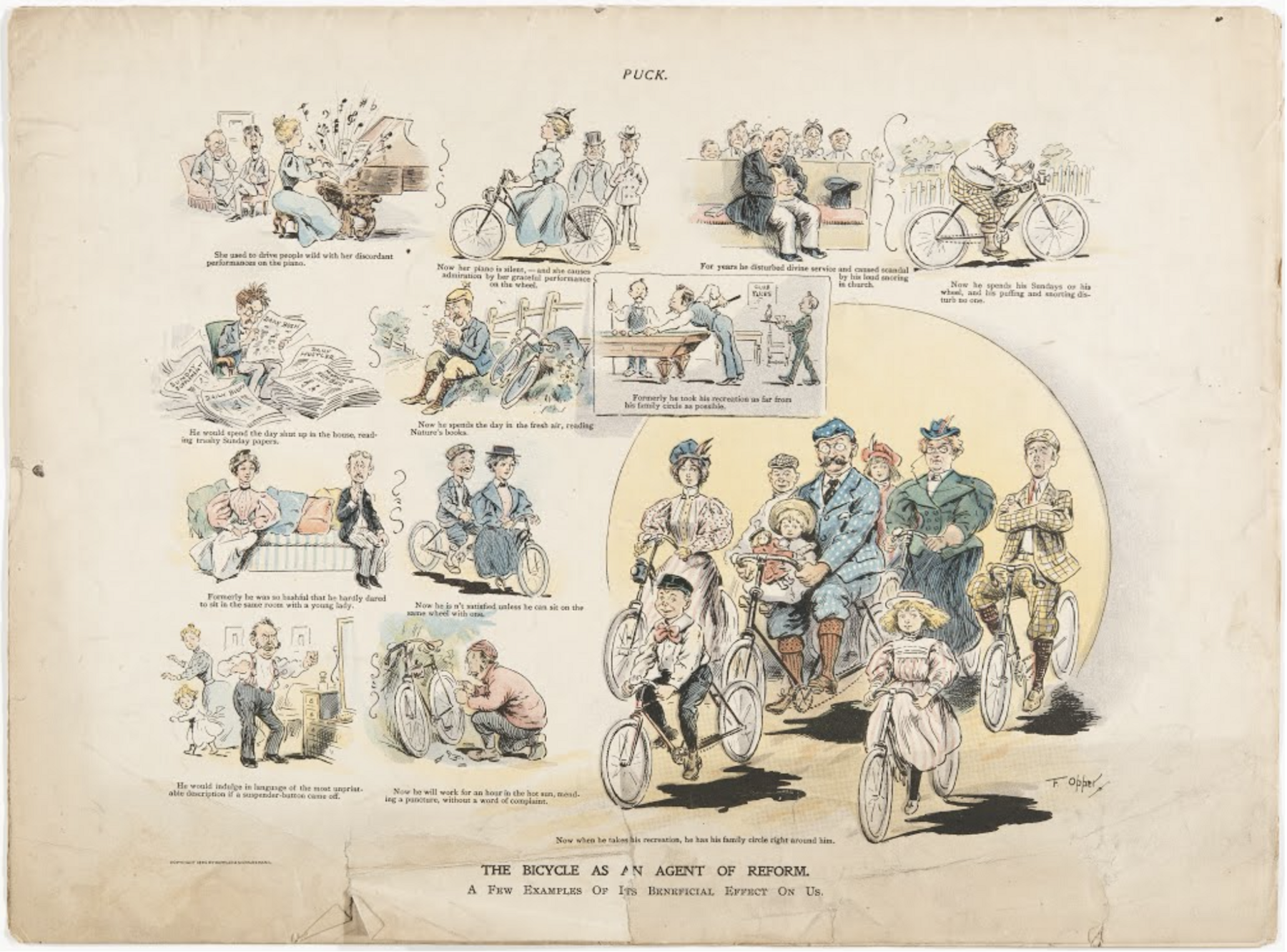
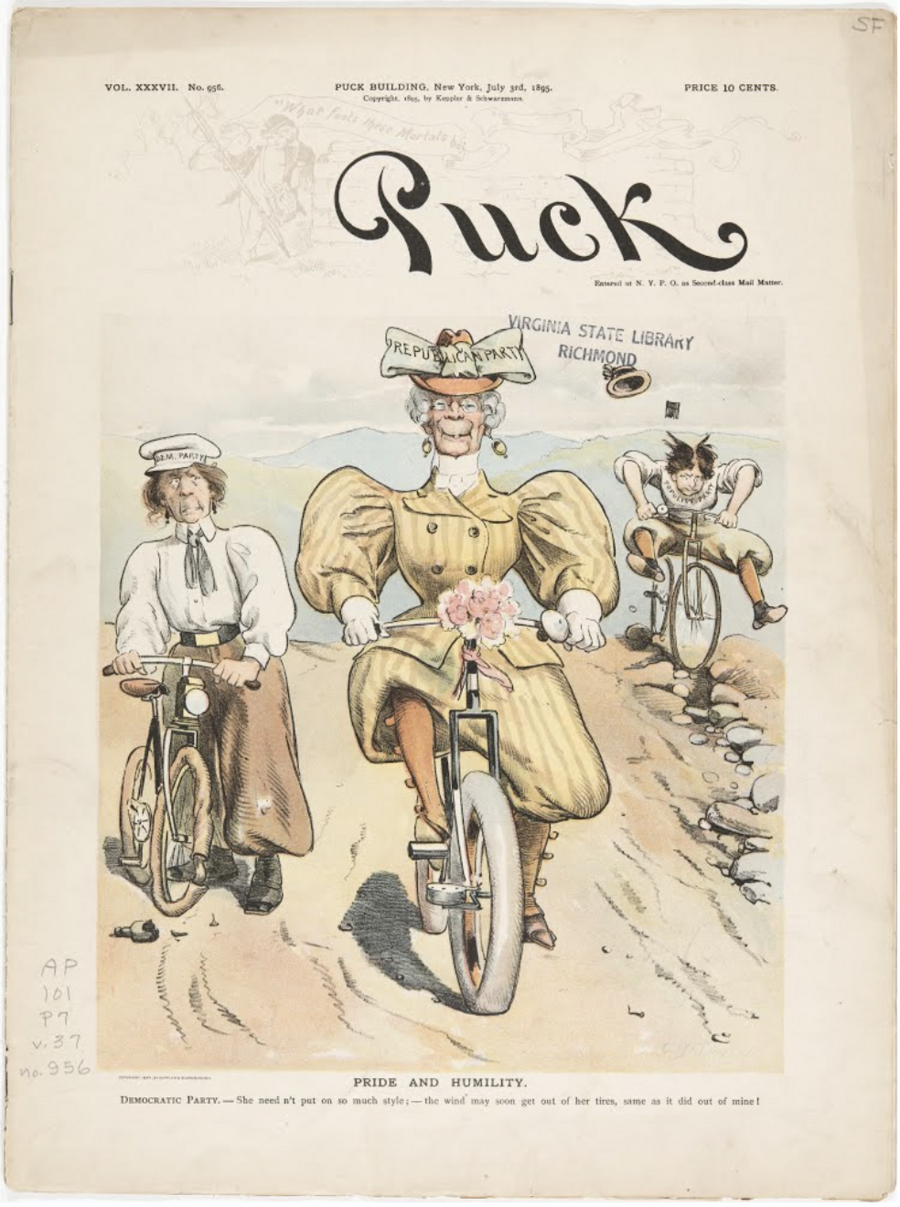
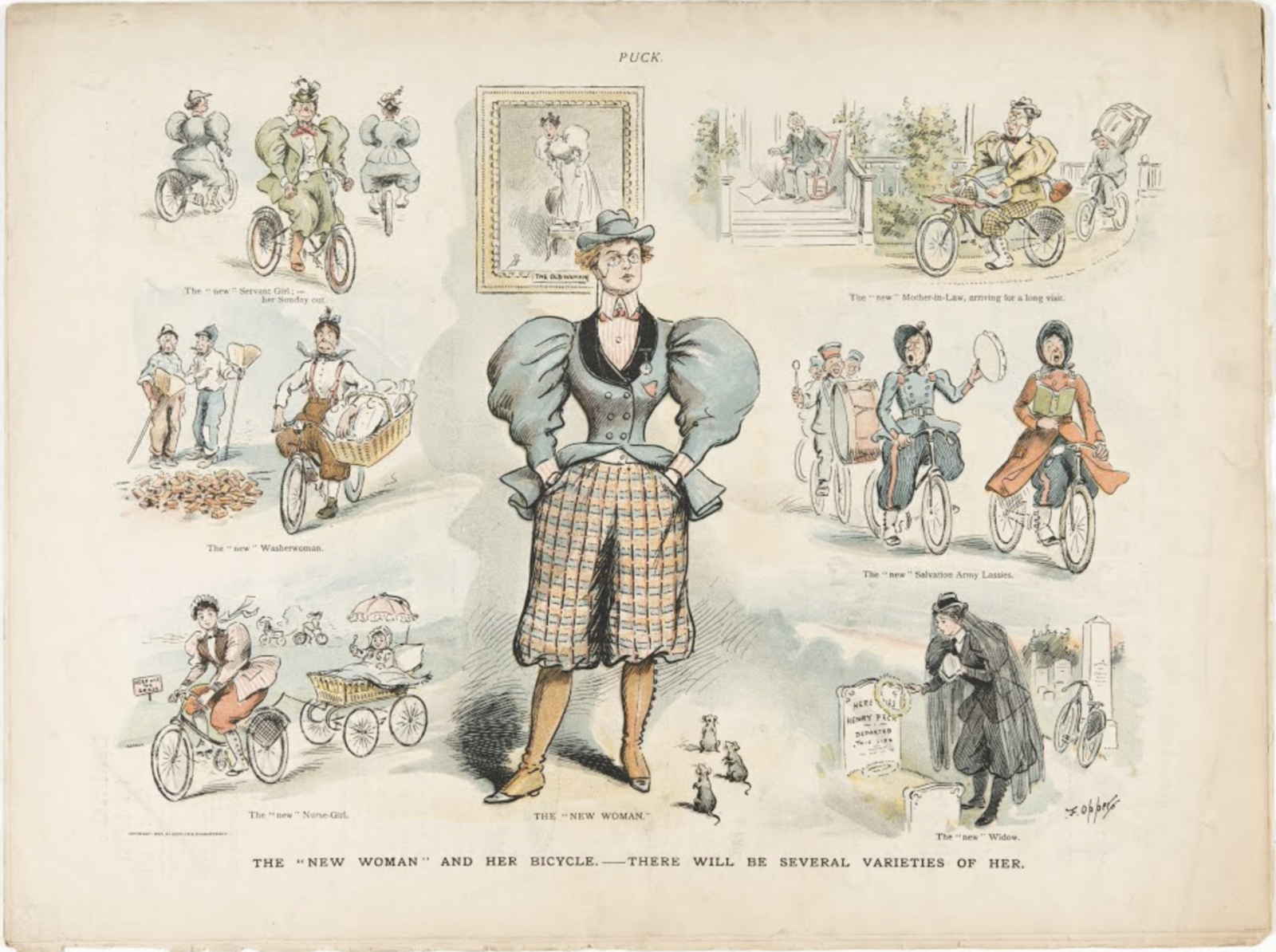
The 1890s made cycling a mass pastime. The long skirt literally became a safety issue, as the wide hem would catch on the pedals and wheels.
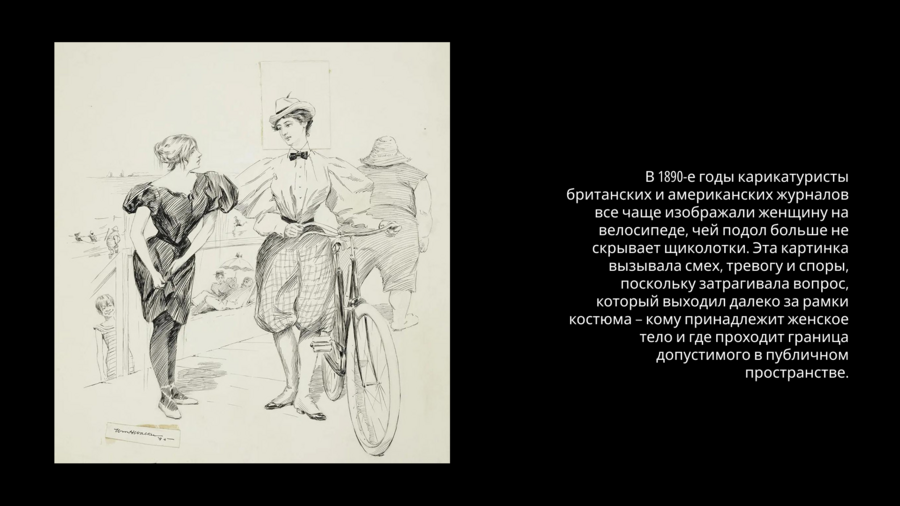
The solution was trousers or the so-called divided skirt, which could be unfastened while riding. In the 1890s, trousers returned to fashion, and female cyclists widely adopted some form of pants.
Tennis Court
Tennis and golf followed the same logic, although the first female athletes were slow to abandon corsets, petticoats, and full skirts. These sports became a genuine source of new acquaintances, as they allowed young people to socialize without their chaperones. Consequently, the public sportswear changed slowly (compared to the cyclist’s outfit) and also kept pace with fashion.
Golf Course
Unlike cycling or tennis, where sports activities conspicuously constrained young women within strict conventions of propriety, golf proved to be one of the most socially acceptable forms of physical leisure.
In the latter half of the 19th century, specialized women’s golf clubs began to form, bringing together female athletes and creating opportunities for regular practice, hosting competitions, and social interaction.
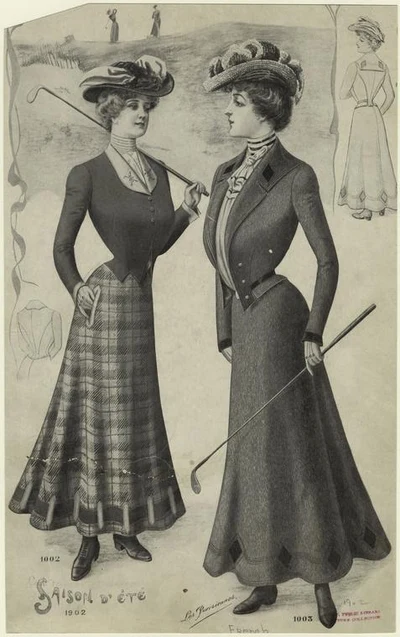
The New York Public Library. «Women golfers"The New York Public Library Digital Collections
«Alexa Stirling"The New York Public Library Digital Collections. 1860 — 1920
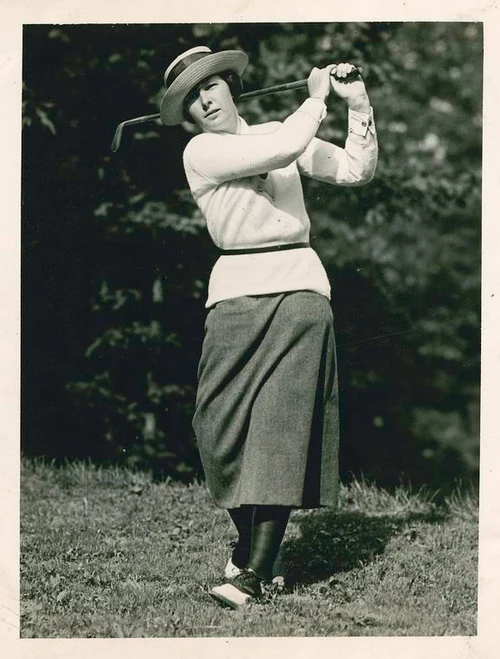
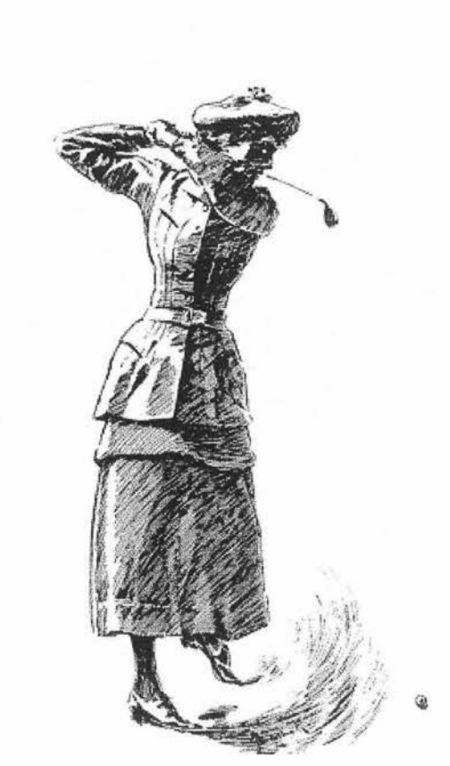
Until the end of the 19th century, there was virtually no specialized golf attire, and women participated in sports wearing everyday clothing. Gradually, female athletes began adapting their wardrobes independently to the demands of the game. They started using elastic bands to secure hemlines, experimented with adjustable skirt lengths, and adopted looser jacket cuts. In the early 20th century, a specialized golf apparel industry began to take shape, offering functional materials and designs that accounted for the specific nature of physical activity.
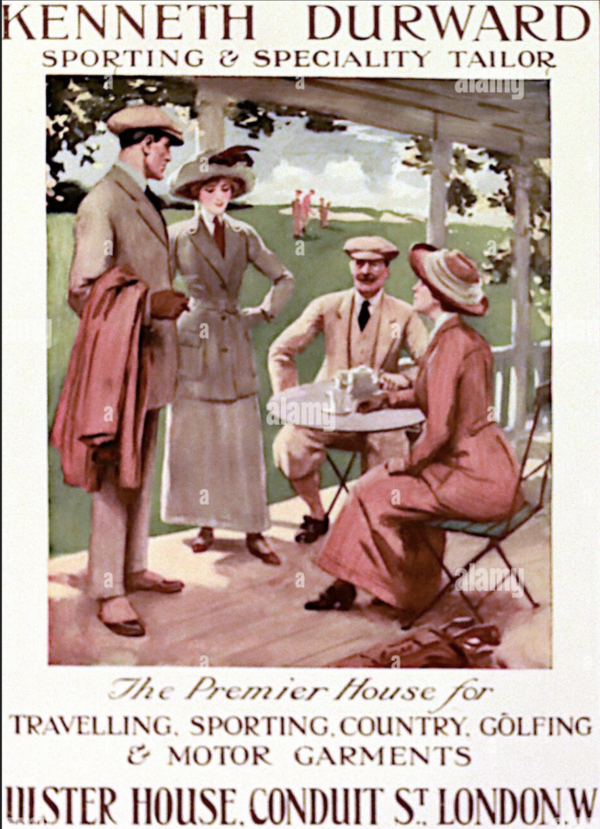
In the early 20th century, the gradual formation of specialized women’s golf attire began. An early example of this development was the suit designed by the British company Burberry in 1904. This suit included the Free-stroke jacket with patented Pivot Sleeves, which allowed for unrestricted movement during a swing, and an adjustable skirt that could be shortened for ease of play. The design also incorporated waterproof materials to protect against adverse weather conditions. In subsequent years, specialized models from other manufacturers appeared, notably the Allendale skirt from Kenneth Durward (1910), which was developed with the necessity of freedom of movement in the hip and knee areas in mind.
«Free stroke» coat by Burberry — 1904
Open body. Swimsuit, tan, and beach.
Early 20th-century women’s swimsuits maintained the logic of everyday wear. They consisted of multiple layers and covered the body almost entirely.