Research Concept
To trace the relationship between the evolution of Alla Pugacheva’s musical sound and the changing nature of her stage persona from the mid-1970s to the end of the 1980s.Key Question: In what instances did changes in arrangements, timbres, and the singer’s performance style precede or coincide with the transformation of costumes, stage behavior, and visual design, and where did these processes develop concurrently?
Hypothesis: Music often sets the tone for the image style, but cases where visual decisions followed fashion trends or influenced the perception of sound are also possible. We will focus on specific examples—iconic recordings and performances by Pugacheva—to prove or disprove this assumption.
The starting point is 1975 and the «Golden Orpheus» contest (winning with «Arlekin»), and the conclusion is the joint album with Udo Lindenberg in 1988. The methodology includes a subject analysis of audio recordings (rhythm, timbre, texture, vocal technique), followed by verification using documented sources—interviews, reviews, and discographical data. Each song will be examined in a specific version (studio, concert, film), detailing the author, arranger, musicians, and studio. For instance, I will demonstrate that «Shaman’s Drum» (1977) was created by Alexander Zatsepin and Leonid Derbenyov, with arrangements by V. Kleynot. Visual materials (album covers, film stills, concert photographs) will be selected for these recordings as evidence and context: theoretically, the textures, colors, and forms captured in the frames should reinforce what is heard. For example, I will analyze the cover of the album «How Troubling This Road Is» (1982), designed by S. Simakov, and link its artistic concept to the sonic content of the songs.
The work is divided into chapters by eras and key compositions. For example: «Harlequin» (1975) — the beginning of collaboration with Slobodkin; the double album «Mirror of the Soul» and the film «The Woman Who Sings» (1978) — the search for a new sound; «How Anxious This Path Is» (1982) — the transition to original music and rock elements; the mid-1980s — international projects and synthesizer sounds (the album Watch Out 1985, the film I Came and I Spoke 1985); the late 1980s — collaboration with Lindenberg and the latest visual solutions (the album Songs Instead of Letters 1988). The conclusion will summarize the findings: I will show where changes in sound and image proceeded hand-in-hand, and where each factor evolved independently.
My main approach was to begin with the music, describe it, and then connect it to the imagery. For instance, the composition «Harlequin» (1975) is distinguished by its characteristic «marching» rhythm and theatrical dynamics; this music led to the creation of a puppet costume with puppet gestures on stage. This sequence—audio to video—will permeate the analysis. Furthermore, I strictly distinguish between the dates of material creation and release to avoid conflating a studio recording with a live version or a film from the same year. At the beginning of the work, I will create a chronological table (object / recording / release / creators / arrangers / visual) and will update it throughout the research, highlighting which data is definitively confirmed and which requires verification.
Thus, the concept is original and structured: I justify the choice of topic, sources, and methods, formulate the question and hypothesis, and then maintain a scientific style and methodological rigor throughout the text. The result will be a cohesive visual-musical work with substantial content and an argued position.
Prologue: Before 1975
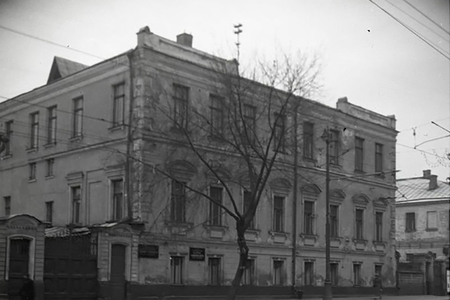
Alla Pugacheva’s journey to the big stage began long before her triumph at the «Golden Orpheus» competition in Bulgaria. In 1964, she enrolled in the conducting and choir department of the M. M. Ippolitov-Ivanov Music School, and by the age of 16–18, she began recording her first songs for the radio and touring with the propaganda brigade of the «Yunost» radio station and the Mosestrada programs.
The building of the M.M. Ippolitov-Ivanov Music School, M.M. Moscow, Vorontsovskaya St., 15
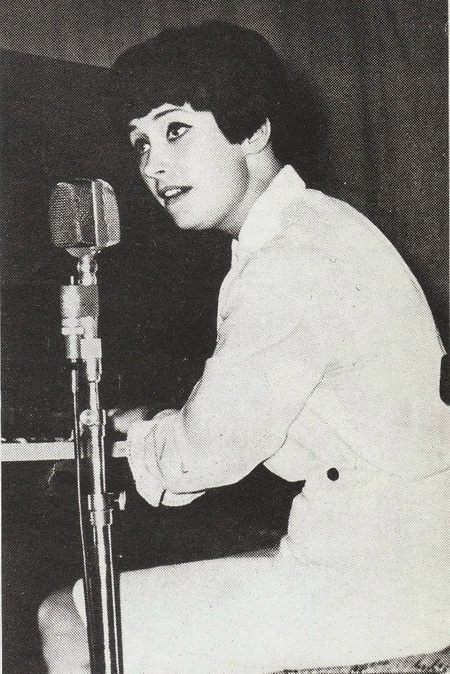
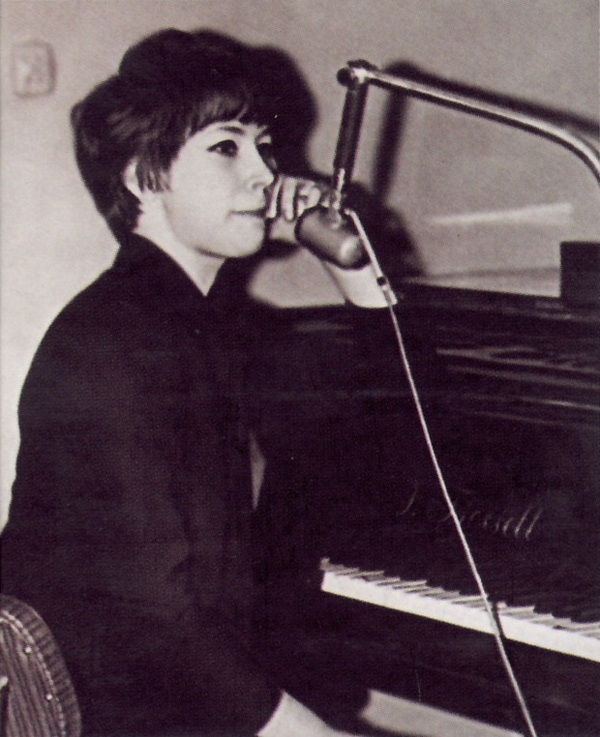
August 1967, gathering of geologists in Gornopravdinsk Gornopravdinsk / April 19, 1968, in Tyumen, concert for students
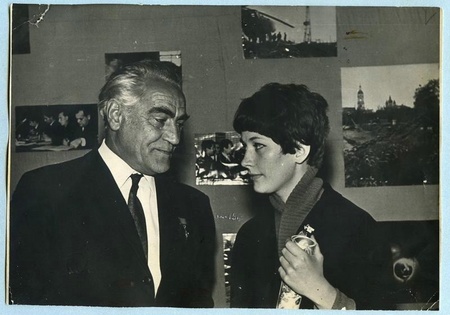
The artists of «Yunost» arrived in the city en route to the North, where they planned a series of performances for oil workers.
This archival photograph captures the legendary Soviet geologist and oil worker Raul-Yuri Georgievich Ervie and a young Alla Pugacheva (photo taken during her tours in the Tyumen region in 1967–1968).
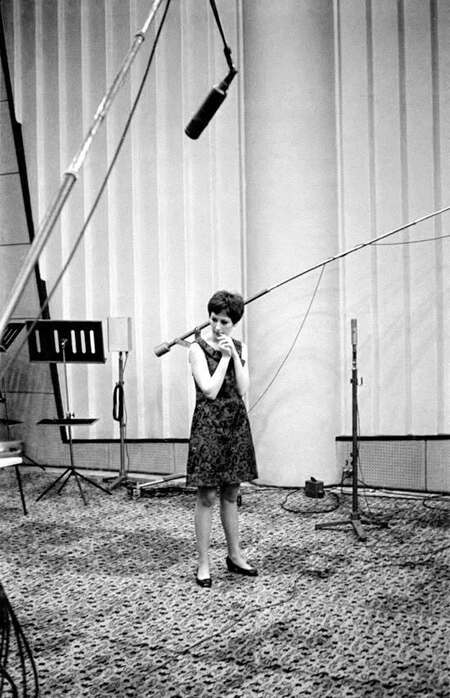
Her first nationwide fame came from the humorous song «Robot» (music by L. Merabov, lyrics by M. Tanich), recorded in December 1965 by the 16-year-old singer for the popular Sunday radio program, «Good Morning!»Anna Pugacheva’s first recording at age 16, December 1965.
«Robot» (1965)
The first recording for radio where the voice exists without a stage or visual image. In the mix, a bright, almost girlish vocal is brought to the foreground, yet it remains within the bounds of a light, playful accompaniment from a popular orchestra (strings, brass, keys, and soft percussion).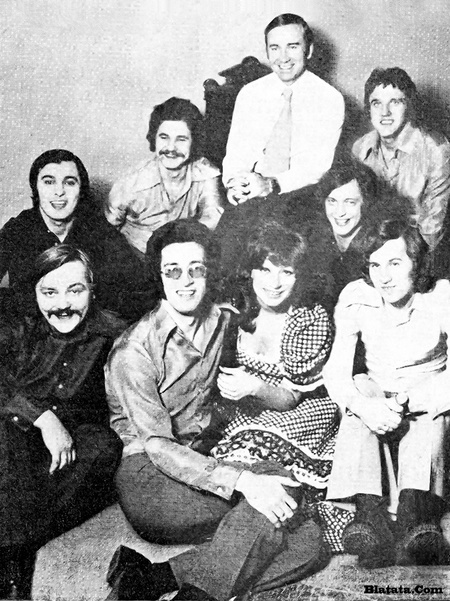
Before launching her solo career, Pugacheva was part of several renowned groups: among them were the ВИА groups «Noviy Elektron» and «Moskvichi, ” as well as Oleg Lundstrem’s famous jazz orchestra, with which she first toured internationally in September 1972 (to Poland and the GDR). Finally, in 1974, Pavel Slobodkin invited her to the ВИА group „Vesyolye Rebyata.“„Vesyolye Rebyata, ” 1975–1976
During this period, Pugacheva’s voice is largely subsumed by the ensemble’s collective sound, and her visual presentation strictly adheres to the canons of Soviet pop music: classic concert dresses, a static performance style, and a clear structure to each number.
The thing is, Алла Pugacheva wasn’t a soloist for the ensemble «Vesyelyye Rebyata.» She was an artist with the ensemble, and she sang with the vocal group. They recruited her back then for her «high voice.» However, since she was a choir director and was excellent at group singing—she would sometimes sing high harmony into the microphones from backstage so as not to «stand out.» This was so she could come out and conclude her solo performance.
Recordings with VIA «Vesyolye Rebyata» (1974)
The ensemble sets a rigid musical framework within which the singer operates. In the songs from this period («Posidim, pookaem, ” „Yasnye svetlye glaza“), her timbre is already gaining strength and a characteristic sharpness, but in the mix, the vocals stand almost equally with the instruments: the electric organ, the rhythm guitar, and the dense choral backing vocals of the ensemble.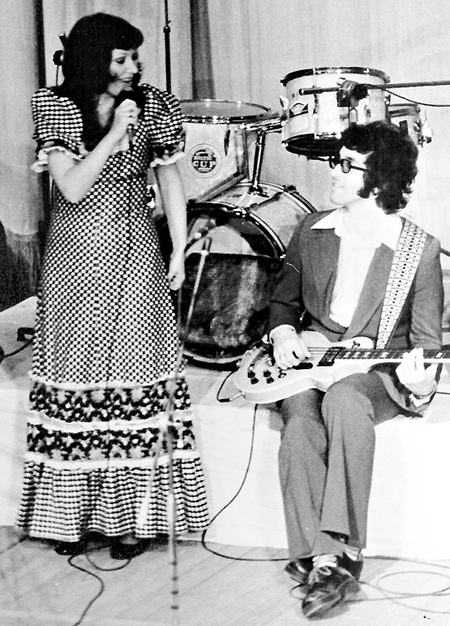
By the beginning of 1975, Alla Pugacheva already possessed extensive touring experience, skill in working with an orchestra, and a distinctive, powerful voice, but she had not yet developed her own unique artistic sound or a distinct stage persona. At that time, Pugacheva wore dark auburn hair with a straight fringe and performed in long, plaid dresses with ruffles, before shifting her image to a more voluminous hairstyle and her famous balaclavas.
«Jester» 1975
The beginning of Alla Pugacheva’s sonic and image evolution is linked to the song «Harlequin,» which brought her widespread fame. When she joined the «Veselye Rebyata» ensemble with Slobodkin in 1974, Alla performed «Harlequin» in 1975 and won the Grand Prix of the «Golden Orpheus» competition. The song was not her own composition—the competition required Bulgarian material (lyrics and music by E. Dimitrov, translated by B. Barkas for Pugacheva).
The musical foundation of the recording is an upbeat melody in 4/4 time, structured to build dramatic tension: moving from a restrained, melancholic verse to an explosive, theatrical chorus. It organically blends elements of 1960s European pop music with the intonations of urban romance, lament, and wandering minstrel singing. Pavel Slobodkin’s arrangement, which relies on the typical VIA instrumentation featuring drums and a vibrant brass section, amplifies this contrast by alternating quiet passages with crisp, march-like rhythms and bursts of lively laughter, moans, and vocalizations.
The soundscape is intensely rich: sharp accents from the brass instruments, a pulsing bass guitar, and the drums create a feeling of a circus arena—of anxiety and running through «sharp needles of bright fire.» Pauses, emphasis on strong beats, and that iconic grotesque laughter in the finale of the chorus are vital to the track. Here, the sound functions not merely as background for the vocal, but as a fully realized character that underscores the tragicomic nature of the clown figure.
Pugacheva rejected the canonical, polished pop vocals typical of the era. She employed a technique of bordering intonation, where singing transitions into spoken word—a raw cry of the soul, strain, and irony. Her voice alternates between being fragile and defenseless, and suddenly possessing immense chest strength, rasp, and steel core.Instead of the carefree doll from the original Bulgarian version, Pugacheva crafted the image of a living, suffering human being («Ah, how hard it is to be funny for everyone»), who conceals tragedy behind a jester’s cap. It is this blend of vocal freedom and dramatic embodiment that brought the singer the Grand Prix at the «Golden Orpheus» and established her as a star.
Conclusion
At the «Harlequin» stage, sound begins to shape the image. The musical production, incorporating childlike elements and cheerful laughter, supported the idea of puppet scenography. Thus, musical and rhythmic techniques dictate the fantastic character, rather than the other way around—sound became the starting point for the visual solution.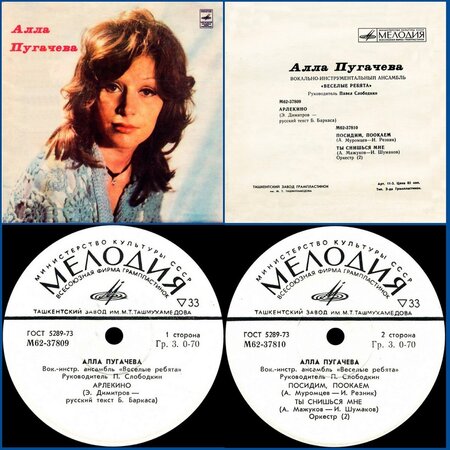
Immediately following her triumph at the «Golden Orpheus» contest (July 21, 1975), the Melodiya company released Alla Pugacheva’s first solo mini-album in record time, recorded with the participation of the VIA «Veselye Rebyata.» The record included three compositions: «Harlequin,» «Let’s Sit and Sing,» and «You Dream of Me.»
Toward the end of 1975 and the beginning of 1976, Pugacheva’s solo repertoire expanded rapidly. At concerts with «Vesyolye Rebyata,» she began to receive the full second set, and the once independent, star-studded ensemble gradually transformed into a supporting group for the singer. The scope of her new sound and stage presence no longer fit within the collective framework of the VIA. This naturally led to dissatisfaction among some of the musicians and the group leader, Pavel Slobodkin: a conflict arose between them over creative and organizational disagreements, and on September 30, 1976, Pugacheva officially left the ensemble and Moskoncert, fully committing to a solo career.
«Mirror of the Soul» (1978) and «The Singing Woman»
The second significant milestone was the debut double album, «Mirror of the Soul» (1978), which thematically and temporally resonated with the release of the film «The Woman Who Sings.» Musically, this work moved far beyond the boundaries of conventional Soviet pop, merging pop music with art rock, psychedelic synthesizer arrangements, and a light funk groove. The core of the record featured songs by Alexander Zatsepin set to lyrics by Leonid Derbenyov; however, this album also marked the compositional debut of Pugacheva herself, who recorded several original songs under the pseudonym Boris Gorbonos.
Key tracks from the album, «Shaman’s Drum» and «Song About Me, ” vividly demonstrate the expansion of instrumentation. In the composition „Shaman’s Drum, ” recorded back in 1975 for the film „The Central Man from the Heavens“ (released in 1977), exotic percussion, mysterious echo effects, and multi-layered backing vocals are featured, while the melody balances between Eastern enigma and a powerful rock impulse. In turn, „Song About Me“ („Just Like Everyone“) is built on an energetic pop structure featuring a taut, almost funky rhythm section. Bright brass and string parts lend the sound an orchestral depth and external sheen, which sharply contrasts with Pugacheva’s candid, confessional vocals—transforming a dance rhythm into a dramatic monologue about solitude.
In the studio recordings for the album «Mirror of the Soul» (1978), the arrangements were primarily handled by Vitaly Kleinot (with his instrumental ensemble) and Alexander Avilov, the leader of Pugacheva’s backing band, VIA «Rhythm.» Backing vocalists from the group «Vesyolye Rebyata» and the USSR State Symphony Orchestra of Cinematography also participated in the creation of the record—this combination of groups lent the sound a richness and complexity rare in Soviet pop music. For example, the composition «Shaman’s Drum» (music by A. Zatsepin, lyrics by L. Derbenyov) is built around a dense bass line, complex drum syncopations, and a hypnotic, incantatory chorus. Meanwhile, «Song About Me, ” by the same writers, relies on an energetic pop structure with a resilient rhythm section, where bright brass and string arrangements create an external orchestral brilliance that sharply contrasts with the singer’s candid, confessional vocals.
Film director Alexander Orlov (for the film The Woman Who Sings, 1978) was responsible for the visual aspects of this period, while photographer Vyacheslav Maneshin created the famous portrait for the cover of the album Mirror of the Soul. The singer’s gaze in the photograph emphasizes the thoughtful and dramatic subtext of the record. In the film, Alla Pugacheva appears in a more mature and bold persona: flowing hair, loose concert gowns, and dramatic stage lighting create the necessary emotional backdrop for dramatic ballads (such as «Shakespeare’s Sonnet» or the title track «The Woman Who Sings»). The stage costumes—ranging from light, flowing garments to the iconic black robe—responded to the contemporary Western aesthetics of the late 1970s and broke the conventions of Soviet pop music.
Conclusion: «Mirror of the Soul» is a period of high genre hybridity. Musically, it signaled a transition from traditional popular music to orchestral pop-rock, a shift that was also reflected in the new, theatrical set design. Alexander Zatsepin’s complex arrangements demanded striking visual solutions: in the film, the director employed the interplay of light, smoke, and mirrors to reveal Pugacheva in a multifaceted portrayal of a woman—from delicate and tender to commanding—a persona that harmonized completely with her powerful, expansive sound.