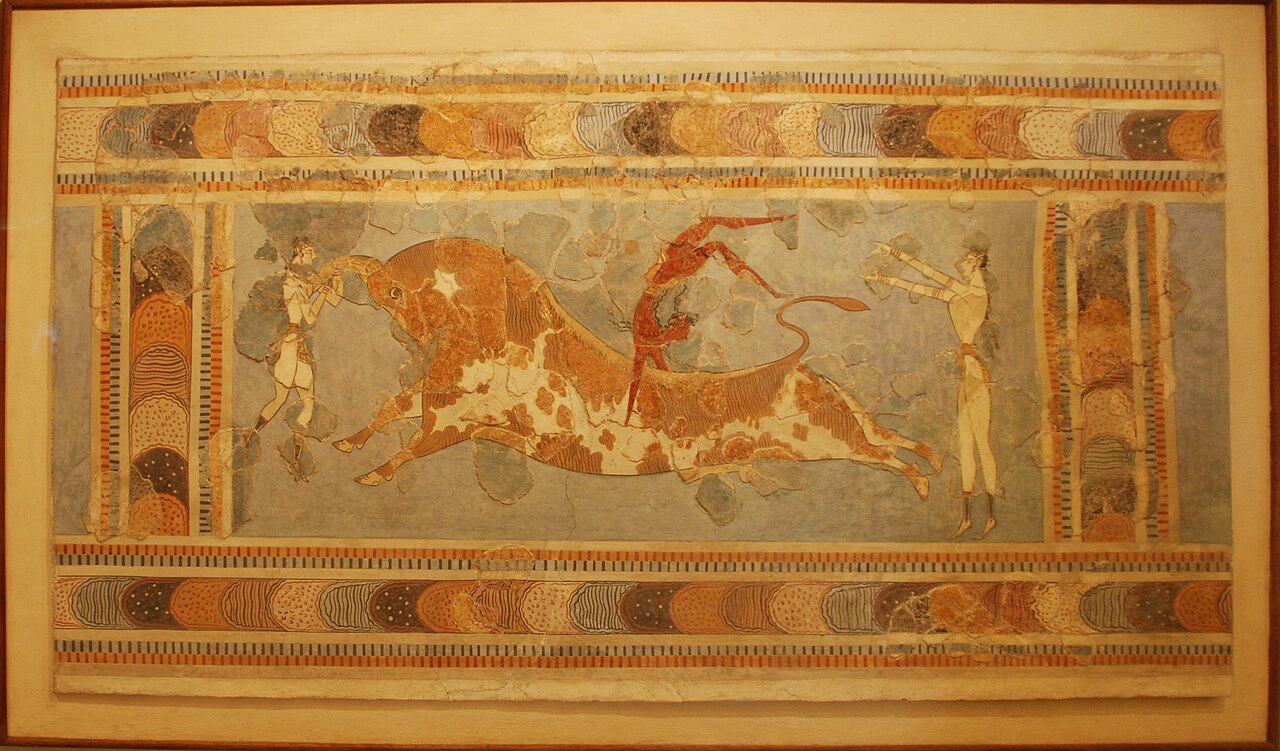
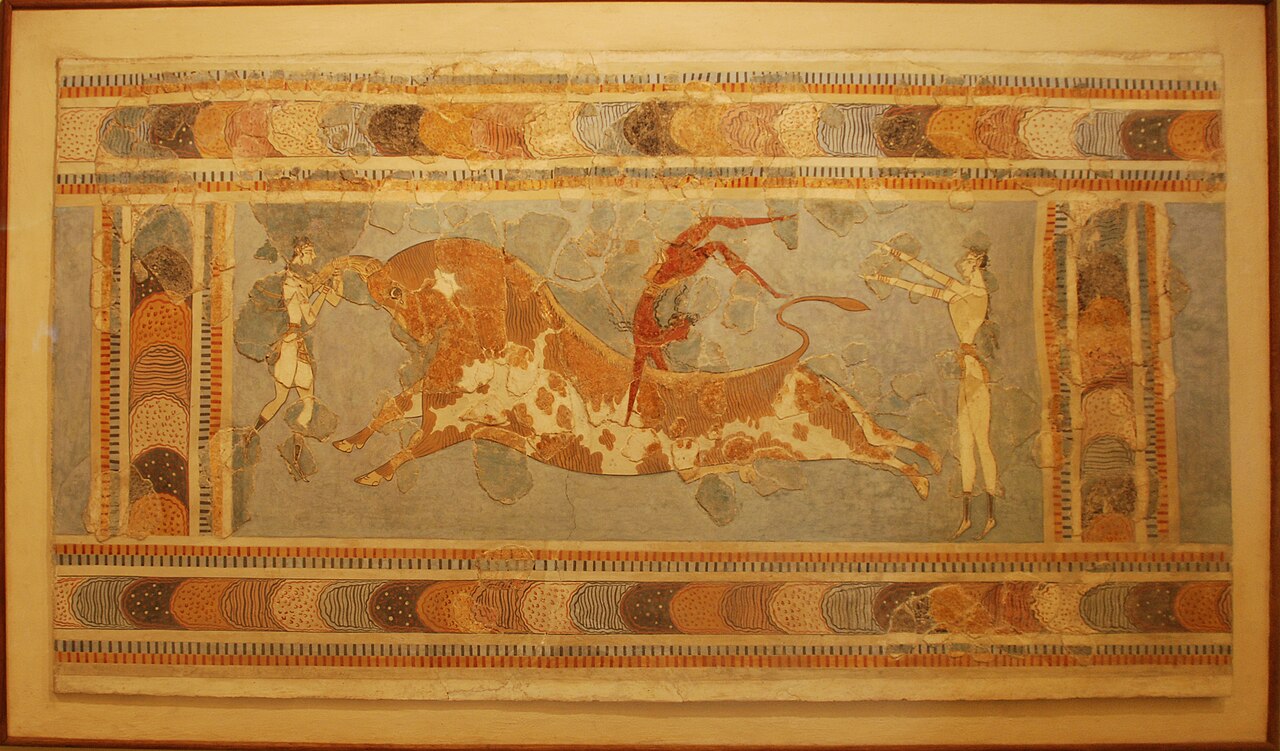
The Bull Figure in Aegean Art, 15th–10th Centuries BCE This research examines the depiction of the bull in the art of the Aegean world between the 15th and 10th centuries BCE. The objective is to trace the evolution of its meaning within the agricultural life, beliefs, and art of Minoan and Mycenaean cultures. The geographical scope covers Crete, the Aegean Islands, and mainland Greece. Two distinct cultural traditions interacted here: the Minoan, centered on Crete, and the Mycenaean, represented by the palatial centers on the mainland. Cultural contacts influenced both art and craft. The bull held a vital place in Aegean society. It was essential for livestock rearing, and the animal’s power made it a prominent cultural motif. Bulls were depicted on both everyday and ritual objects. However, not every depiction held religious significance—the interpretation depends on the context, the material, and the object’s function. In Minoan culture, the bull is often presented dynamically. The most famous example is the scenes of bull-leaping from Knossos. These scenes are characterized by dynamism, plasticity, and attention to anatomy. The motif also appears on frescoes, seals, ceramics, jewelry, and ritual vessels. The rhyton shaped like a bull’s head combines artistic representation with practical function. In Mycenaean culture, the bull achieved its own distinct artistic expression. It is shown in sculpture, ceramics, and artifacts from cultic contexts. Some Mycenaean representations are more generalized and schematic than the dynamic Minoan compositions. Nevertheless, Mycenaean craftsmen absorbed and reinterpreted Minoan motifs. The study also addresses the post-palatial period, which began after the collapse of the Mycenaean palatial centers around 1200 BCE. Social changes impacted the art, but individual motifs persisted. Monuments from the 12th to 10th centuries allow us to trace this continuity amidst the transition to the Iron Age.
Historical Context and Origin of the Image.
How did the depiction of an animal reflect the beliefs, traditions, and artistic sensibilities of ancient peoples?
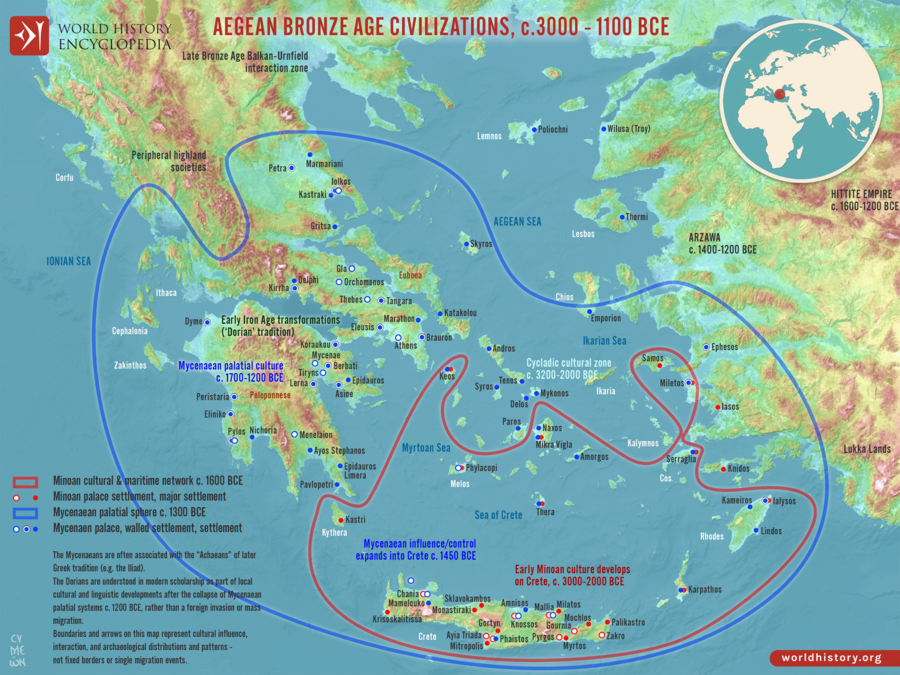
The main research centers are Crete and mainland Greece.
The research spans the 15th–10th centuries BCE.
On Crete, the image of the bull became particularly prevalent in courtly and religious art.
Knossos became one of the most important centers of Minoan culture and bull imagery.
On the continent, the bull image continued to exist within its own artistic and ritual tradition.
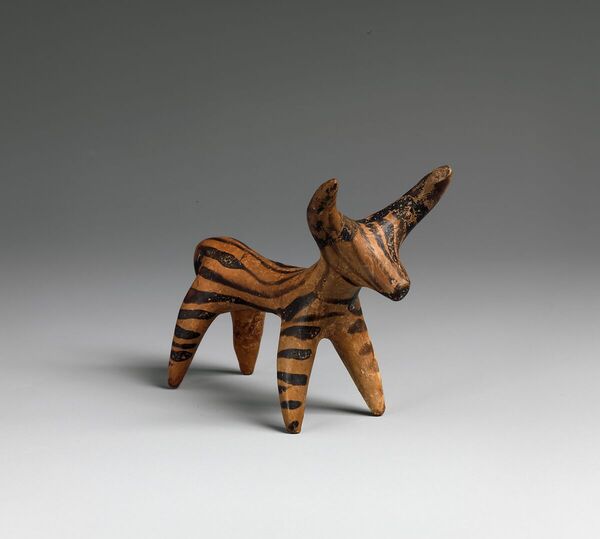
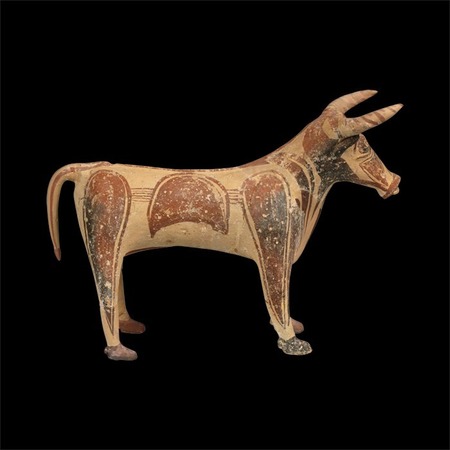
Two cultures utilized the bull motif, yet they rendered it in different materials and forms.
The Bull in Life and Worldview.
The bull was an important agricultural animal and a source of prosperity for the farm.
The animal’s power was conveyed through its tense posture and expressive plasticity.
In Minoan culture, the bull was associated with the power of nature and fertility.
The image of the bull appeared in subjects related to cultic practices.
In Minoan Crete, the bull and its associated sacred symbols occupied a central place in art, embodying power, fertility, and divine authority. One of the primary artifacts demonstrating this in an architectural and ritual context is the miniature «Fresco of the Three-Part Sanctuary.»
Scenes of bull-catching on golden bowls associate the animal with ritual and public life.
The horns of dedication signified the sacred nature of the architectural spaces.
The Bull in Painting and Artistic Imagery.
Bull-leaping has become one of the most recognizable motifs in Minoan art.
The composition unites animal and human figures into a single dynamic scene.
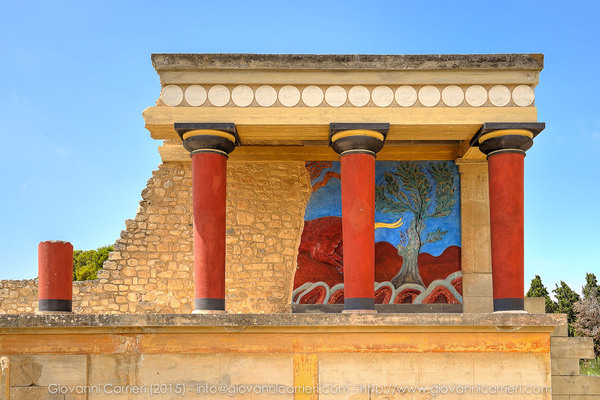
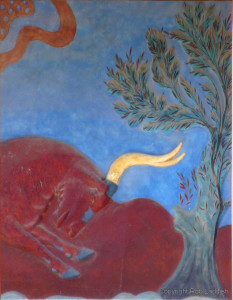
The tilt of the head and the posture of the body create a sense of rapid motion.
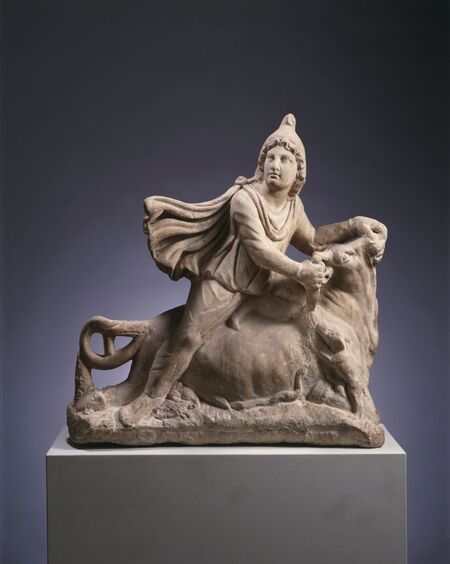
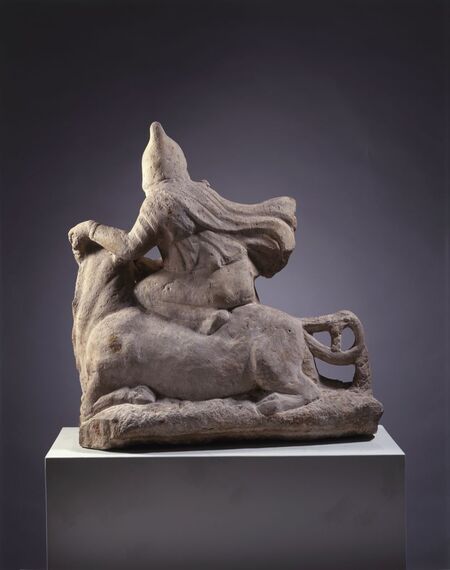
The interaction between humans and animals is becoming an independent artistic theme.
A miniature image transfers a complex scene onto the surface of a precious object.
Stamps transformed the image of the bull into a compact and recognizable composition.
The volumetric figures allowed for the conveyance of the animal’s form and character.
Clay figurines combined sculptural form with decorative painting.
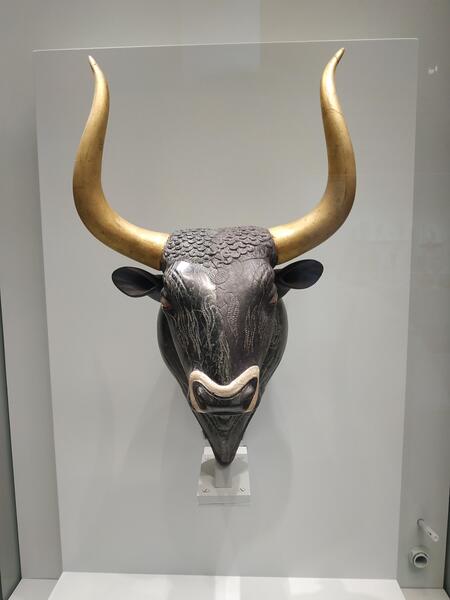
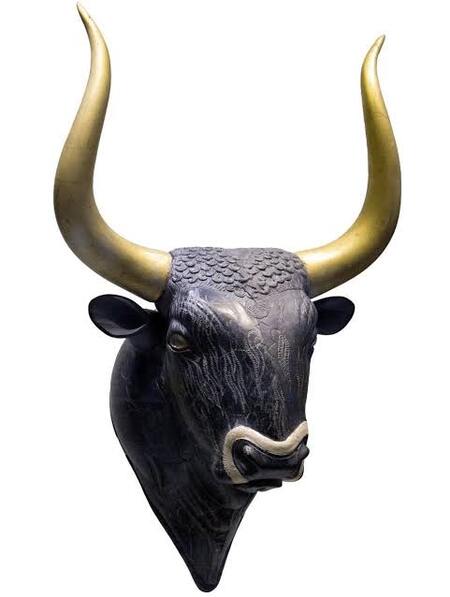
The animal head becomes an independent artistic motif.