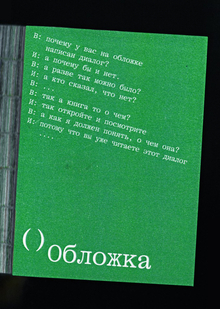
This is an independent bookstore that has long gone beyond the concept of a «store.»
Today it is a network of outlets in St. Petersburg and Moscow. However, the image that the audience has is a single one: a place where people come not so much for a specific book, but for a certain experience and atmosphere.
The brand is built around several key ideas: curatorial selection (in the store only those books that the team considers worthy), the atmosphere of the place (interior, the smell of coffee, a special feeling of «home»), humanitarian mission (to sell good books to as many people as possible) and independence.
Instead of competing on price and assortment, the brand chose competition for a person’s time and attention. The longer a person stays in the store’s space, the more likely they are to leave with a purchase. From here there are cafes, reading areas, soft light, tables by the window. The store ceases to be a point of transaction and becomes a place where you want to linger.
The interior of a store in St. Petersburg and Moscow.
The second principle is based on this foundation — emotional warmth as a competitive advantage. Large networks have no voice, no personality, no feeling. On the contrary, the brand has built a warm relationship with its audience. It focuses on people in their 20s and 40s. Their area of interest includes literature, contemporary art, independent culture and aesthetics. Another distinct group is young urban intellectuals who keep up with new literary trends and value aesthetics. This particular audience engages actively with the brand on social networks, purchases merchandise, and attends events.
Brand communication
The brand has built one of the most interesting and recognizable communication strategies among independent bookstores in Russia. It is present in the public space through several levels: the physical space of the store, digital channels, editorial content and event activity. All these levels work in concert and form a single brand image.
The store itself is the main communication tool. The interior, the arrangement of books, the coffee shop, the atmosphere — all this says more about the brand than any advertisement. People take pictures inside, share pictures, recommend each other. The store works as a self-distributing visual content.
The design and presentation of the store in St. Petersburg and in Moscow is different. They adjust to the mood and values depending on the audience and the city. Peter is romantic, literary, vintage. Moscow is advanced, technological, and modern.
On social media, the brand posts photos of books and the store, makes recommendations, event announcements, and personal notes from the team. He creates the impression of a lively editorial staff, literary critics, and the format of personal diaries. They also collaborate with other brands, arranging joint collections, etc. All this creates a certain tone that sets the brand apart from others. It is through this communication channel that the brand’s identity is built and conveyed to the audience. They cooperate with publishing houses, cultural institutions and other independent projects.
The next communication channel is the website. Formally, it operates as an online store with delivery. The site serves as a trading platform, but its distinctive feature is the author’s voice in the descriptions of books. The texts on the site are written as recommendation reviews, not as product cards. This is a continuation of the editorial logic carried over from social media.
Merch is a separate and important part of the system. Shoppers, badges, stationery — all this is produced by the store itself and works as a portable advertisement. The product itself becomes a communication channel here.
Television advertising, billboards, and other traditional formats are absent from the PR strategy — this is the conscious position of an independent project that builds communication through authenticity rather than through reach.
Choosing a theory
Dialogic Theory as applied to PR communication is the most suitable optics for analyzing a brand’s communication strategy. The choice of this theory is not accidental. It is an independent brand that builds its communication in a fundamentally different way than large networks: not through broadcasting messages to the audience, but through a constant dialogue with it. The theory explains how organizations should build high-quality, ethical relationships with the public through dialogue, rather than through one-way broadcasting.
Dialogic theory identifies five key characteristics of genuine dialogue: mutuality, timeliness, empathy, risk, and commitment. Each of them is reflected in the brand’s communication. In addition, the theory suggests specific principles for online dialogue: the dialogic loop, the usefulness of information, the generation of repeat visits, the intuitiveness of the interface and the retention of visitors. This makes it particularly applicable to the analysis of the brand’s digital channels.
Brand analysis by theory
Mutuality Dialogic theory asserts that the organization and the public are inextricably linked, and this connection must be explicitly recognized. The brand builds all its communication on the recognition of this interdependence. A store does not exist without readers, and readers get not just a place to buy books, but a space that belongs to them. Communication is based on the principle of «we create this place together.»
Propinquity & Dialogic Loop The theory requires the organization to communicate with the audience before making decisions, not after. The brand’s media channel works exactly like this: the team shares their thoughts, talks about the process, discusses books — and this happens in the present tense, not as a report. The audience has the opportunity to ask questions and receive answers through feedback forms and comments. The store staff really answers questions about the availability of books, recommends, advises — this turns communication from a one-way broadcast into a live exchange.
Empathy The theory defines empathy as creating an atmosphere of support and trust in which others can engage in dialogue. The brand creates such an atmosphere on both levels — physical and digital. In the store’s space: a coffee shop, comfortable reading areas, a children’s corner, and no «buy something» pressure. In digital channels: the tone of the texts is warm, personal, without corporate distance. When the team recommends a book, it sounds like advice from someone you trust, not an advertising post. Visual content on social media — atmospheric photographs of books, coffee, and interiors — creates an emotional climate in which the audience feels accepted and invited. This is communication empathy in action.
Risk & Commitment Dialogic theory says that genuine dialogue always involves risk — vulnerability, spontaneity, openness to the unexpected. However, the brand is ready to engage in dialogue even when it is inconvenient. This is not a weakness in communication, but a strength that makes a brand authentic.
Risk & Commitment The expansion of the product range, the appearance of a coffee shop, the opening of a stationery room, the launch of a publishing house — all these are answers to the real demands of the audience. This makes communication two-way, unlike most book networks.
Dialogic theory requires an organization to publish information that is valuable to all groups of the public, and to create reasons to return. The brand makes regular book recommendations, event announcements, product range updates, and thematic collections — all this creates reasons to visit again and again.
Conclusion of the study
The brand’s communication strategy is generally effective — and this is confirmed not by words, but by results. Communication strengths: lively tone, visual identity, meaningful space, event activity, reputation. All of this works in concert and creates a cohesive image. One of the recommendations is to redesign the site. Right now it looks too commercial as a standard channel of mediocre bookstores.
Bibliography and sources
RBC Style. URL: https://style.rbc.ru/life/626174559a7947a90633732d (дата обращения: 12.06.2026).
RBC Style. URL: https://style.rbc.ru/visionaries/6981ad7d9a7947607b5313b7 (дата обращения: 12.06.2026).
Подписные издания. URL: https://www.podpisnie.ru (дата обращения: 11.06.2026).
Издания [Электронный ресурс]. — URL: https://t.me/izdaniya (дата обращения: 11.06.2026).
The Concept of the Dialogue by T. Dridze as a Relevant Tool for Cross-Cultural Mediation in International Business [Электронный ресурс]. URL: https://www.researchgate.net/publication/347947378_The_Concept_of_the_Dialogue_by_T_Dridze_as_a_Relevant_tool_for_Cross-Cultural_Mediation_in_International_Business (дата обращения: 12.06.2026).
SNAUKA.ru. URL: https://web.snauka.ru/issues/2013/07/25725?ysclid=mqdtk914aq481758744 (дата обращения: 13.06.2026).
Афиша. URL: https://www.afisha.ru/spb/shop/podpisnye-izdaniya-68388/?date=18-09-2022 (дата обращения: 12.06.2026).
Яндекс Карты. URL: https://yandex.com/maps/org/podpisnyye_v_muzeye/50481093864/gallery/?ll=37.570312%2C55.780370&tab=gallery&utm_source=share&z=16.72 (дата обращения: 11.06.2026).
Яндекс Карты. URL: https://yandex.ru/maps/org/podpisnyye_izdaniya/153607368410/gallery/?ll=30.347686%2C59.934786&source=serp_navig&tab=gallery&z=16.71 (дата обращения: 11.06.2026).
Издания [Электронный ресурс]. — URL: https://t.me/izdaniya (дата обращения: 12.06.2026).