Данный проект является учебной работой студента Школы дизайна или исследовательской работой преподавателя Школы дизайна. Данный проект не является коммерческим и служит образовательным целям
Проект принимает участие в конкурсе

Back to basics: How Communication Theory Works in the Field of Design

Brand design is often mistakenly reduced to aesthetics and creating a «pretty picture». In reality, visual and verbal identity is a complex, multi-layered communication system. In a context of informational noise, where the user’s attention is the most valuable resource, just creativity is not enough. One could even say that «communication theory» is a kind of NLP but for a brand. It gives the designer and art-director a fundamental basis for answering key questions: how to code a brand’s message so the audience decodes it exactly as intended? How to avoid noise? And how to build a dialogue with the user?

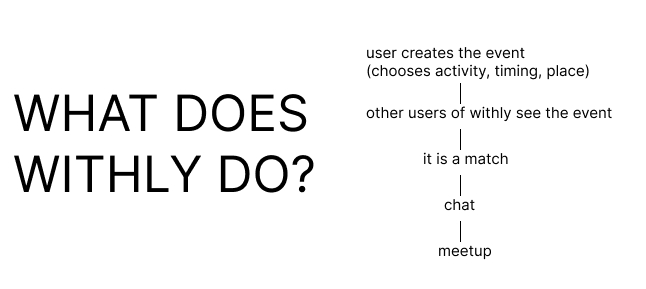
WITHLY is an app that helps people find someone to hang out with. The service is for anyone who wants to go to a cafe, catch a movie or just walk around the city, but doesn’t want to do it alone. All you need to do is just pick a place or an activity, set the time, and find someone who wants to do the exact same thing.

Understanding these mechanisms allows you to build a communication ecosystem. This is especially critical for services whose mission is directly tied to social connections. In the case of the WITHLY app, the visual and interactive language must not only attract attention, but also reduce social anxiety, normalize new forms of interaction, and clearly distinguish the meaning of «shared leisure» from established dating-platform tropes. Communication theory here acts as a compass: it helps design speak precisely, ethically, and contextually appropriately, turning pixels into dialogue and the interface into a bridge between people.

The further analysis of the WITHLY app will rely on this theoretical framework to assess how well design decisions serve the stated communication goal, where semantic gaps arise, and how they can be eliminated at the level of visual strategy, interaction logic, and tone of communication.
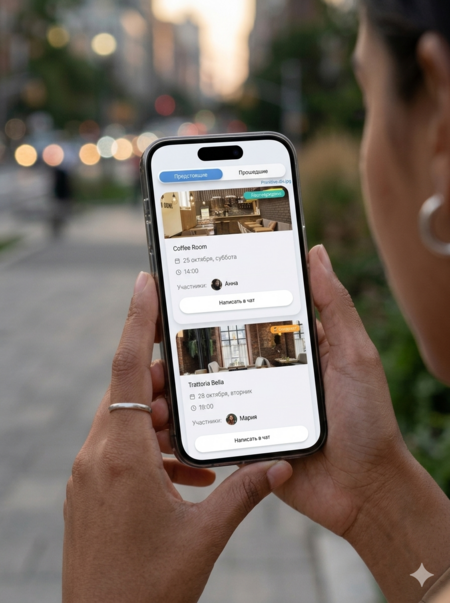
Presentation of the project for a general audience
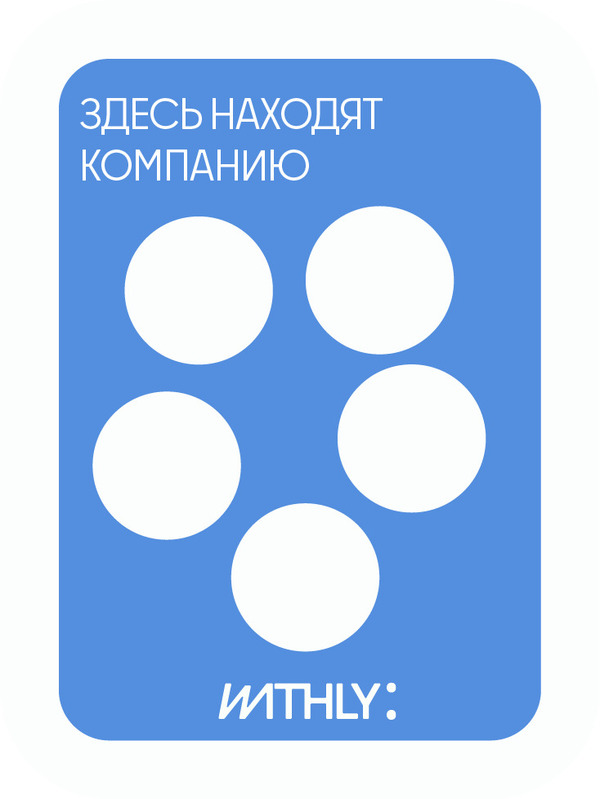
Slogan: Не оставляй место пустым! Don’t leave the place empty!
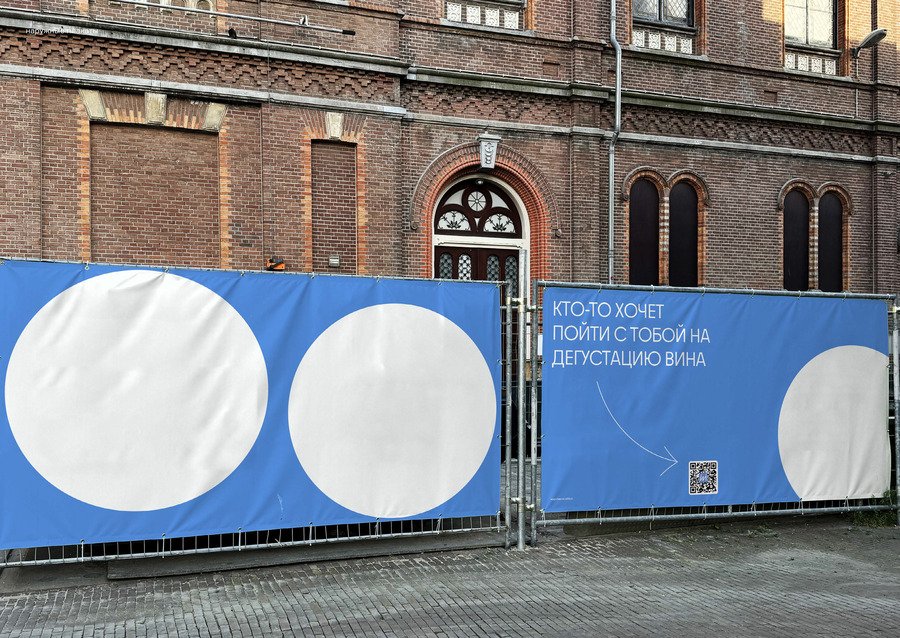
big
Исходный размер 3500x2480

Withly is not a dating app. There are no swipes, no endless choices, and no romance. Everything is agreed on beforehand: the place, the timing. Being specific is opposite to the awkwardness.

Исходный размер 3500x2480

Our communication is a solution to avoid digital isolation. We use the semiotics of urban leisure instead of dating codes and speak to the user in a language of empathy and respect for their autonomy. WITHLY does not promise perfect relationships: we create safe conditions so that beautiful moments in the city stop being empty.

Presentation of the project for a professional audience
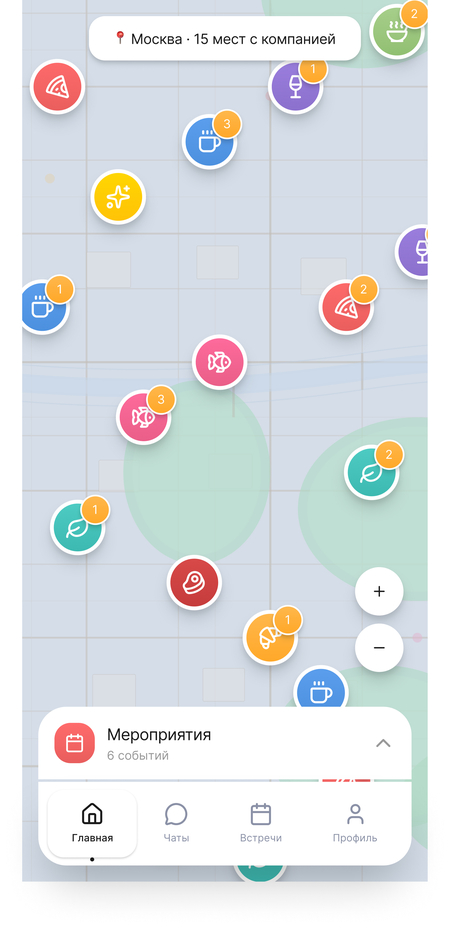
WITHLY is a digital platform redefining urban social interaction by shifting the focus from romantic dating to shared event-based experiences. The service allows users to easily find companions for specific activities, acting as a trusted intermediary that helps to overcome social barriers and cognitive costs of organizing leisure time.

Исходный размер 3500x2480

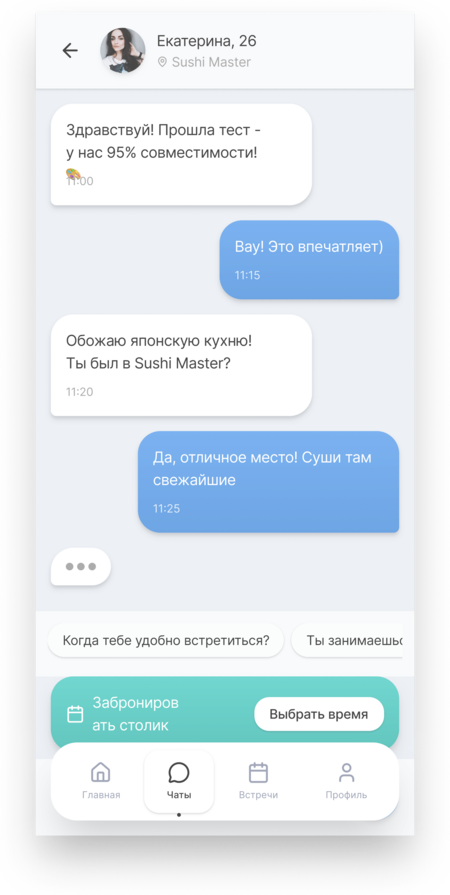
The app’s architecture and communication strategy are grounded in behavioral and communication theories: the interface intentionally minimizes social anxiety, prioritizes safety through user verification and partner venues, and structures user profiles around shared intentions and events rather than physical appearance, transforming an «empty seat» from a sign of isolation into a deliberate opportunity for a meaningful offline connection.
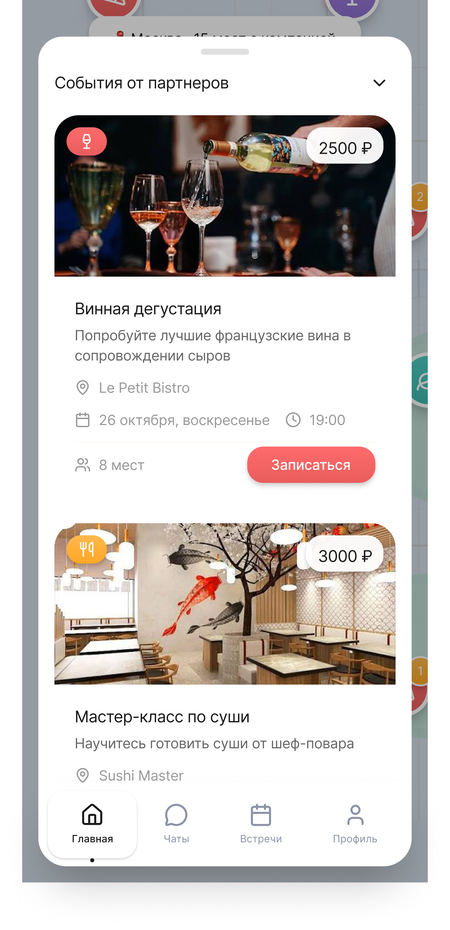
Key features

Исходный размер 1824x693

Target Audience

Segment 1: Students and young people. They are active in the city, studying or starting their careers. Their friend circle is still forming, or friends have moved away, so they don’t always have someone to hang out with.

Segment 2: Socially anxious or/and introverted people. People who find it hard to meet up spontaneously offline. They prefer calm, predictable formats where they know exactly who and where they are meeting.

Segment 3: People who just moved. People who relocated to a new city or country. They are building their social circle from scratch and don’t have a solid group of friends yet.

Исходный размер 3500x2480

Insight

People aren’t necessarily afraid of being alone, they’re afraid of being perceived alone. Sitting alone in a cafe, going to the movies solo, or walking around the city by yourself feels awkward and «socially weird».

This insight drives our creative task and visual metaphor to connect with the audience.

Creative task

How can WITHLY app help young city dwellers who feel awkward doing things alone find a buddy for a specific place and time, to kill that fear of missing out and bring back the chill, natural vibe of going out?

Competitors

TWINBY: A modern russian dating app. Matches people using psychological tests and compatibility algorithms, mostly for romance.

WOOH: An app for finding friends and chatting, popular in big cities. Helps you meet based on interests, but lacks integration with city infrastructure and doesn’t focus on specific offline activities.

Idea and metaphor

Исходный размер 3500x2480

Brand Character: Friendly, chill and open. Doesn’t force socializing, just gently helps you find company.

Values: Comfy communication, openness, respect, user safety, IRL interactions, sharing experiences.

Rational Benefits: Easy way to find a buddy, quick planning, safe environment, partner venues, saves time.

Emotional Benefits: Feeling like you’re not alone, less social awkwardness, easy meetups without pressure, feeling connected to the city, feeling calm before a meetup.

What do we see? A lively city, cafes, streets, people. Places to hang out and share vibes. What do we hear? Chatter, laughs, talking about movies or music. The sound of people hanging out. What do we feel? Lightness, calm, confidence. The feeling that there’s always someone around to share the moment with.

Design concept

Исходный размер 1806x866

The logo is simple, but some letters connect with each other to show «being together». And the two dots at the end, as in the previous version, represent two people.

Исходный размер 3500x2480

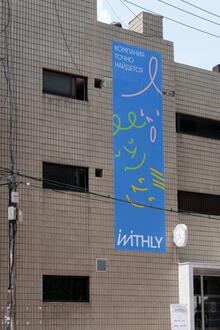
The color palette of the brand is pretty intentional. Colors are soft and pastel (warm yellow, dusty pink, sage-green, calm blue) are not aggressive like some tech brands. The user perceives them as friendly and approachable, which is exactly what Withly is about. Young people today are tired of overly corporate vibes, so these colors create that chill, welcoming atmosphere. They match the slogan of the brand and hints at calm and no pressure, which is crucial when you’re trying to reduce the awkwardness of meeting new people. The colors are social media-friendly too, which especially matters for our audience.

Исходный размер 3500x2480

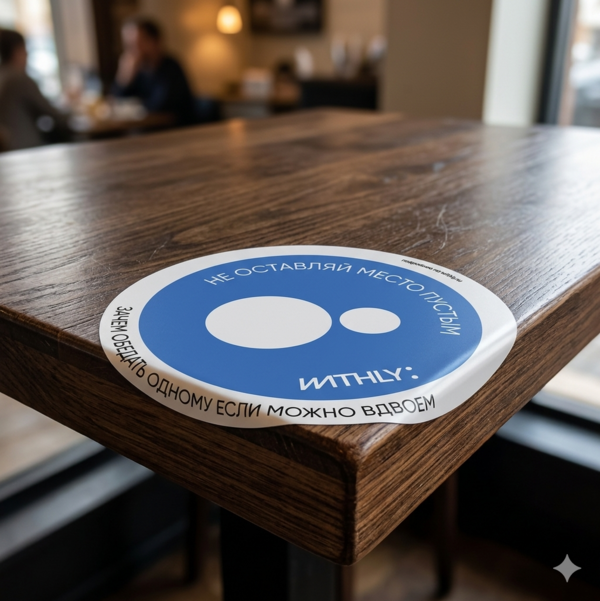
The thing is that young people love stickers. They slap them on laptops, phones, water bottles, anywhere. It’s a form of self-expression. It’s also a smart promotional move. When someone sees a WITHLY sticker on their friend’s laptop or phone, they can ask: «What’s that? Where’d you get it?». It’s organic communication that actually works because it comes from someone they trust, not an advertisement.

Brand and pop culture references

Исходный размер 1431x474

Communication theory framework of the project

Politeness theory

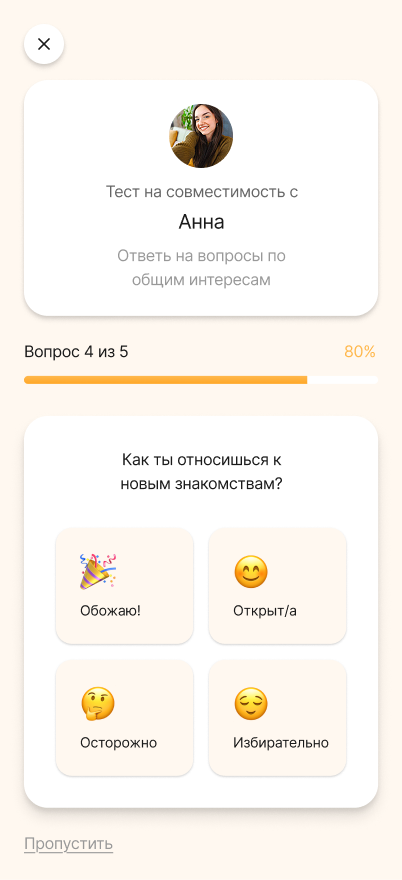
WITHLY intuitively applies many principles of politeness theory, but it could reinforce them more systematically. Viewing the brand through the lens of PT shows that it effectively addresses the high social vulnerability of its audience by making protection of the user’s «face» a priority. The app successfully uses negative politeness strategies (respecting autonomy, avoiding pressure, offering optional actions) and positive politeness strategies (supporting a sense of belonging). To maximize this effect, design and copy should systematically minimize face‑threatening acts: soften scenarios of rejection or non-response, and focus the rating system on assessing the comfort of the event rather than the person. This turns WITHLY into not just a utilitarian service, but a 100% safe and empathetic space for real-life meetings.

Social exchange theory

Key rewards include the emotional comfort of overcoming isolation without romantic pressure, the practical time savings from avoiding endless coordination with friends, and the building of social fund in the form of new weak ties within the city community.

At the same time, design deliberately minimizes the inevitable costs: emotional risks of rejection, cognitive load, and safety threats. By shifting profile focus from appearance to the event, offering ready-made activity templates, and providing verification through partner venues, Withly radically lowers the «price» of social interaction.

Craig’s traditions

Semiotic: WITHLY consciously breaks the established semiotic code of dating apps (hearts, swipes, emphasis on appearance), replacing it with the aesthetics of shared events (tickets, map pins, warm urban tones), and re-signifies the key sign of the «empty seat» — from a symbol of loneliness and isolation into a symbol of an open possibility to meet.

Cybernetic: To eliminate semantic noise (dating associations) and close the cybernetic loop (frustration from lack of responses), app’s design uses transparent onboarding and empathetic system messages that set the right expectations immediately and complete the feedback cycle.

Rhetorical: WITHLY doesn’t just provide a tool, it attempts to change the cultural code: to normalize the practice of «going out with a stranger.» In post-soviet mentality, this is often perceived as «strange» or «dangerous».

Socio-psychological: Given the audience’s social anxiety, app’s design avoids aggressive UI patterns, replacing them with gentle icons and ready-made event templates, which reduces cognitive load and removes the psychological barrier to organizing a meetup.

Библиография
1.

Мордвинова М., Соловьёва О. Communication Theory: Bridging Academia and Practice: онлайн-курс. — Электрон. дан. — URL: https://elearning.hse.ru/moocs/communication-theory-academia-practice/ — (дата обращения: 11.06.2026)

2.

2.Чебан Д. HSE Portfolio. Проект № 293549: электрон. дан. — 2026. — URL: https://portfolio.hse.ru/Project/293549# (дата обращения: 11.06.2026)

Источники изображений
Показать полностью
1.

Чебан Д. HSE Portfolio. Проект № 293549: электрон. дан. — 2026. — URL: https://portfolio.hse.ru/Project/293549# (дата обращения: 11.06.2026)

2.3.4.

Мокапы сгенирированы с помощью нейросети Gemini https://gemini.google.com/app/fc17033def1f0c55 (дата обращения: 11.06.2026)

Мы используем файлы cookies для улучшения работы сайта и большего удобства его использования. Более подробную информац...
Показать больше