Research Concept
Location
Navigation
- Introduction: The Appearance and Creation of the Series
- The Wild West and Spaghetti Westerns in Anime
- Noir and Detective Fiction
- Sound Design and Jazz in Outer Space
- The Wild West in Space
- Cyberpunk or Retrofuturism?
- Conclusion
I. The History of the Cowboy’s Emergence
Shinichiro Watanabe — the originator of the «Cowboy Bebop» concept, the series’ art director, and director. For Shinichiro, this was not his first foray into anime series production; prior to «Bebop,» he had worked on the iconic «Dirty Pair» and directed several episodes of Gundam.
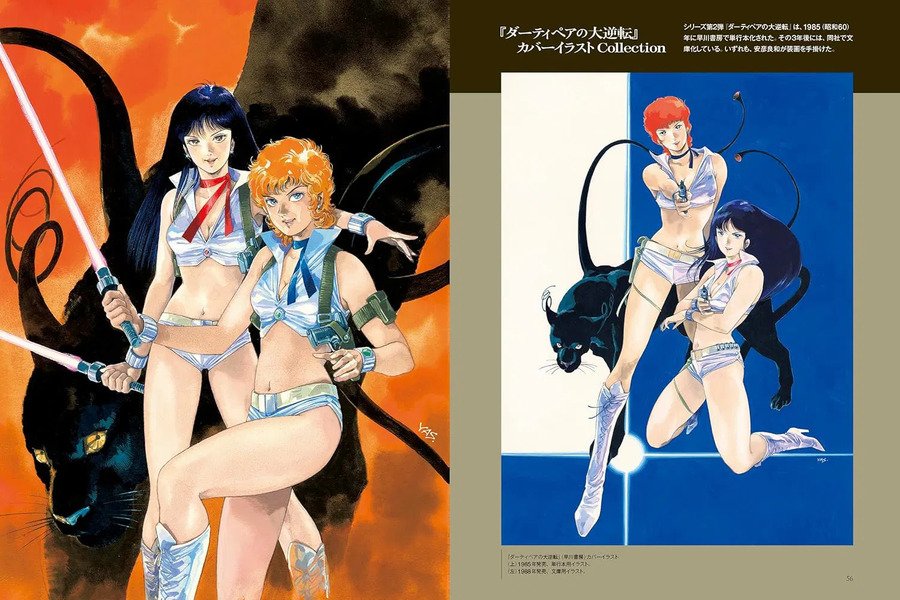
Posters from the official «Dirty Pair Artworks» artbook
Shinichiro Watanabe didn’t particularly enjoy working on other people’s franchises because of the constant creative constraints, and he was more inclined to move into directing his own independent project.
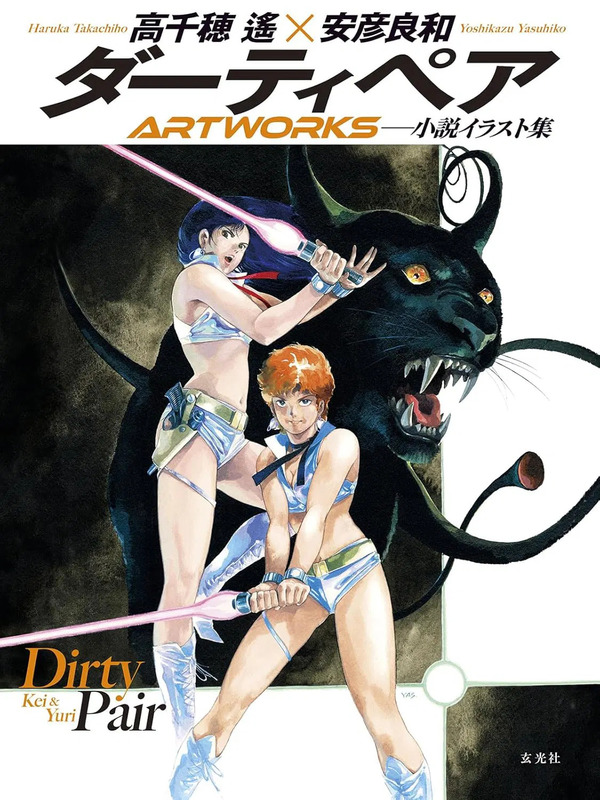
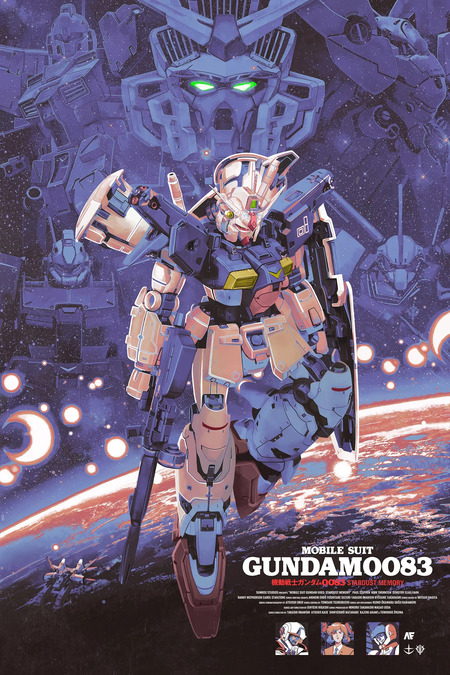
on the left: a poster from the «Dirty Pair artworks» collection on the right: an alternative 2024 poster for Gundam 0083 for Wondercon
From Watanabe’s high school, he watched American Westerns, with a particular fondness for director Sam Peckinpah, who made films like «Major Dundee, ” „The Westerner, ” and others. Among anime, he admired „Nausicaä of the Valley of the Wind“ and the second part of „The Incredible Aliens.“ These two seemingly disparate facets of Shinichiro Watanabe’s interests ultimately reflected in the visual aesthetic of „Cowboy Bebop, ” forging a unique synthesis of the Wild West and outer space.
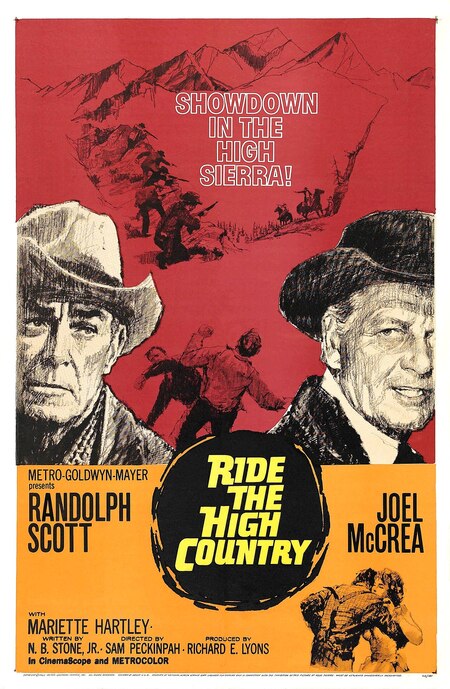
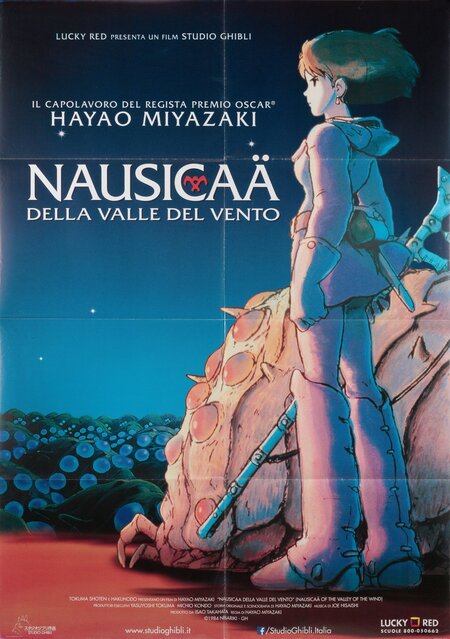
Left: a poster for Sam Peckinpah’s film «Ride the High Country» Right: Hayao Miyazaki’s «Nausicaä of the Valley of the Wind»
Due to the immense popularity of the «Star Wars» franchise, Watanabe felt compelled to incorporate space and sci-fi elements into his design to boost recognition and sword sales.
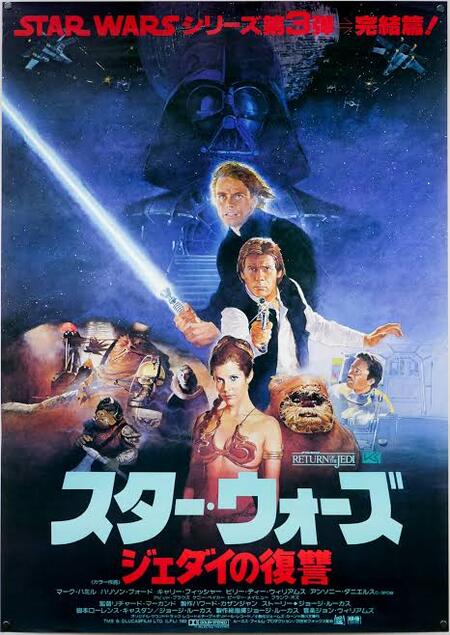
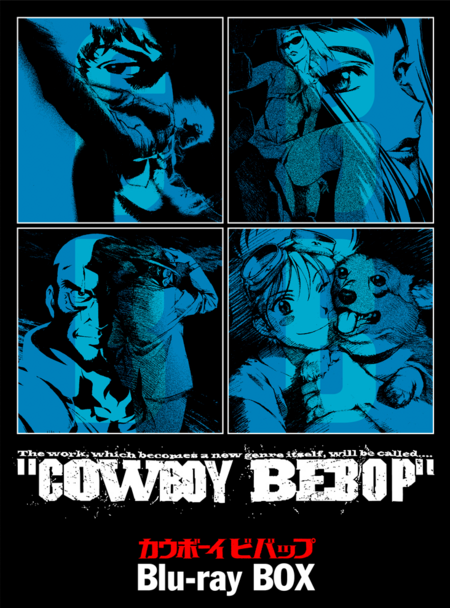
Left: A 1983 vintage «Star Wars» poster in Japanese. Right: A «Cowboy Bebop» poster for Blu-Ray.
To align with the cyberpunk and science fiction trend, Watanabe had to modify the «Cowboy» setting by adding diverse planets, each with its own culture, similar to Star Wars, and technological megacities featuring neon signage and robotic implants, reminiscent of Akira. This merged the strongest elements of two prominent Japanese media properties while retaining the «bounty hunter» concept—the cowboys—but relocating them to outer space.
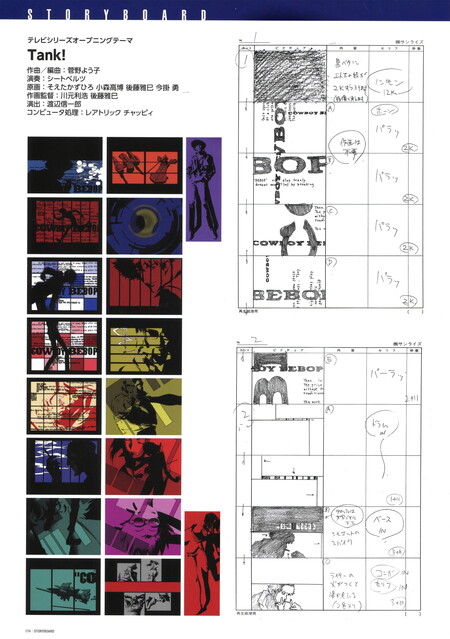
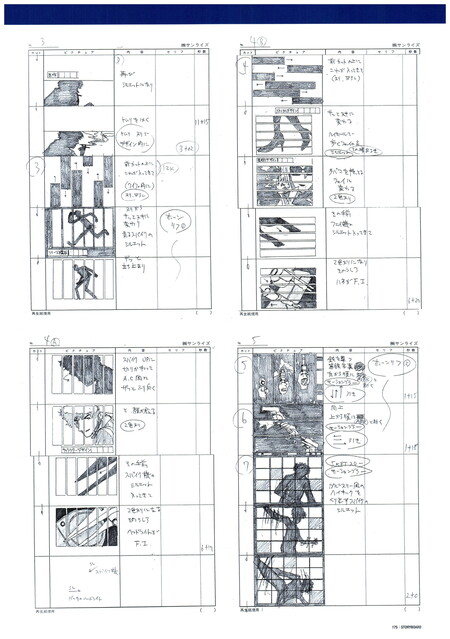
Storyboards from the opening sequence of «Tank!» from the official art book «The Book of Cowboy Bebop»
During the design development of the main characters—particularly Spike and Fay—the author also referenced the cult Japanese franchise Lupin, drawing inspiration from the characters' plasticity and the vibrancy of their imagery.
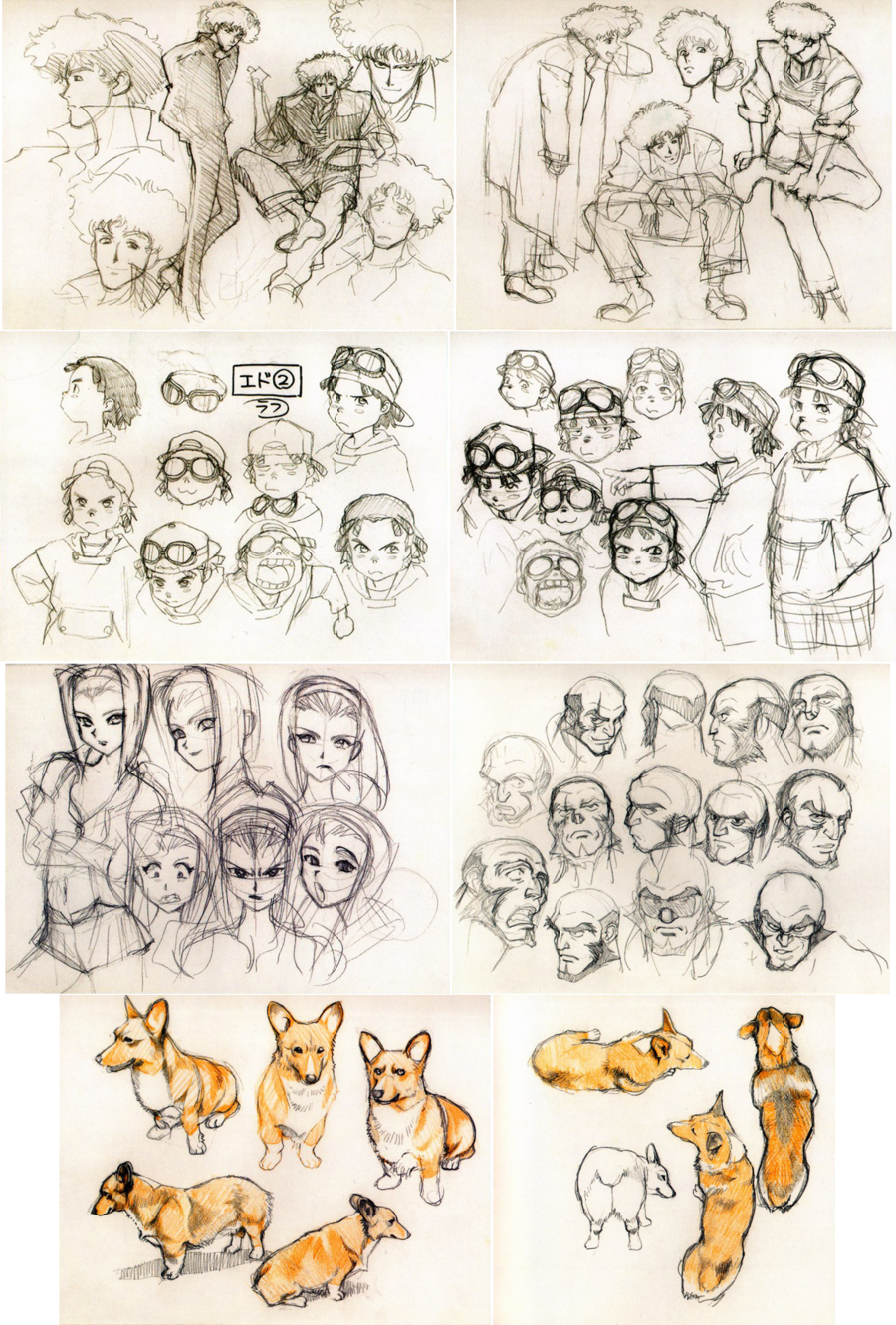
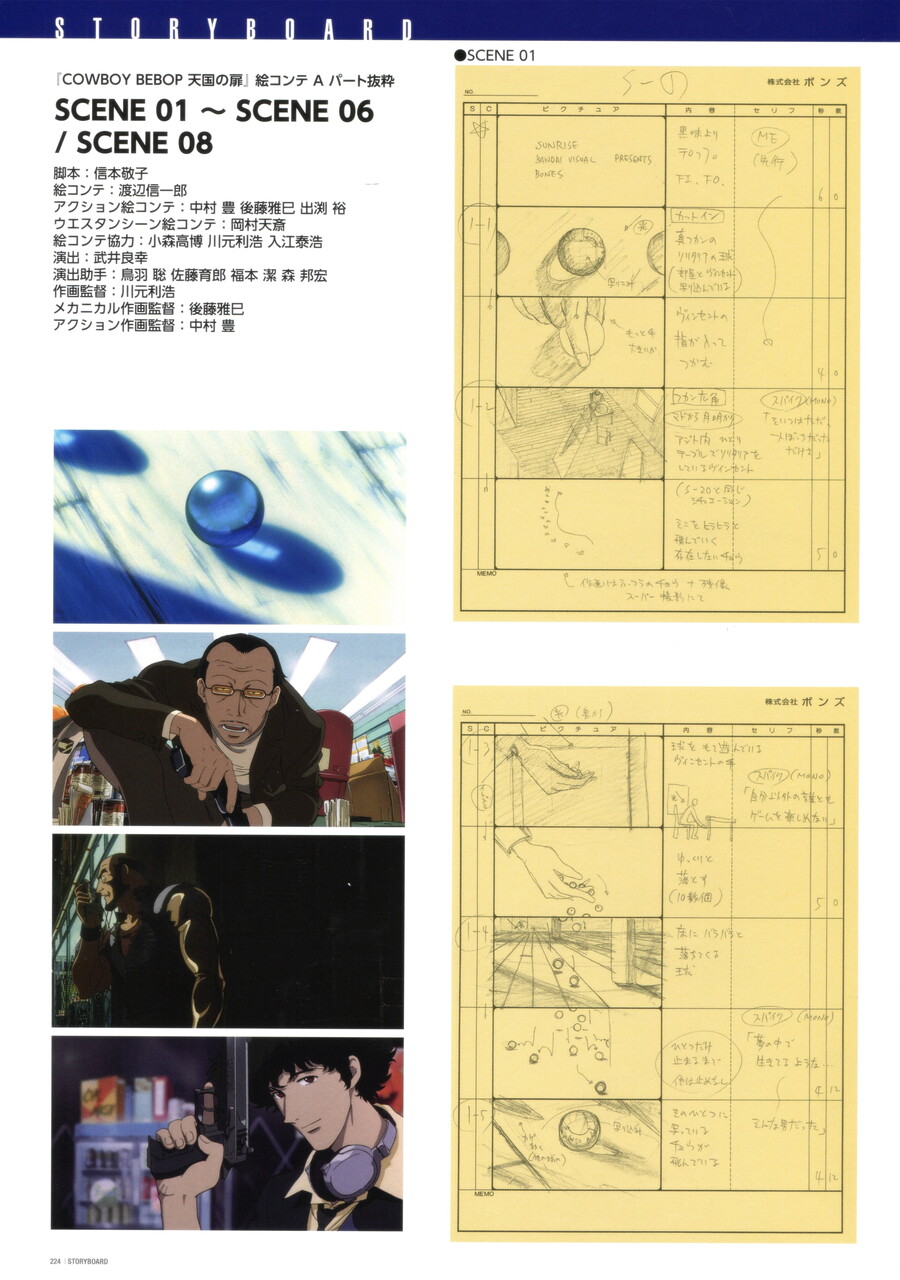
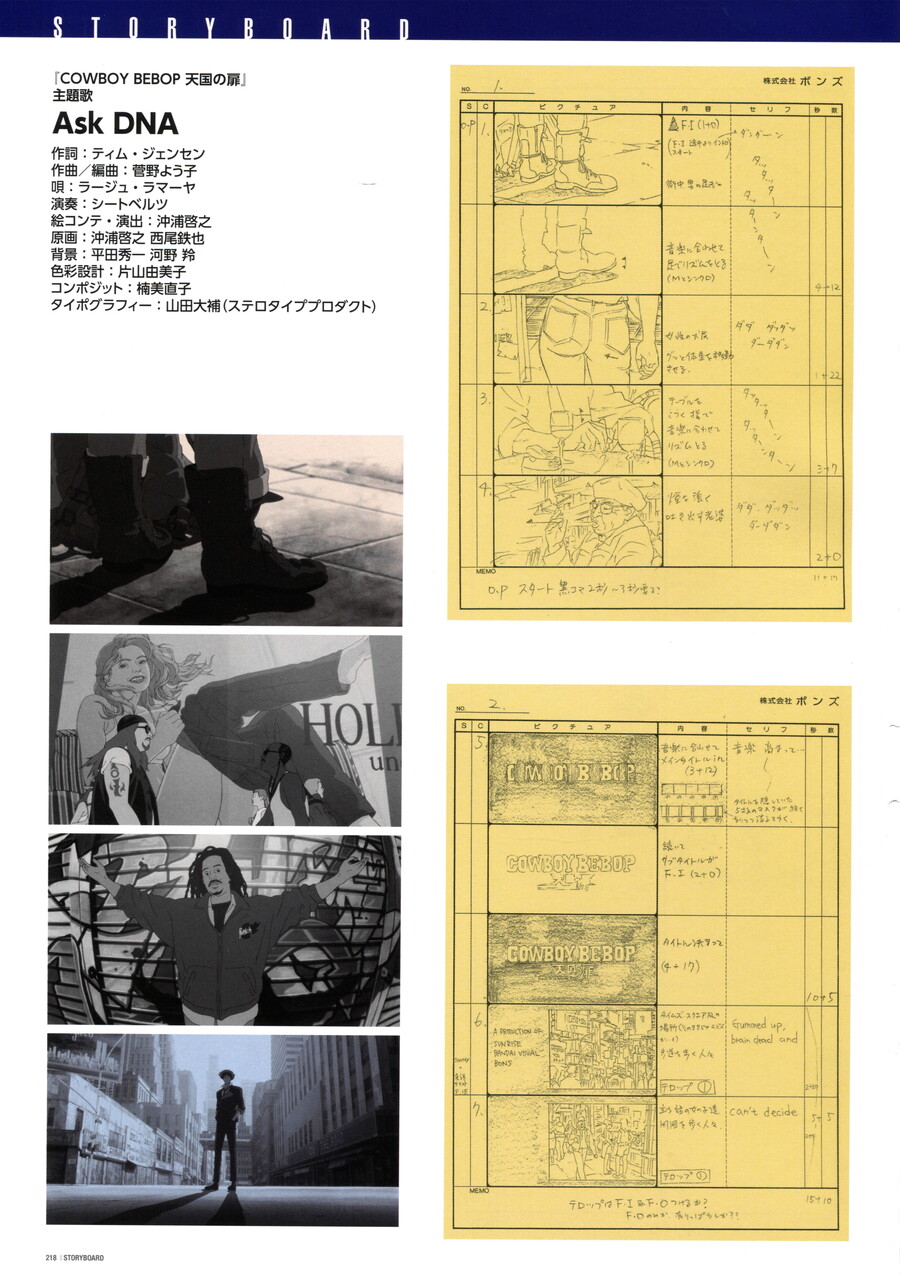
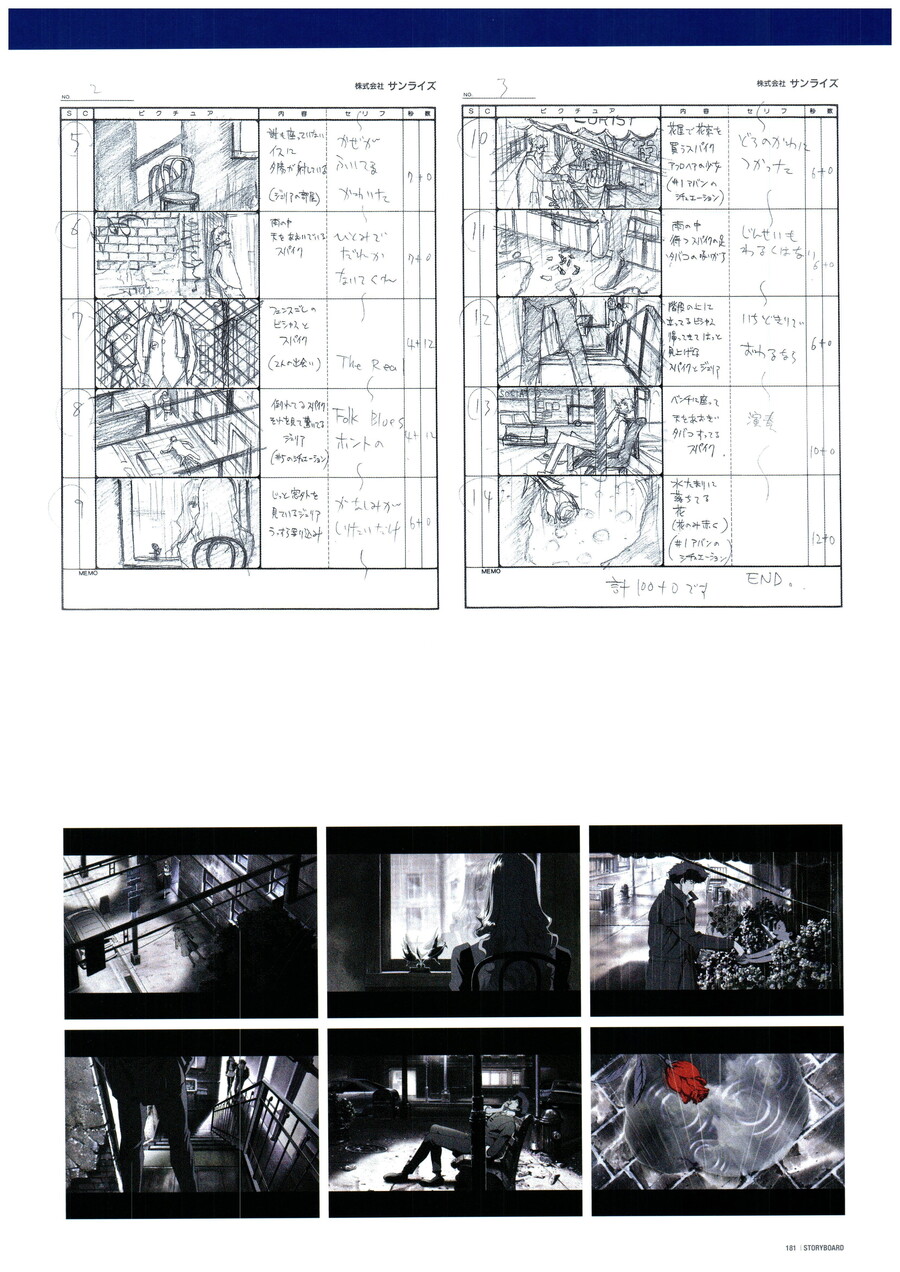
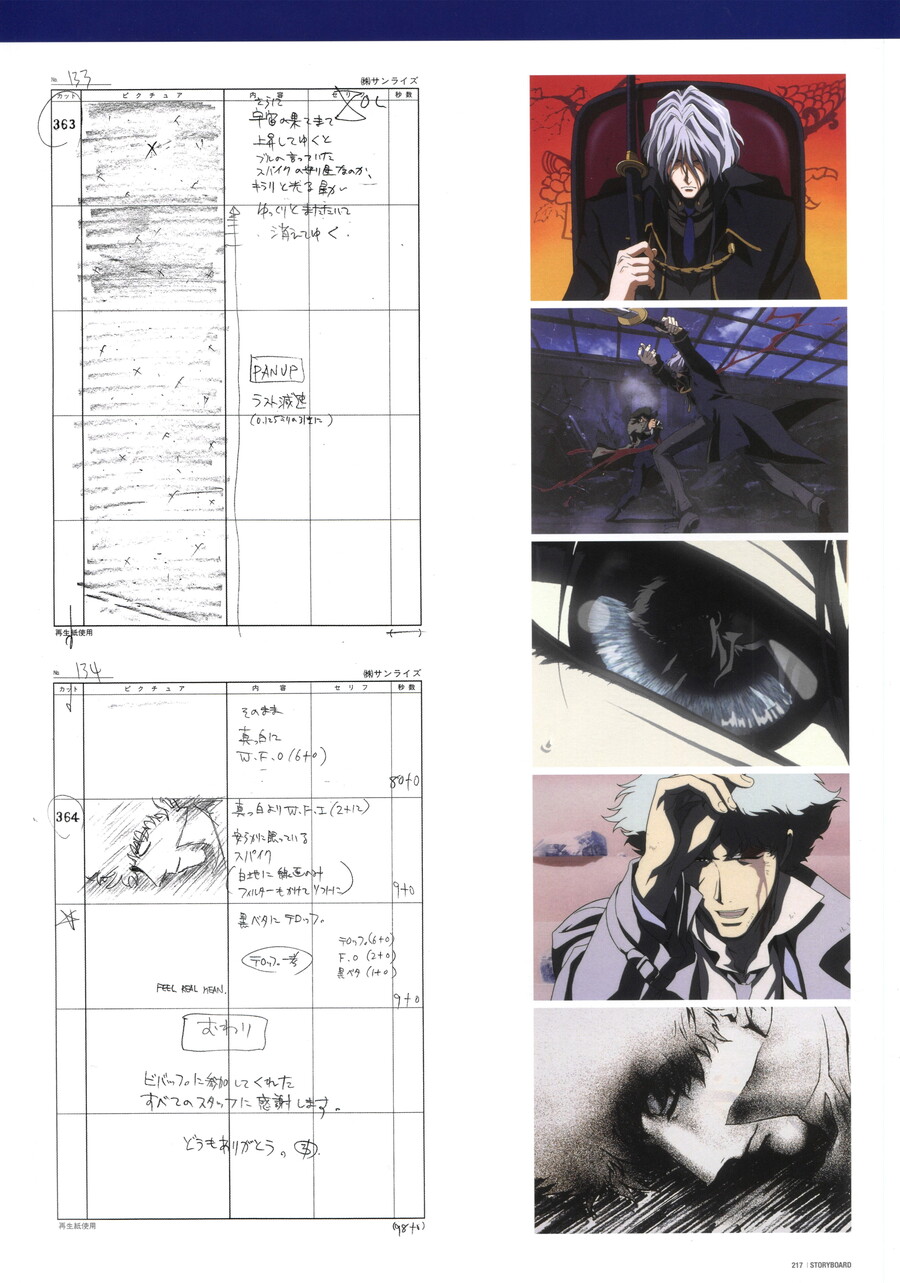
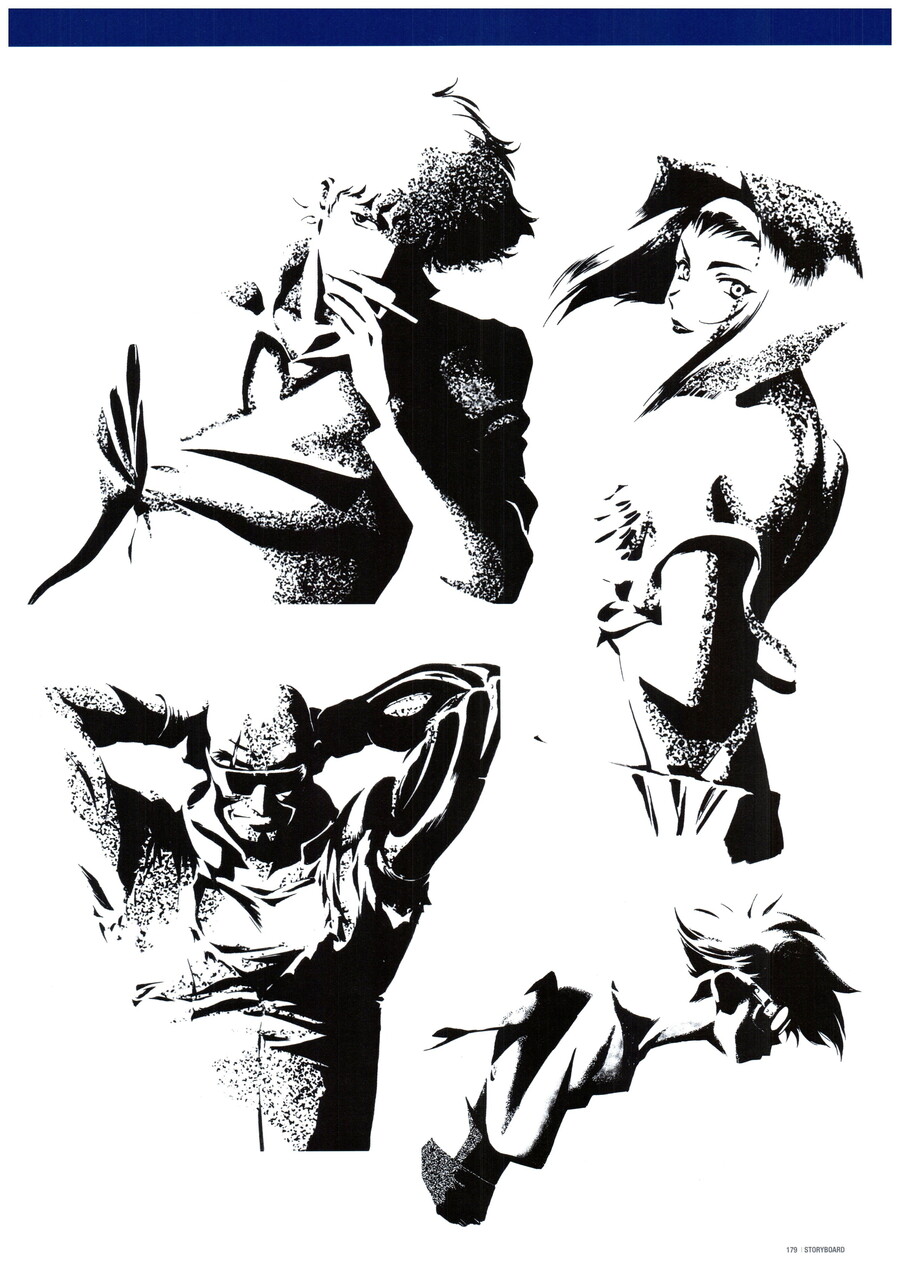
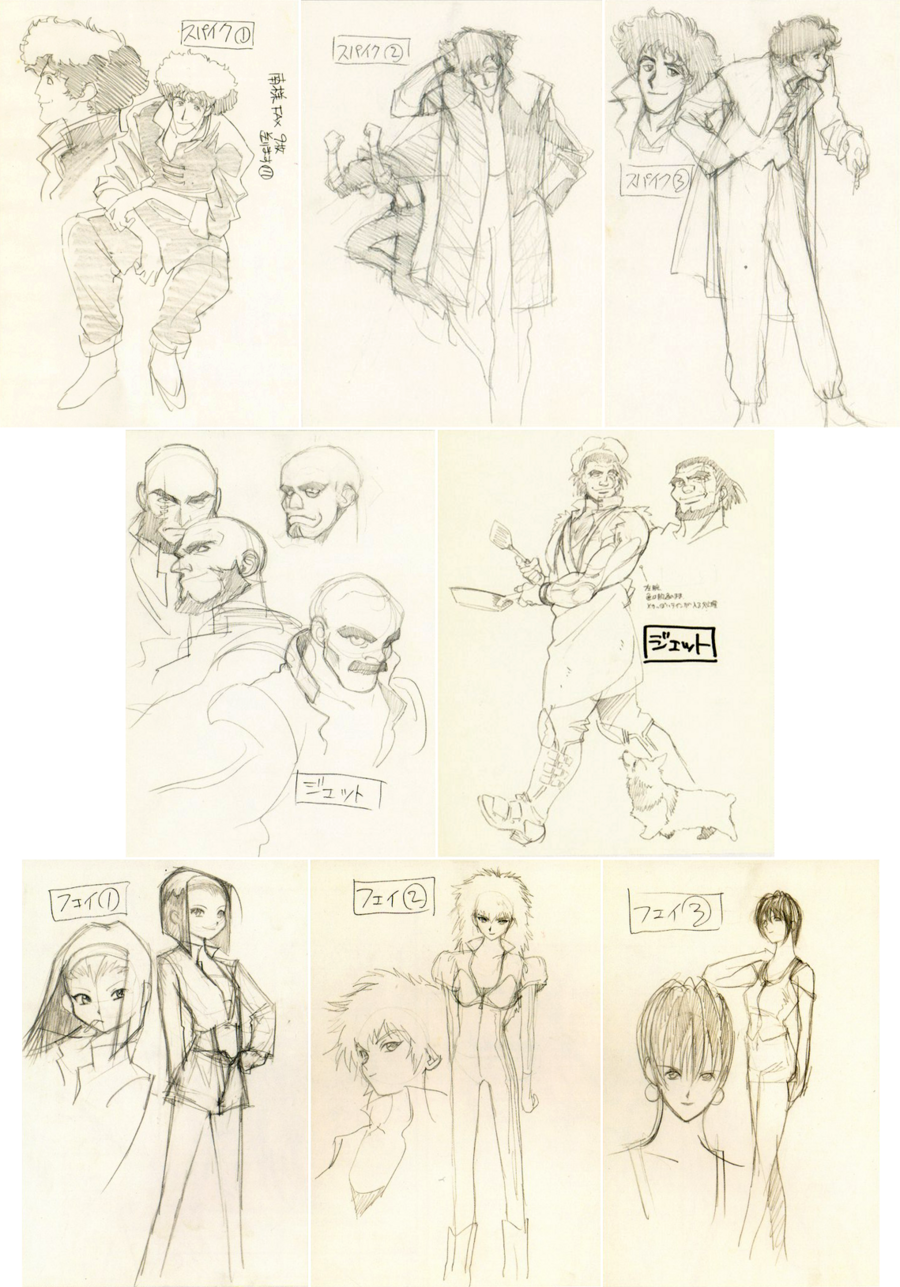
1–5: storyboard elements from «Cowboy Bebop» 6–7: character sketches from the «Session 0» artbook
II. Western in Outer Space
Shinichiro Watanabe originally loved classic American cowboy films from the 50s and 60s, and he incorporated some of those imagery into the series despite Bandai’s demands for a new «Star Wars.»
«Lemonade Joe, ” Aldrich Lipsky, 1964
From the film «Cowboy Bebop: Knocking on Heaven’s Door,» 2001
Even though the design of the main characters and their surroundings is more futuristic and leans toward Lupin III or Akira rather than Sam Peckinpah films, the love for the Western genre is conveyed through the environment, camera angles, and supporting characters, such as in the episode «Cowboy Funk.» The series frequently employs classic close-ups on rivals’ faces during firefights—a technique common in similar films—along with match cuts, pauses, and fast-paced, chaotic gun battles where the outcome of the duel is obscured by smoke and fog. These clichés in the series are used not only as visual references but also as comedic elements that satirize cowboy tropes.
«Ride the High Country,» Sam Peckinpah, 1962
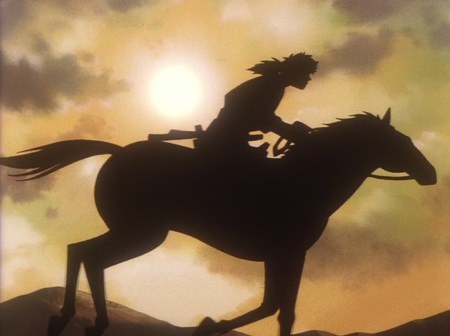
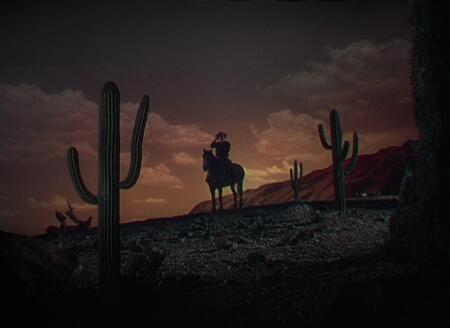
right: «3 Godfathers, ” John Ford, 1948
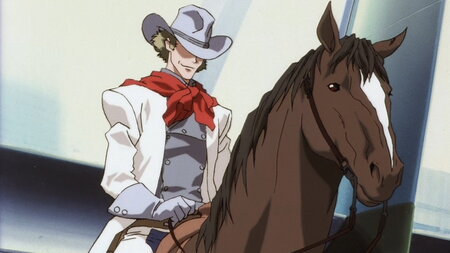
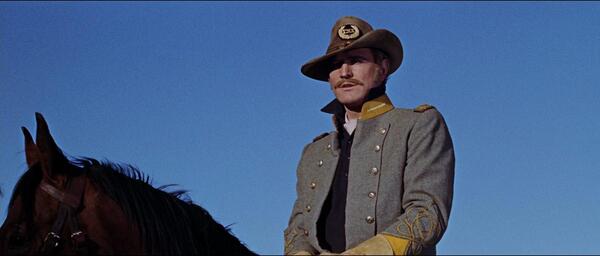
right: «Major Dandy,» Sam Peckinpah, 1965
One of the most striking features of Westerns—scenes of confrontation where characters stand opposite each other—is found in Bebop’s characteristic montage. This principle is adopted both as a comedic element to mock clichés and within a dramatic context, effectively inheriting the Westerns' montage technique. The comedic elements are recognizable through the exaggerated, caricatured «Westernization» of the characters: giant hats, specific staging, long-distance shots, and a hand reaching for a pistol. During serious moments, hyperbole is absent, but the use of close-ups remains.
From the film «Cowboy Bebop: Knocking on Heaven’s Door,» 2001
«The Good, the Bad and the Ugly,» Sergio Leone, 1966
One of the details that adds diversity to the world of «Cowboy Bebop» and sets it apart from its contemporaries is the outdated media technology, stylized after analog aesthetics found in Westerns: characters receive their orders from the TV program Big Shot, hosted by two archetypal American film hosts in cowboy costumes; crime blotters about bandits resemble typical Western wanted posters. Within the series world, despite technological advancement, newspapers and newspaper layouts still exist and are used as a medium.