Rubricator:— Concept — Postmodern Elements — Satire — Musical — Conclusion
Concept
By the early 1990s, the Soviet Union was already beginning to dissolve, and this process was irreversible—both the country and its ideology were fragmenting, a change that undeniably reflected in all aspects of people’s lives, including the animated films they created.
The cartoon «The Grey Wolf and Little Red Riding Hood» differs significantly from its predecessors and the moralistic works of the Soviet Union. It reinterprets one of the most typical fairy tales: Red Riding Hood bringing pies to her grandmother while encountering danger in the form of a grey wolf. However, this cartoon reflects Soviet reality in every aspect: the Perestroika era—Little Red Riding Hood delivers a Russian pie directly to Paris for her grandmother, Teres. On the same journey, she also meets the grey wolf, who has already eaten many familiar characters.
The fairy tale directly attempts to reflect contemporary reality and engages in a present dialogue with the viewer.
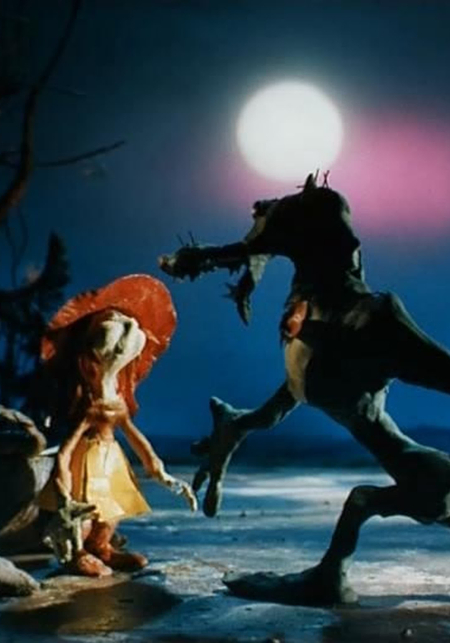
A frame from the cartoon «Little Red Riding Hood and the Grey Wolf»
Early work with fairy tales in Soyuzmultfilm was rather modest, and their plots sometimes attempted to mold themselves to Communist ideology or very explicitly highlight the «correct» morality. The fairy tales of that era felt quite unique and restrained, whereas contemporary animation doesn’t abstract from reality—it only complements it and moves on the same wavelength. All of this occurs because the work also clearly exhibits the main characteristics of postmodernism, such as irony and grotesque, citation, and intertextuality. This demonstrates how global artistic trends and movements began to appear and influence works of art within the USSR, which had been isolated until that time.
Before Soviet audiences, this project was presented—it didn’t dictate a specific truth, nor did it say what was wrong or what was right; it simply told a story from which each viewer could draw their own conclusions. Nonetheless, the author’s perspective is present, though largely conveyed through satire and the mockery of the characters' behavior, daily life, and surroundings.
Stills from the animated film «Little Red Riding Hood and the Gray Wolf»
Claymation is also used, and this choice was not arbitrary. Previously, it was featured in other animations such as «Last Year’s Snow» and «The Plastic Crow, ” because this technique was excellent for employing visual narrative and playing with fluid volume and form, thus achieving interesting solutions and strong satirical moments.
A frame from the cartoon «Little Red Riding Hood and the Big Bad Wolf»
Beyond this, the cartoon can also be interpreted as a musical. Therefore, songs and musical accompaniment play a significant role, complementing the characters' imagery and lending them distinct characteristics.In this visual study, I aim to dissect the cartoon, identify interesting solutions, trace ideological shifts, and understand what makes it both unusual and memorable. During the analysis, I have identified several core traits to focus on, as I believe these elements are what set the cartoon apart: satire, postmodern features, and musical execution.
Postmodernism
I want to emphasize how the animated film plays with context and quotations. It features various references to specific works, to pop culture, and, naturally, to the realities of the country.
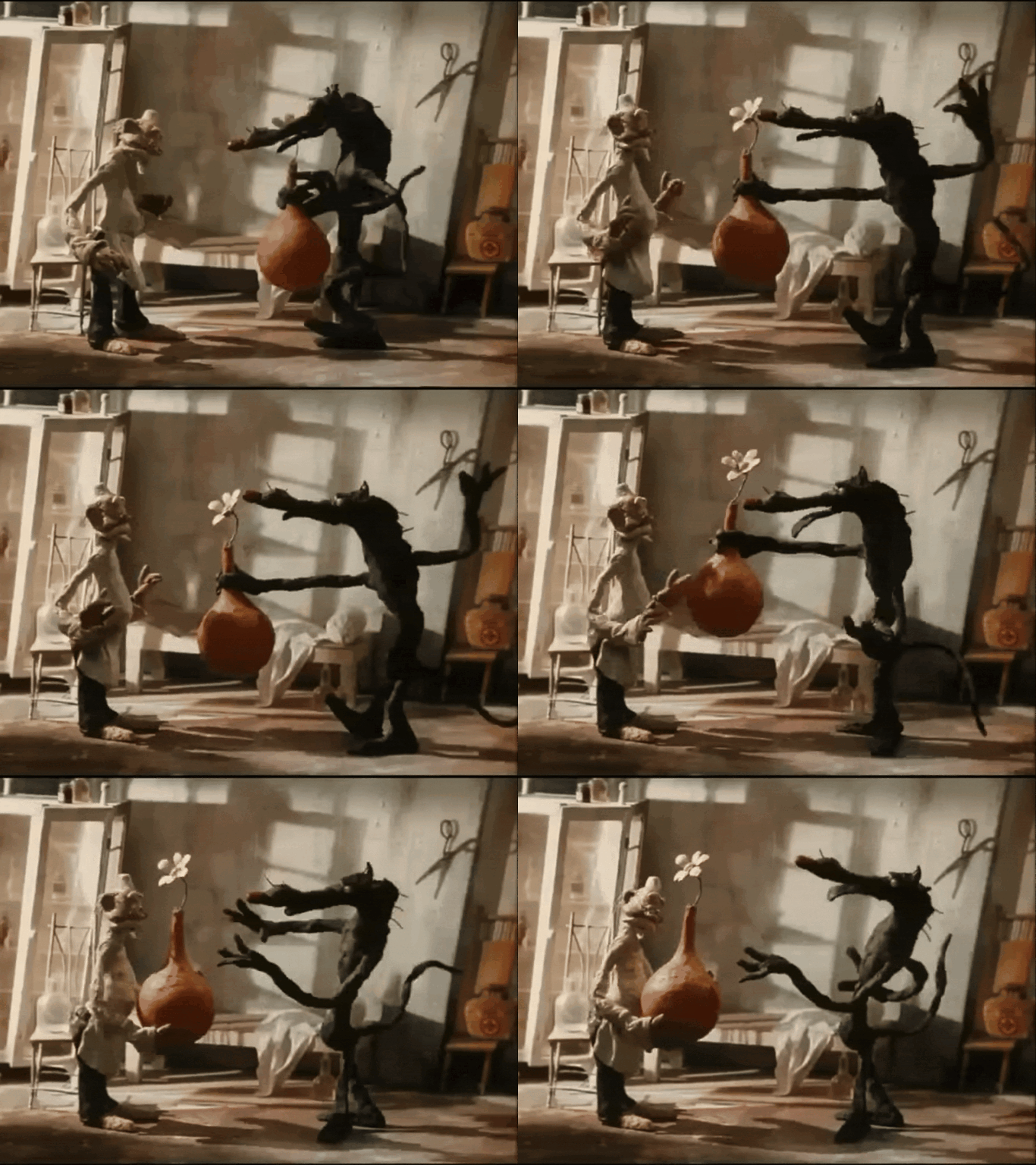
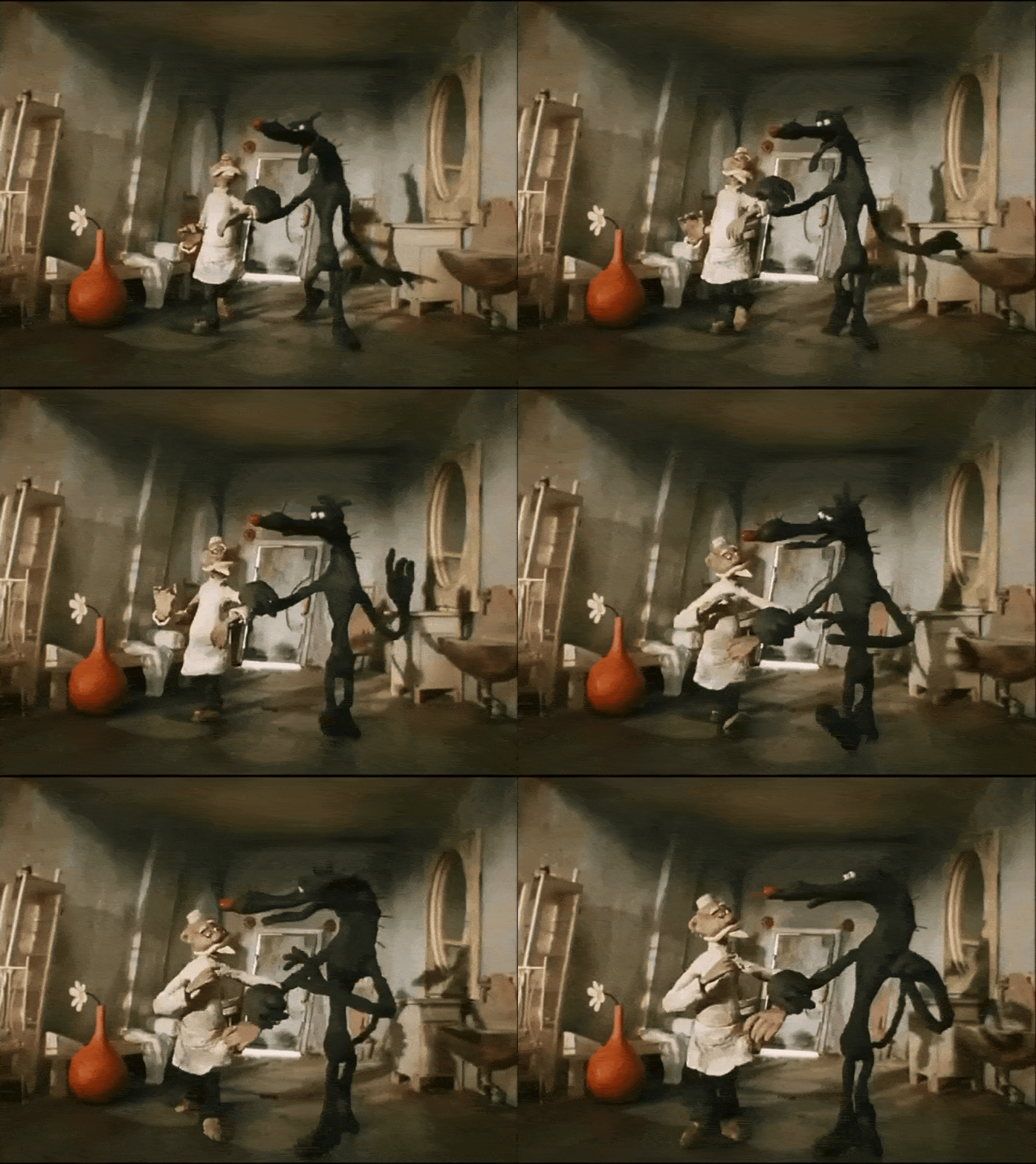
Stills from the cartoon «Little Red Riding Hood and the Big Bad Wolf»
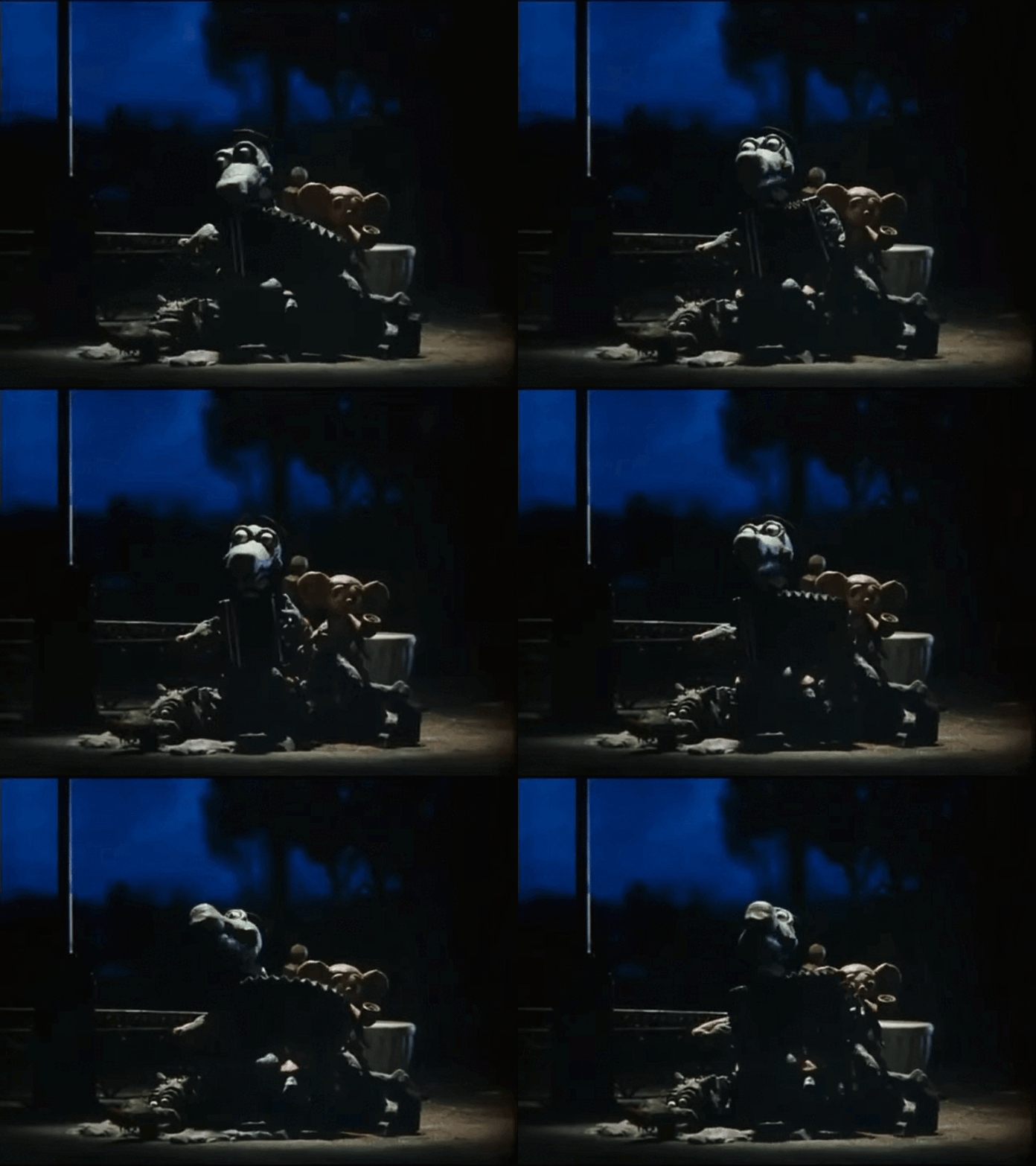
First and foremost, the Gray Wolf approaches AiBolit, a character from an entirely different fairy tale, and asks him for an iron jaw. The character will later cross paths with numerous other characters familiar to viewers from Soviet cartoons, as well as international ones: Gena the Crocodile and Cheburashka, the three little pigs, and even the seven dwarfs. The latter is no less surprising, as the footage with them is directly quoted from a Disney cartoon, which the viewer instantly recognizes despite the different animation technique.
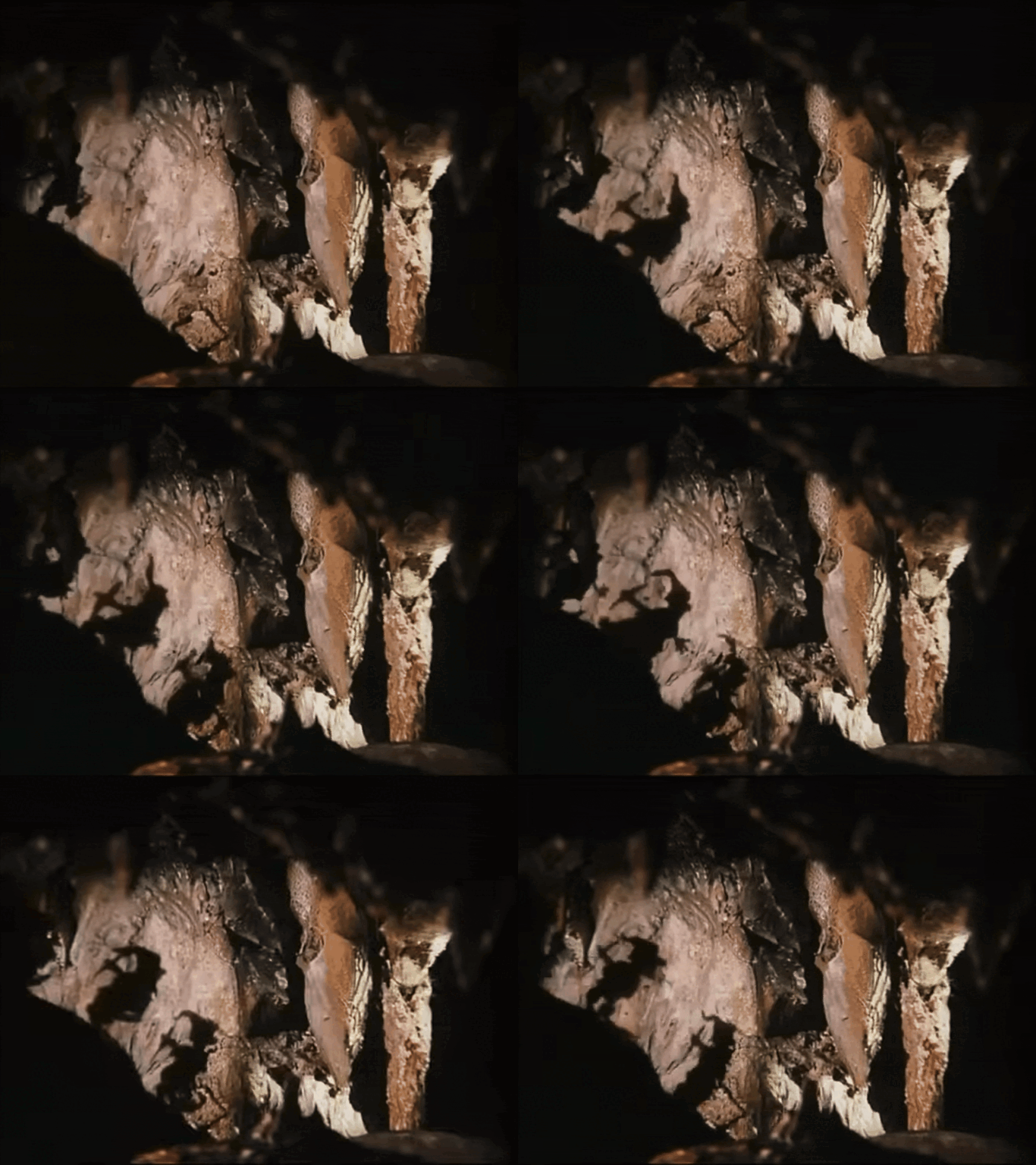
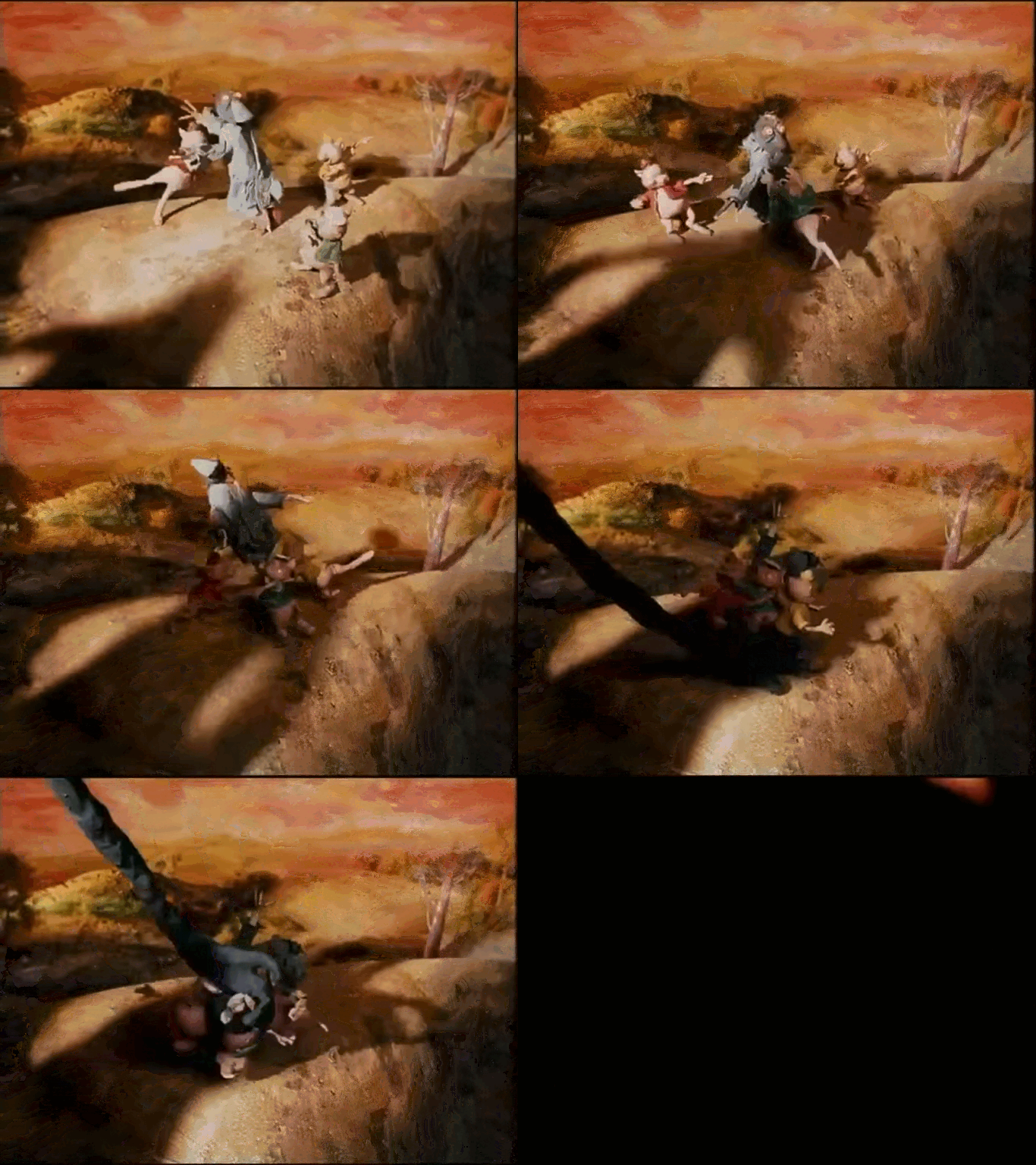
Stills from the cartoon «Little Red Riding Hood and the Big Bad Wolf»
Foreign characters appear only after the main character travels abroad, and the most typical archetypes are chosen to characterize them.
Furthermore, when Mama explains to Little Red Riding Hood where her path lies, she opens a map and sings: «For love and friendship, there are no borders”—this refers to the Soviet viewer’s reality: the lines point to the easing of travel restrictions abroad and the softening of the Iron Curtain. However, the piece also shows abroad from another perspective: their grandmother, a relative, lives there, and the work also alludes to their separation.
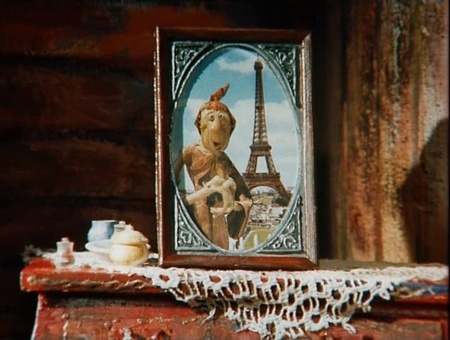
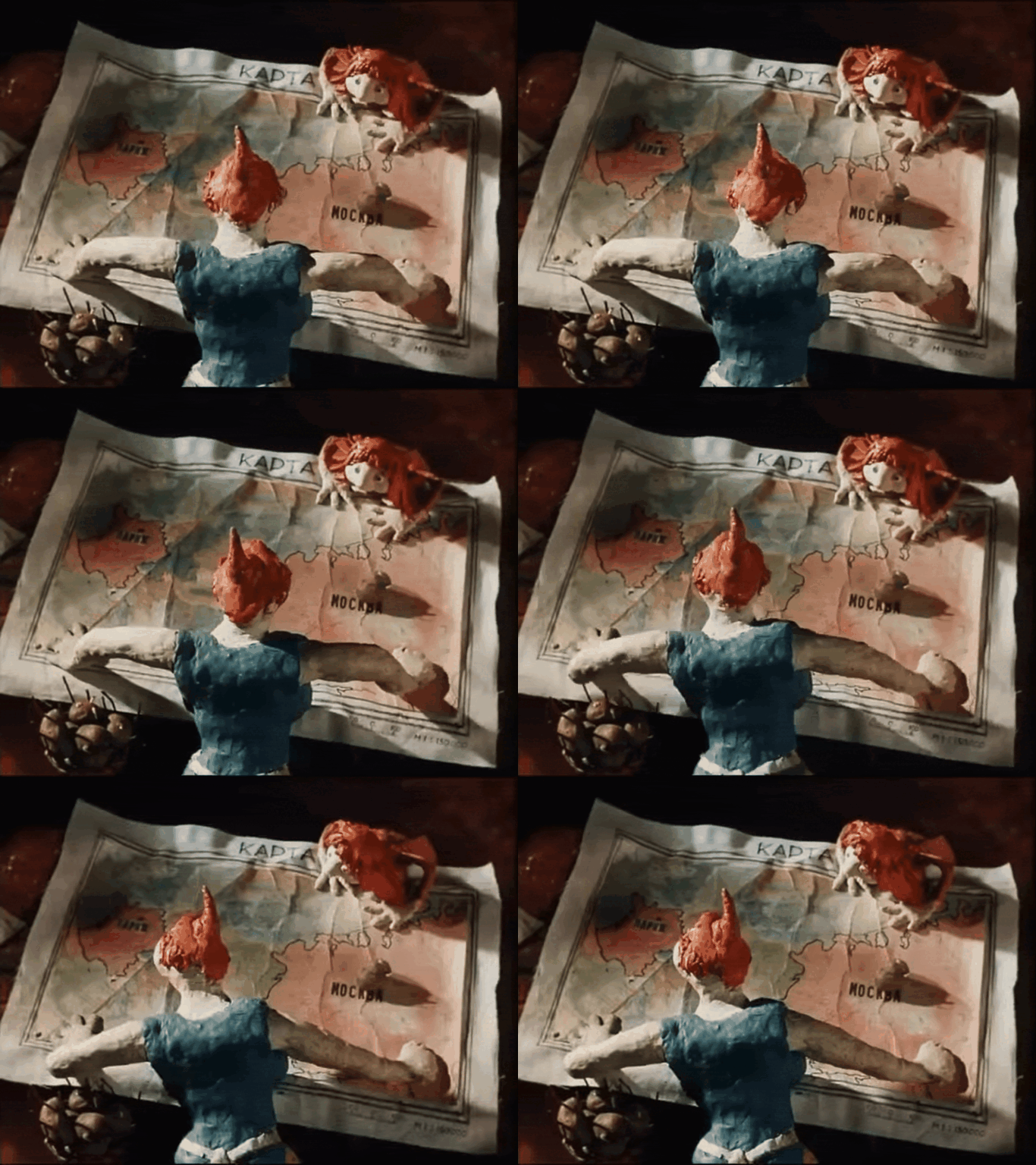
Stills from the cartoon «Little Red Riding Hood and the Grey Wolf»
Additionally, there is a reference to pop culture. When the wolf gets his metal teeth, he sings that he has always loved metal, and shows a rock symbol, which conveys two messages: he is pleased with his new prosthetic jaw, and he also loves the «metal» music genre.
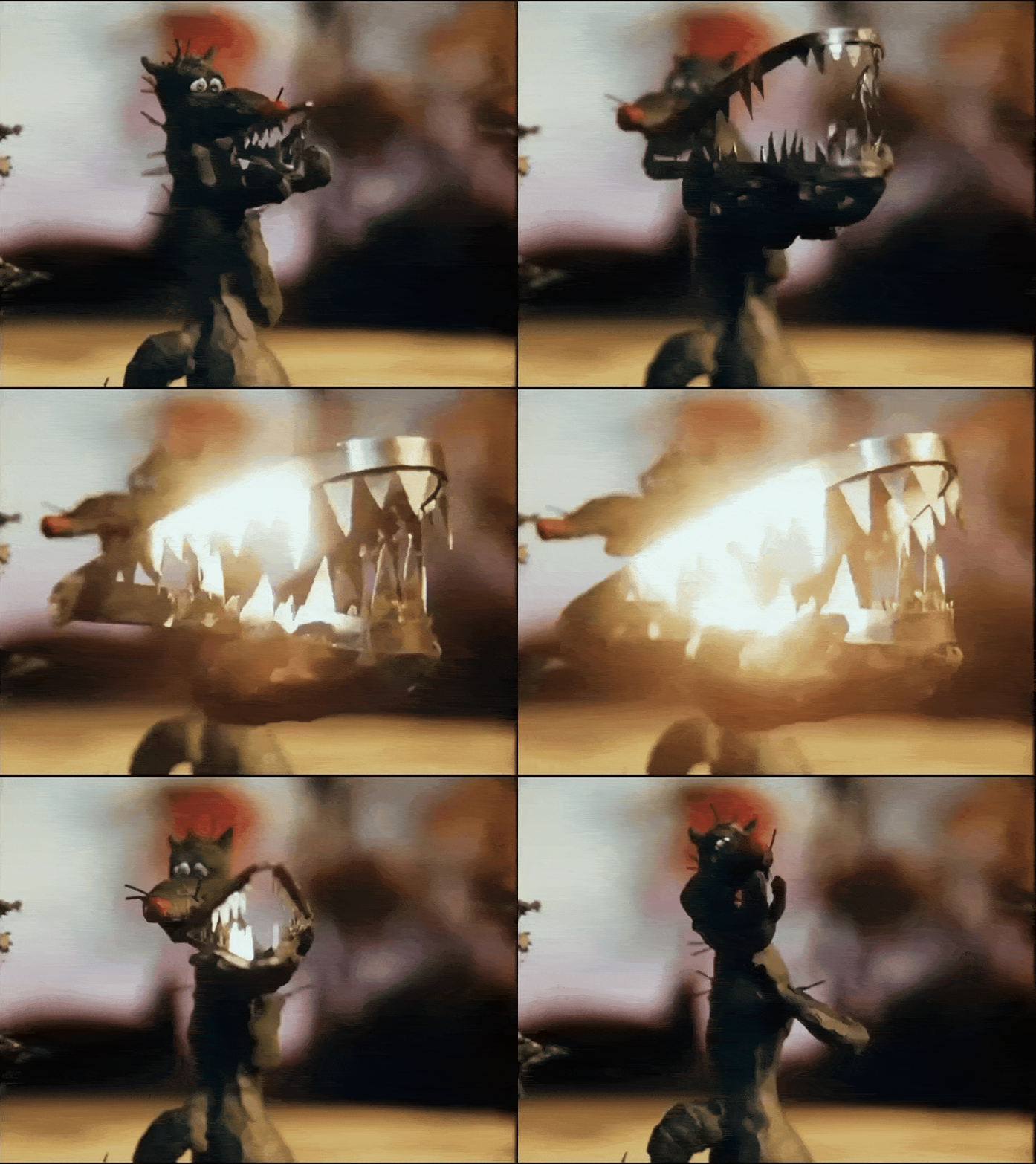
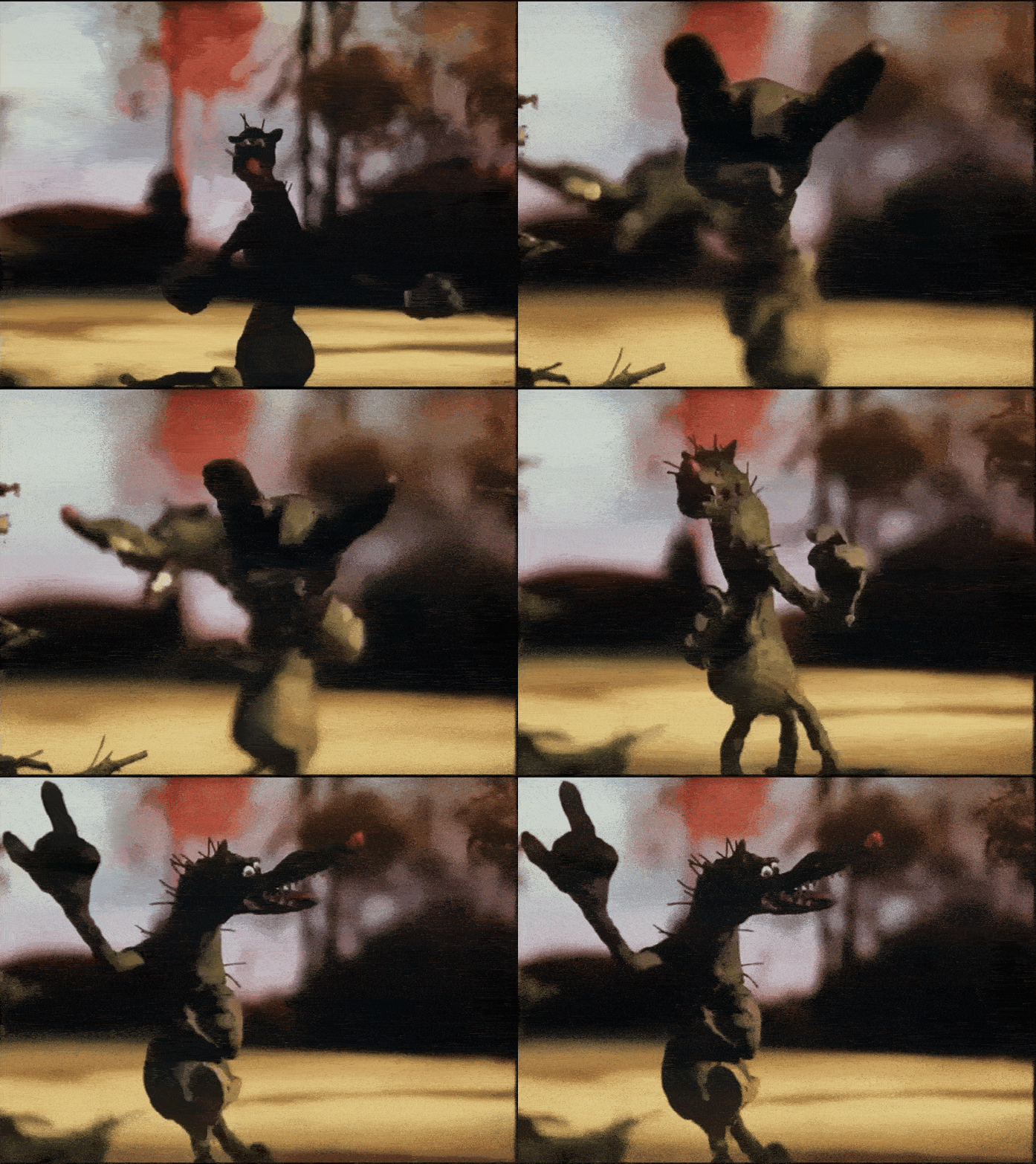
Stills from the cartoon «Little Red Riding Hood and the Big Bad Wolf»
In the end, when the Wolf loses his teeth, the characters emerge from his belly as if he were being dug out from the inside. Free, they march while holding banners inscribed with the symbol «World Peace.» In this way, the characters seem to have staged a «French Revolution, ” as the events take place near a grandmother’s house in France. The Grandmother herself leads the heroes’ march, and her name, Theresa, perfectly complements their message: she acted as the savior—and possibly the organizer—of this small revolution, since she was the wolf’s final victim, and everything started after her.
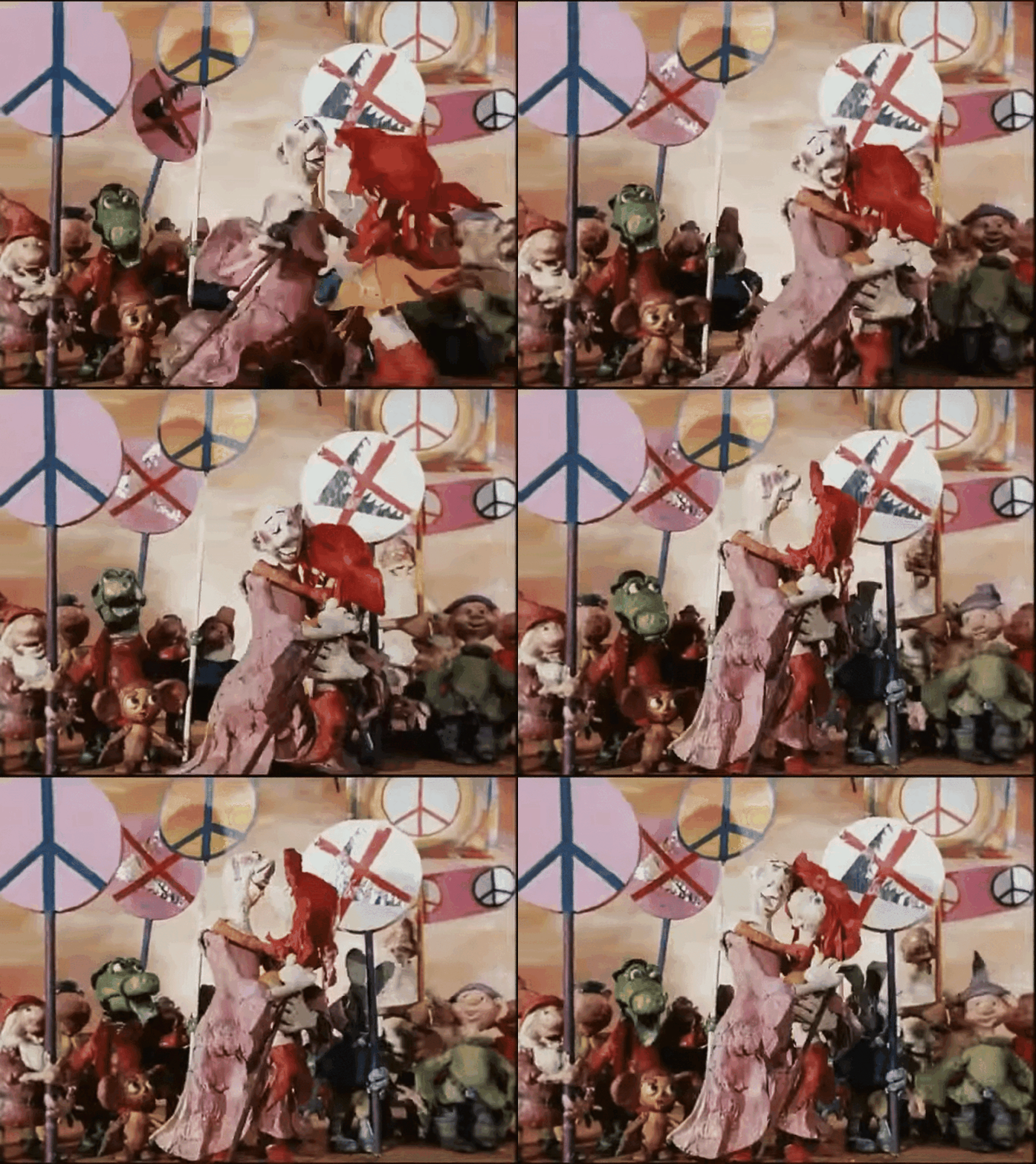
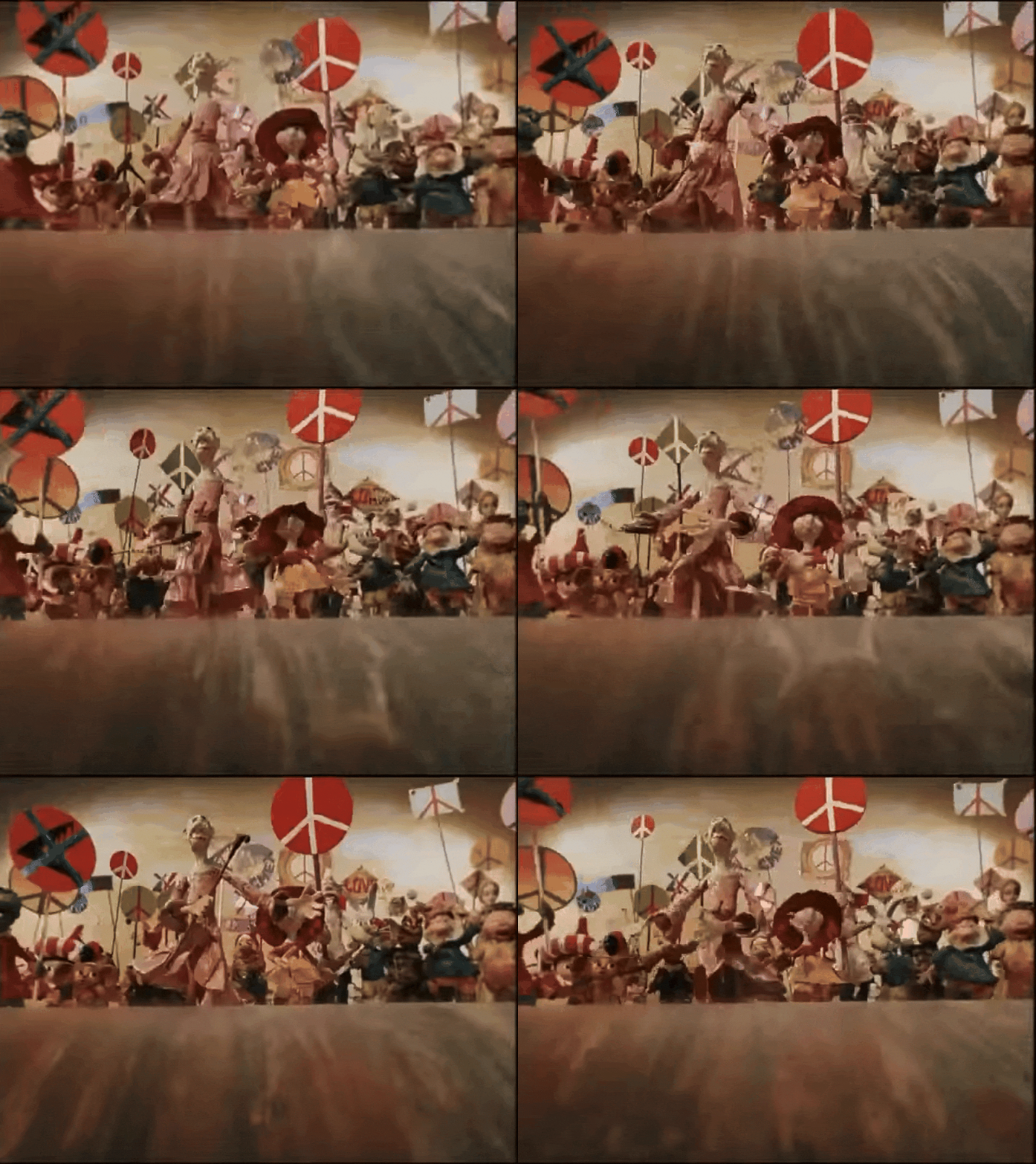
Stills from the cartoon «Little Red Riding Hood and the Grey Wolf»
In addition, the characters managed to stage a small rebellion when Aibolit tried to dance to lift the characters' spirits, but the Wolf suppressed it quite quickly: the doctor had not managed to resist the villain before—not the first time when he didn’t want to give him teeth, nor the second, now.
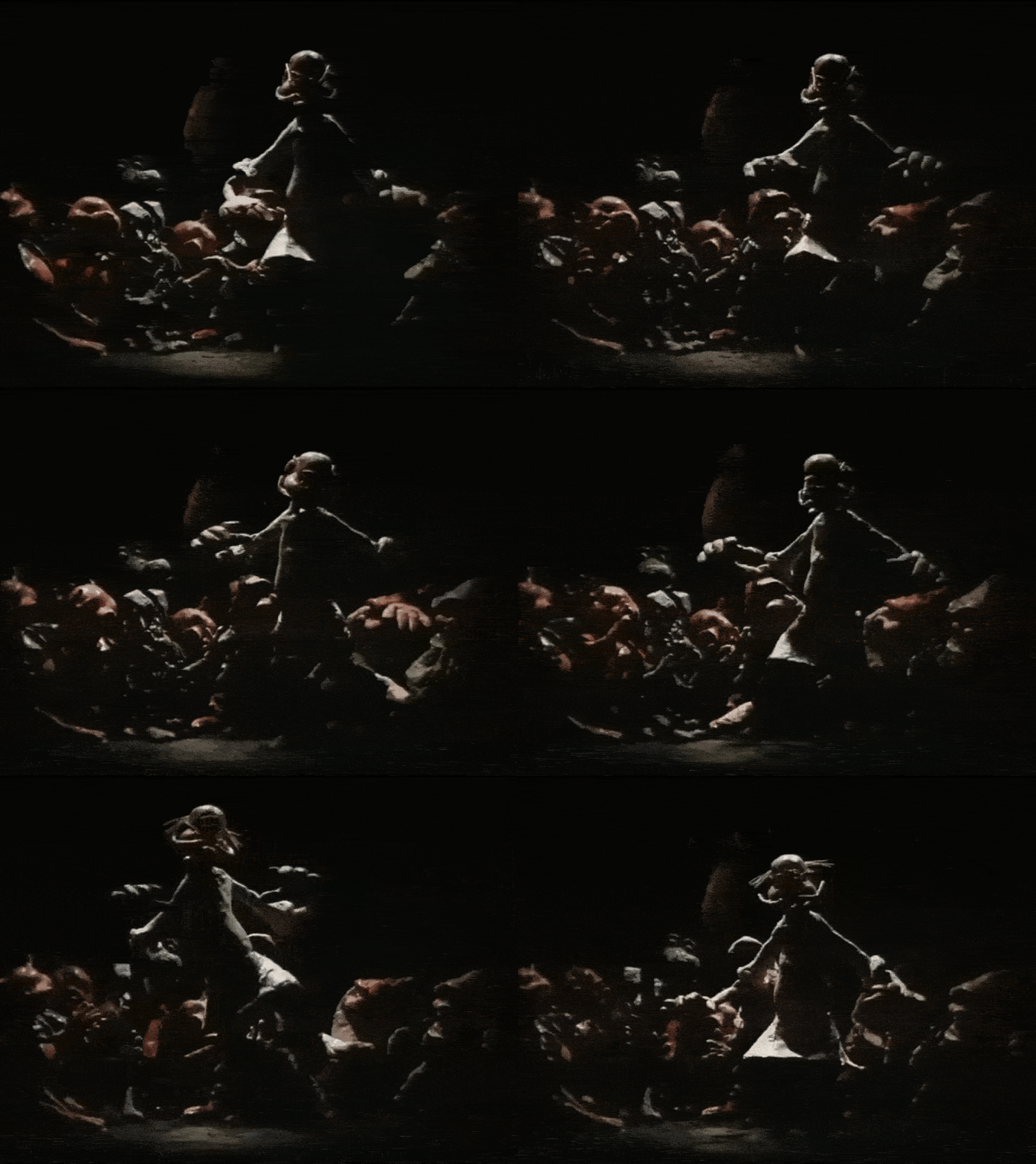
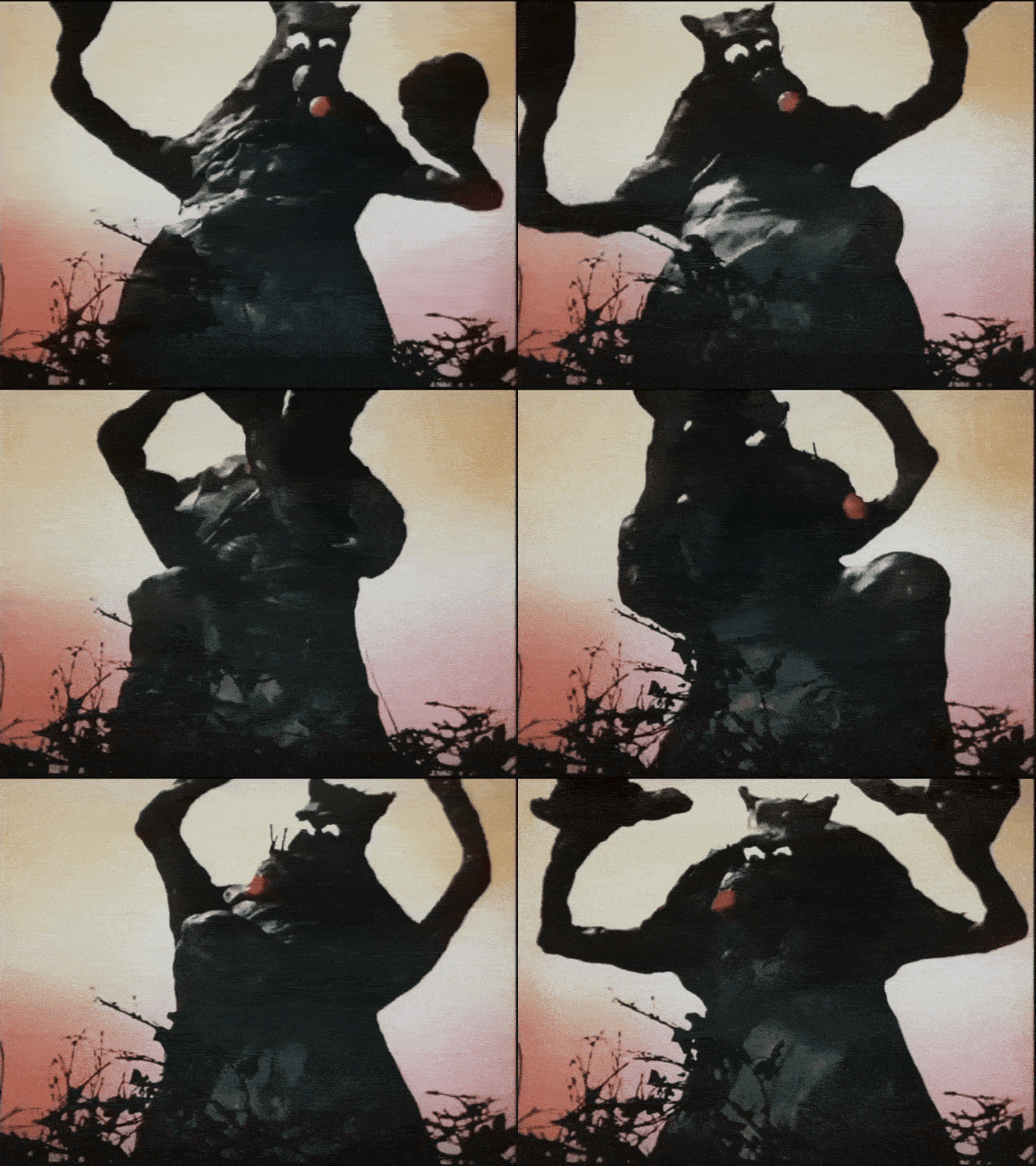
Stills from the cartoon «Little Red Riding Hood and the Grey Wolf»
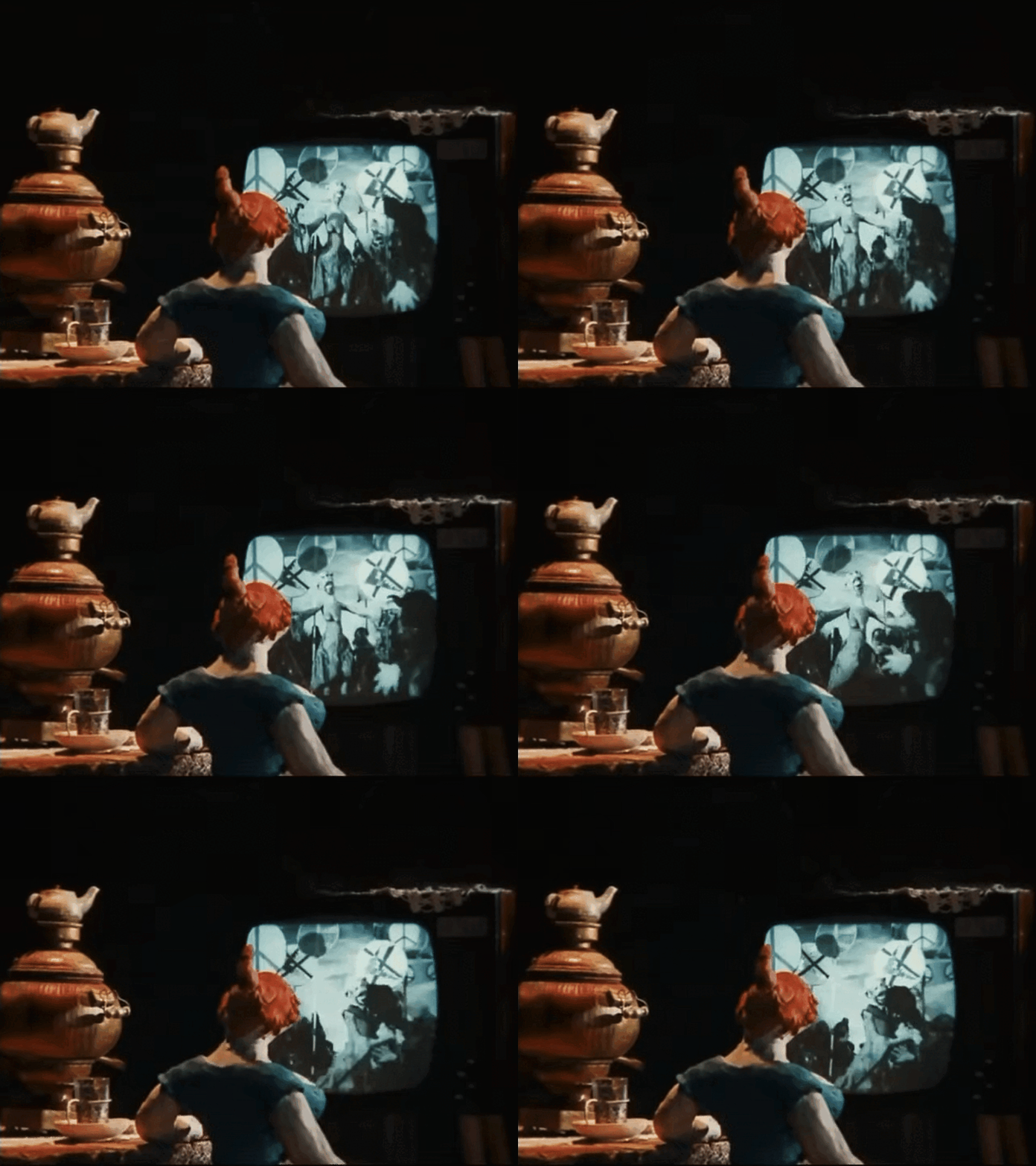
Additionally, the work lacks a clear finale, as the viewer suddenly witnesses a mother in black and white on a television screen amidst the march of survivors. Then, the equipment accidentally shuts off, and the heroine, like any Soviet citizen, strikes it to turn it back on, but nothing happens.
While the granddaughter and grandmother are talking, she sits alone in her old cottage and hums a song from the screen, leaving the audience with a slight sense of melancholy.
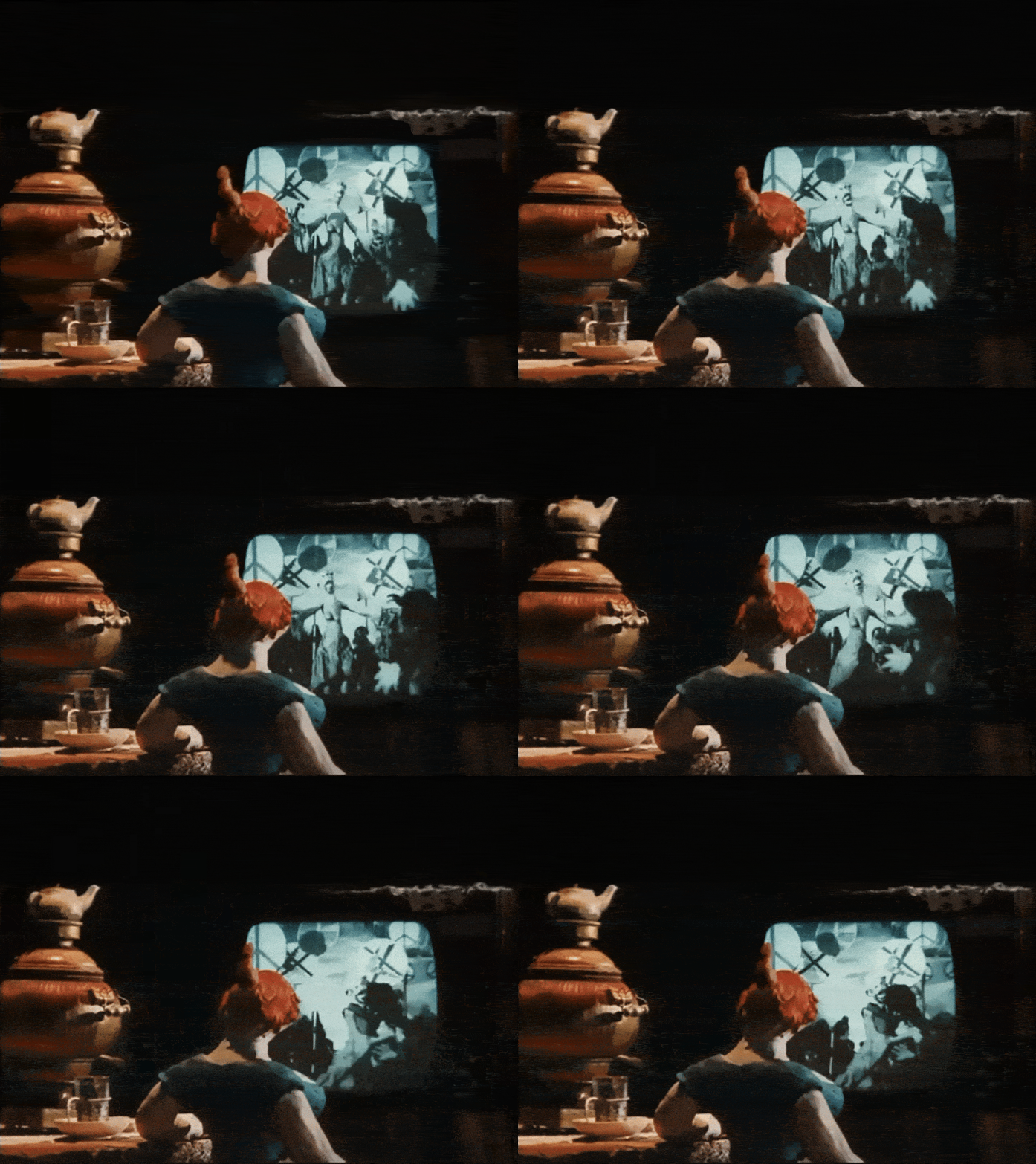
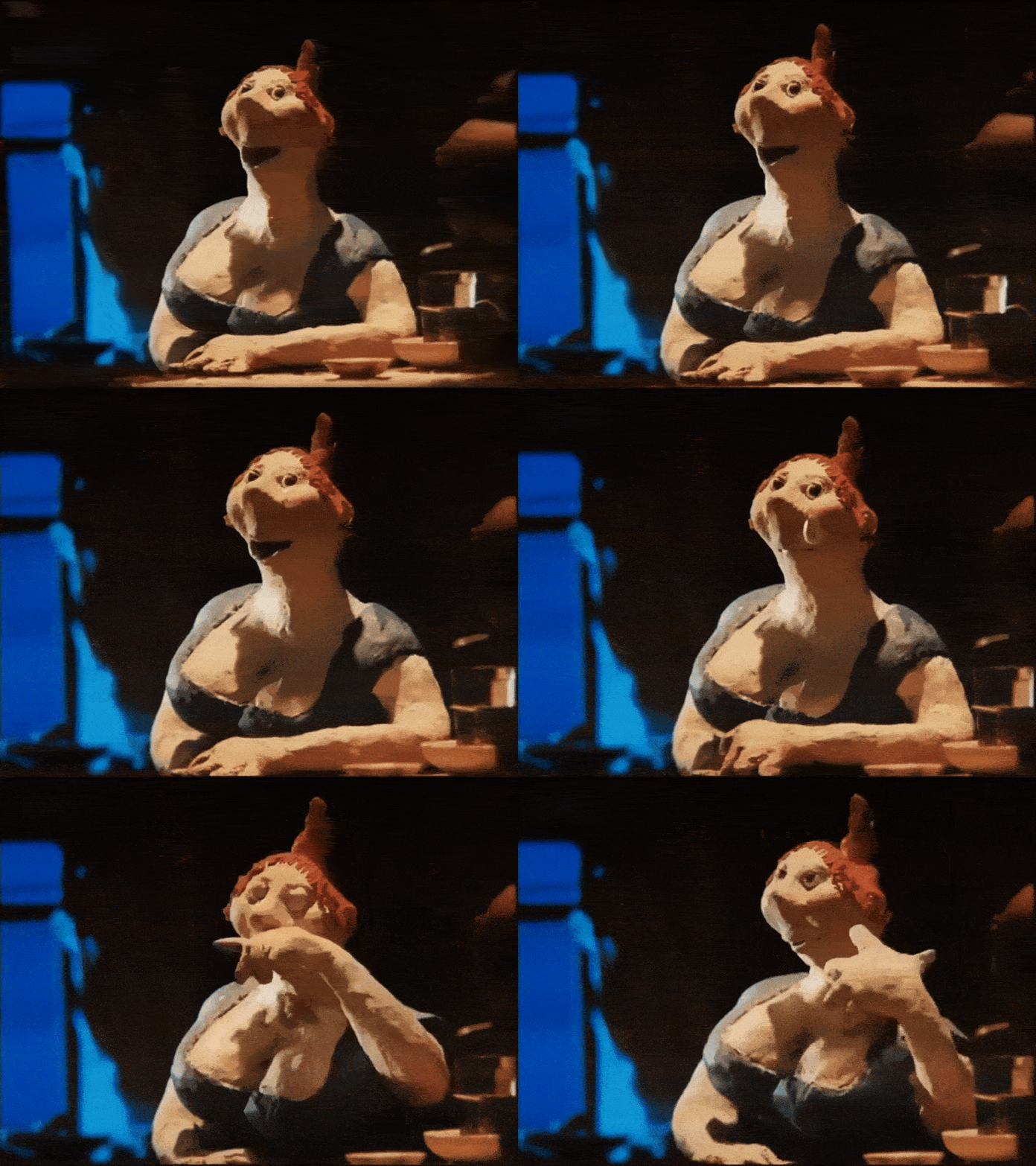
Stills from the cartoon «Little Red Riding Hood and the Gray Wolf»
Satire
The animation sets an ironic tone right from the start: it displays a distorted and seemingly mocked plaster cast of the «Worker and Kolkhoz Woman» monument. After this presentation of the beautiful monument, the camera pans down, and the viewer sees it being defaced lower and lower with various paints, dirt, and inscriptions, much like a fence. It’s as if the ostentatious grandeur of the old era is being ridiculed, behind which the sloppiness of current Soviet realities hides. Next to it is a rustic, not particularly sturdy little house where Little Red Riding Hood and Mom live.