Concept
In the 1990s, the development of technologies—specifically the internet and the creation of online media—gave people access to and the ability to communicate in a new space. Within the music industry, these technologies coincided with the development of artists' connections with fans. As a result, numerous music group websites emerged, each featuring unique designs that reflected the band’s image and varied interactive functionality.
Because there was no universally recognized template, as exists today, there was much more room for creativity, self-expression, and originality in design solutions at that time. The trends of that era made this period of the internet even more fascinating to study—a period characterized by a resistance to the kind of simplification common in web design and functionality now. Since websites were novelties to everyone back then, rather than familiar platforms for consuming visual, audio, and text content, the functionality often mimicked familiar real-world objects. For instance, a light switch or a button that turned on a television screen served the same function as an object within the website.
Compared to the initial capabilities for website creation, by the mid-90s, technologies became accessible that allowed for creating sites that were not just text documents with hyperlinks and neon colors (initially only 16 colors were supported), but also significantly more complex design and text elements. For instance, a wide color palette was already widely used, images were supported, banners could be made, colored 3D buttons, object animations, changing an object’s color and size, moving elements, and pop-up windows—in short, a comparatively much more lively and interactive look and functionality.
Furthermore, websites gradually became optimized—meaning loading speeds increased, and the quality of detail rendered became sharper and better.
Because of this, all these websites possessed a greater level of thoughtfulness and a unique character, which could convey more about the band, offering fans more opportunities to immerse themselves in the content and creativity.
Since the music itself, nor the media (photoshoots, concert recordings), nor the news resources were as readily and widely accessible as they are today, the emergence of these websites represented a massive novelty and provided significant practical value to both the music creators and the listeners. This was because they gained a new space to interact both with the bands and with each other (for instance, through the ability to create a chat room).
This temporary phase in the development of internet functionality became a fascinating example of how the potential of creative advancement and design solutions—which were not merely art, but a new field for the development of musical culture as a whole—was revealed. This can be examined through the archived websites of music groups that were highly popular at the time.
Megadeth Arizona (1994)
Megadeth Arizona—the band’s first official website in history (according to the band)—launched in 1994 to support the release of the album Youthanasia. The site was created by Capitol Records, with Wendy Dugan handling the design.
Youthanasia Album Cover
Megadeth in 1994 (promotional photoshoot in Arizona)
The Youthanasia album musically merges thrash metal with old-school hard rock, incorporating a degree of folkloric Voodoo themes, which is reflected in the website’s aesthetic.
The Megadeth Arizona website is named because the band worked in a studio in Arizona during the album’s recording.
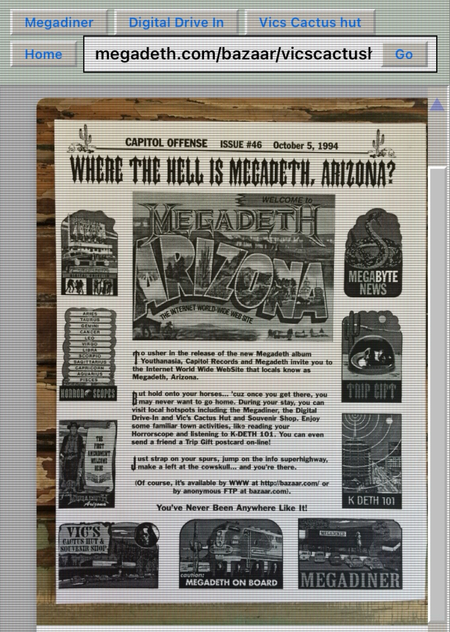
A screenshot of an old version of the website from 1994
The website itself was designed as a digital town complete with various interactive locations, including sections for photo shoots, news updates, and a chat room where fans could interact with each other and the group.
In 2024, to commemorate the 30th anniversary of the Megadeth album, the website was recreated, and this version is available on the modern official site.
Metallica (1996)
Another well-known thrash metal band also launched its own website in 1996, styled after their work at the time. On the site, you could browse their discography and read information about the members.