Concept
This visual study explores how cinema from the Perestroika era constructs the image of crisis through its visual environment. Films from the second half of the 1980s are often associated with «glasnost”—the relaxation of censorship and the turn toward previously forbidden themes. However, the core objective of my research is to identify the specific elements that constitute this visible image of crisis.
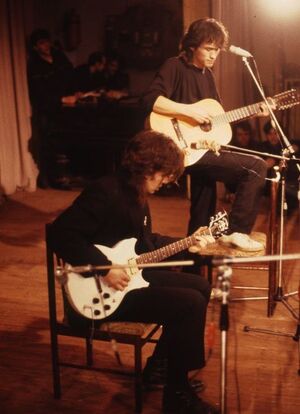
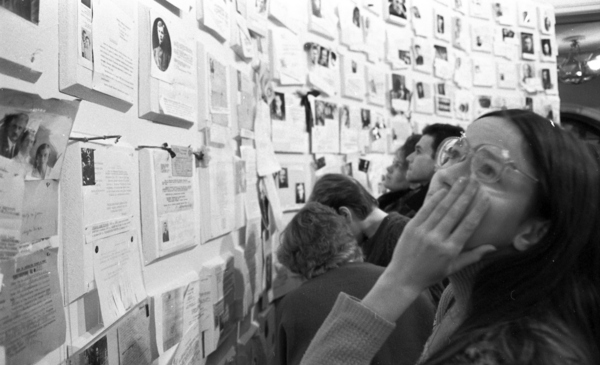
«Yuri Kasparian and Viktor Tsoi at a concert in Leningrad, ” 1986, Tim Penn // „The first exhibition about the victims of Stalinist repressions, 'Week of Conscience, ' in Moscow, ” 1988, Dmitry Borko
The hypothesis underpinning this visual analysis is as follows: the Soviet world depicted in Perestroika cinema gradually loses its stability and begins to disintegrate on both a narrative and a visual level. This decay is evident everywhere: we see dilapidated walls, clutter, cramped spaces, irritation, emptiness, rust, and the film graininess of the images.
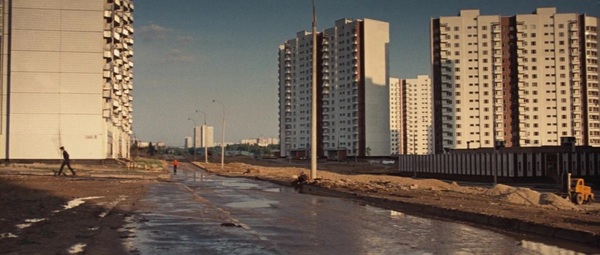
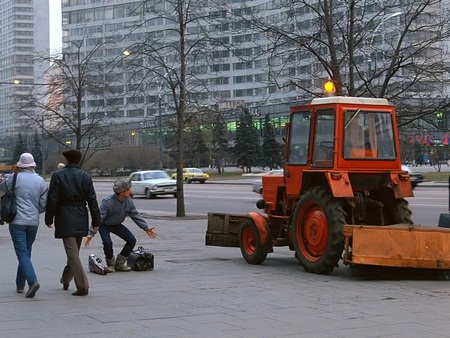
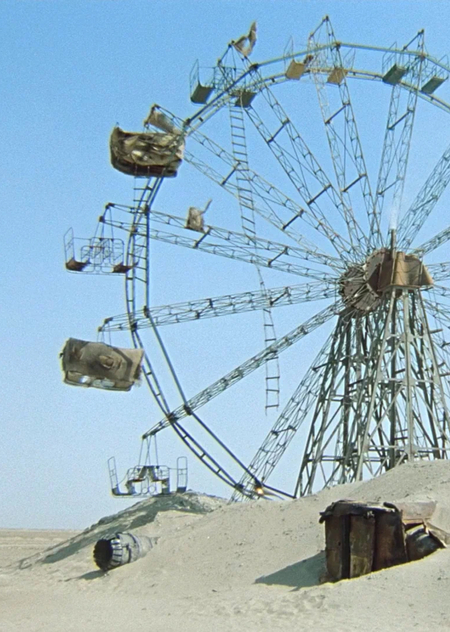
«Courier, ” 1986, Karen Shakhnazarov // „Kinzha-dza-dza! , ” 1986, Georgiy Daneliy
In this context, the shot should be considered an independent source of meaning, divorced from the narrative. Therefore, while viewing and analyzing cinema, I focused on close-ups, character placement, actor and camera movement, and the material environment. These elements help to understand how space is structured—whether it is confined, empty, chaotic, or decayed.
In this work, I examine three films from the latter half of the 1980s—"The Courier,» «Kin-dza-dza!», and «Astenic Syndrome"—because each one presents its own depiction of crisis and Perestroika. In «The Courier,» the image of crisis is constructed through everyday life: apartments, streets, clothing, daily routines, and, most importantly, generational conflict. In «Astenic Syndrome,» it is depicted much more emotionally: through fatigue, irritation, crowds, shouting, and the inability to speak to or hear each other normally. In «Kin-dza-dza! ,» late Soviet reality is transplanted into the fantastic world of Plyuk, where shortages, materialism, hierarchy, and absurd rules shape the structure of an entire civilization. The research is built upon a comparison of recurring visual motifs. This approach helps to see not three separate pictures of the era, but a single, unified idea of the collapse of the familiar Soviet world.
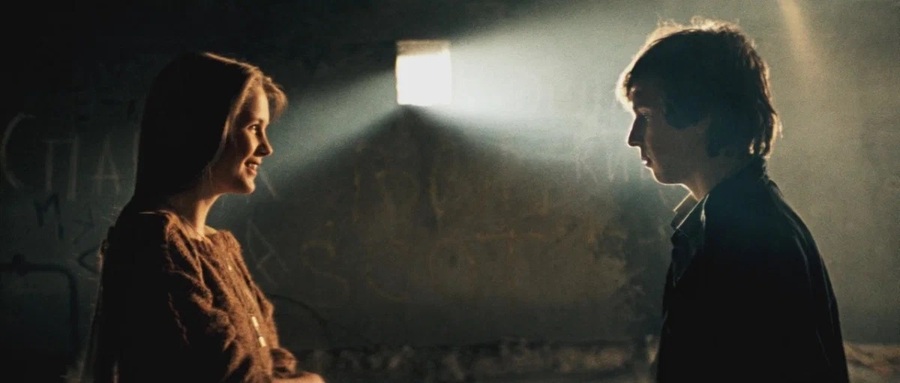
«Courier,» 1986, Karen Shakhnazarov
The principle of rubrication is linked to this logic of comparison. Each section examines a single visual motif: everyday life, the city, the material world, and the human being within that environment. This sequence allows the work to move from familiar domesticity toward more severe forms of crisis, demonstrating how the same image operates differently in «The Courier, ” „Asthenic Syndrome, ” and „Kinzadza!“.
«Kinzadza! , ” 1986, Georgy Daneliani
The visual material selection system is tied to the research hypothesis. I choose frames where the crisis is conveyed through a specific environment: the characters' apartments, the crowd in the subway, an empty quarry, rusty ruins, symbolic objects. Each frame proves the thesis rather than merely supplementing the text.
Topics
Concept
Everyday Life
The City as Irritant
The Material World
Humanity Amidst Decay
Conclusion
Everyday Life
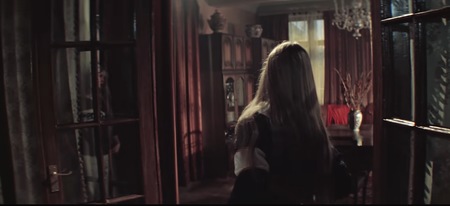
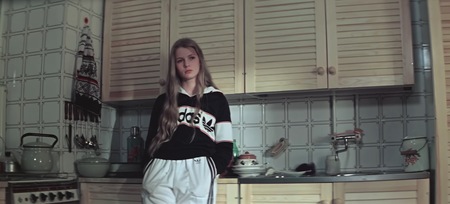
«Courier, ” 1986, Karen Shakhnazarov
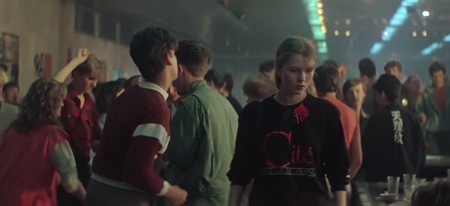
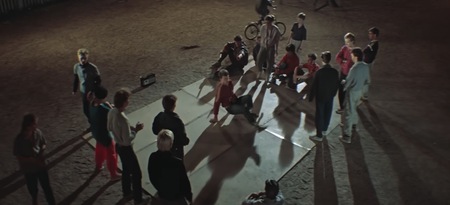
«Courier, ” 1986, Karen Shakhnazarov
In «The Courier,» the interior appears almost familiar: apartments, rooms, furniture, bookshelves, tables, and everyday details—but it is within this very ordinariness that the crisis begins to emerge. The space of adults and the space of youth exist side-by-side, yet they are absolutely nothing alike. In the narrative, in many episodes, we see the adults addressing themes of education, status, family, and future careers, while Ivan responds with a deliberate unwillingness to engage in these dialogues, relying on irony, daydreaming, and infantile behavior.
«Courier, ” 1986, Karen Shakhnazarov
Visually, this is manifested in scenes where Ivan finds himself inside the rooms of Katya’s family apartment. He is physically present in these spaces, yet it is as if he does not belong to them. His posture, untidy appearance, and gestures disrupt the solemnity of the adult world’s setting. He is integrated into the established system, but he does not accept its rules. Therefore, the crisis in «The Courier» represents the contrast between the individual and the surrounding environment.
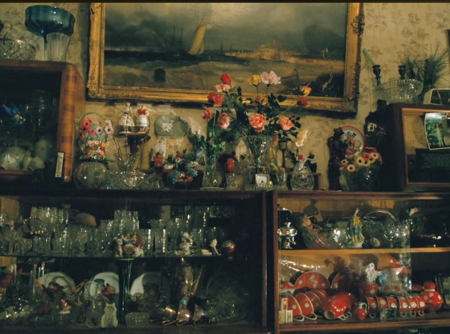
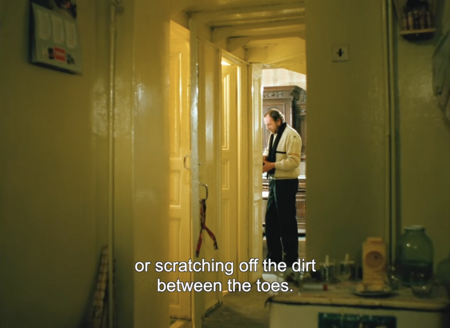
«Asthenic Syndrome,» 1989, Kira Muratova
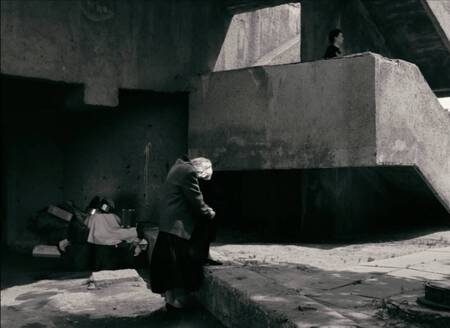
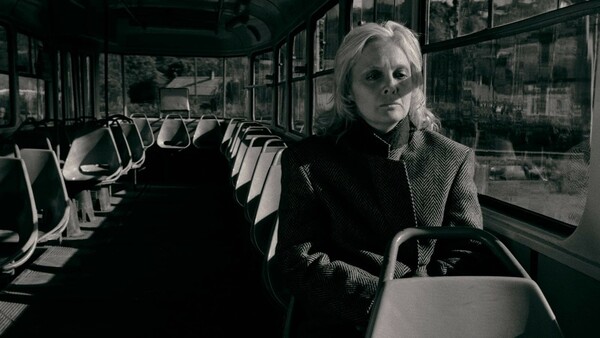
«Asthenic Syndrome,» 1989, Kira Muravatova
In «asthenic syndrome,» even residual stability is lost in the everyday space. The environment becomes constricted and anxious: rooms, hallways, schools, and hospitals immerse a person in general irritation.

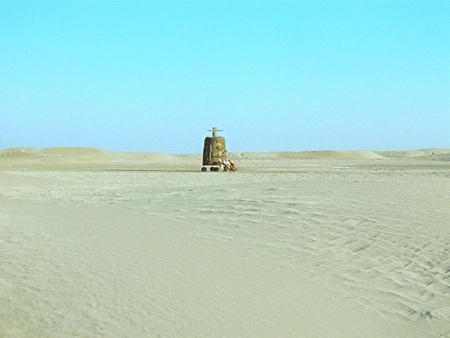
«Kinzadza-dza!» (1986), Georgy Daneliya
«Kinzadza-dza!» Instead of home and familiar locations, the characters find themselves on a desolate planet, surrounded by temporary shelters, rusty structures, technical debris, and underground spaces. The crisis here is no longer that the home has become uncomfortable, but that the concept of «home» as a form of normal life is gone. Pluk’s world resembles a civilization from which the place of human comfort has vanished.
The City as a Stimulus
In the cinema of the Perestroika era, the city is not merely a backdrop for unfolding events. It demonstrates how crisis extends beyond personal lives. It is everywhere: in public transit, in shared spaces, and on the city streets.
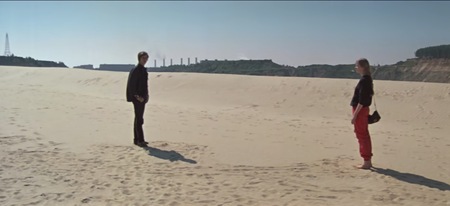
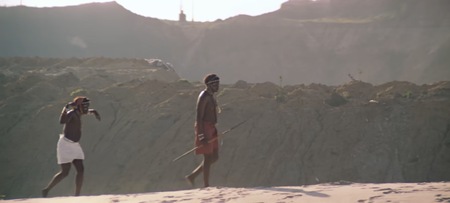
«Courier, ” 1986, Karen Shakhnazarov
In «The Courier, ” the city appears quite open—to Ivan, it is like a space for play. However, this sense of play arises from the lack of a clear trajectory. For instance, in the episode featuring the sand quarry in Lyubertsy, Moscow ceases to be a recognizable city and almost turns into a desert. This shot is significant because in the quarry, Ivan finds himself outside the system of adult rules, in an empty space without a clear function. There, he can freely fantasize without burdening himself with thoughts about life.
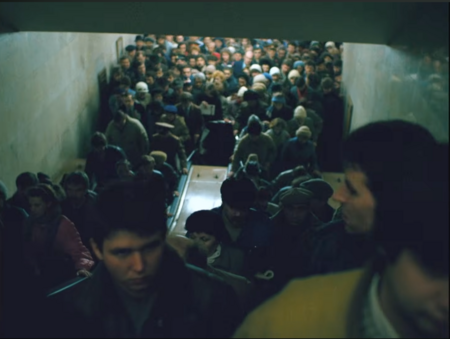
«Asthenic Syndrome, ” 1989, Kira Muravatov
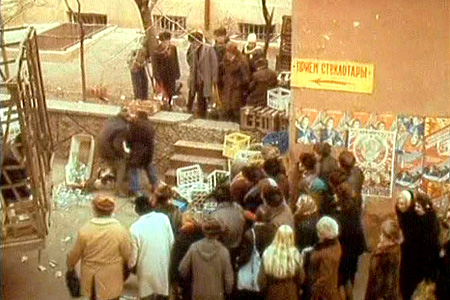
In «Asthenic Syndrome,» the urban and public environments become much harsher. Spaces where people are supposed to gather transform into irritants. In the first part, Natalia Ivanovna encounters the city as an aggressive environment: people crowd together, get too close, and speak simultaneously, yet they remain inwardly isolated. In the second part, this state transfers to Nikolay Alexeevich: he appears lonely amid an endless stream of faces, voices, and chance encounters. Dialogues devolve into unintelligible noise and clamor, and the frame’s space is constantly overwhelmed by bodies. Thus, the image of crisis arises not only through the characters' behavior but also through the very public environment—a setting where people are physically close but can no longer properly hear one another.