
CATEGORIZATION //
- Specifics of the Building’s Artistic Program and Location
- Anthropomorphic and Zoomorphic Motifs
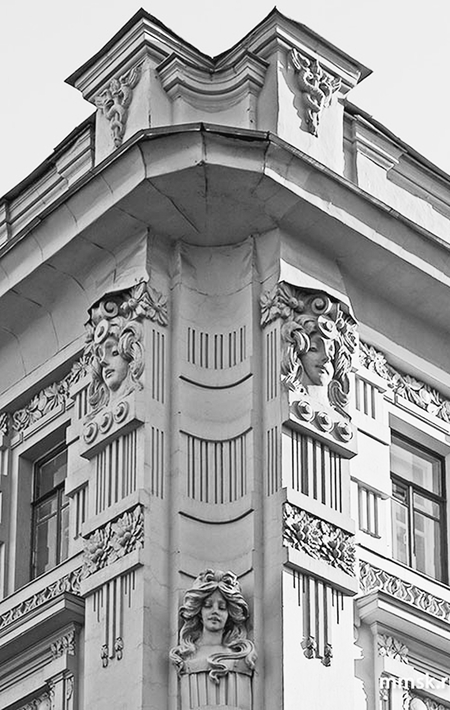
- Female Masks—A Symbol of the Era
- Vegetal and Floral Motifs—"Stone Flora»
- Conclusion
- Bibliography
- Image Sources
CONCEPT
The topic of the visual study was chosen due to the growing interest in Silver Age architecture as a cohesive artistic phenomenon, synthesizing architecture, sculpture, monumental and decorative arts, and applied art, as well as the philosophy of Symbolism. The turn of the 19th–20th centuries in Russia marked a period of radical reconsideration of aesthetic norms: architects sought to overcome the utilitarian nature of the building, transforming it into a vessel for metaphors, cultural codes, and spiritual meaning. Modern architecture enters into a dialogue with the aesthetics of Russian Symbolism, where every architectural decision—from the overall composition to the shape of a door handle—is intended to convey hidden meanings, mystical states, and the idea of a «two worlds.»
The relevance of this topic stems from the fact that the symbolic elements in Silver Age architecture have been studied in fragments to this day—examining façade decoration, ornamental motifs, the work of specific architects, or local schools in isolation. A visual study, however, allows for a comprehensive approach: examining the system of images as a unified field of meaning and identifying recurring motifs, such as botanical, zoomorphic, astral, and anthropomorphic forms. This perspective opens the door to analyzing not just the stylistic elements, but the architecture itself and the language of symbols it speaks.
The hypothesis of this visual study is that decorative elements in Silver Age Russian architecture formed a coherent visual language that directly reflected the philosophical ideas of symbolism. For example, concepts of the cyclical nature of existence, the animation of nature, or the mythologizing of the city—the ideas of the journey, the threshold, and the «Eternal Feminine"—were expressed. It was through these decorative techniques that architects conveyed non-obvious meanings to the viewer, transforming the facade into an encrypted text.
The material selection principle is based on including buildings from the 1890s–1910s belonging to Russian Modernism, featuring strongly expressive decorative elements with symbolic weight. The study incorporates structures from Moscow, St. Petersburg, and other cities of the Russian Empire where local centers of symbolism developed in architecture. The works of Fyodor Shekhtel, Lev Kekushev, and Ivan Fomin are analyzed, as are lesser-studied buildings that also contain elements of symbolism.
Ultimately, the research will reveal how architectural decor became a visual reflection of the Silver Age’s worldview, transforming the urban environment into a space of symbols.
The specificity of the building’s art program and the placement of decorative elements //
A defining characteristic of Silver Age architecture was the pursuit of the «synthesis of arts, ” wherein architecture merged painting, sculpture, stained glass, mosaic, and furniture. The architect no longer merely designed the building’s structure; they created an entire artistic narrative. The façade was perceived as a unique text that the viewer was meant to „read“ and immerse themselves in the intended atmosphere.
For example, the Ryabushinsky Mansion, designed by Fyodor Shekhtel between 1900 and 1903, demonstrates the principle of «total art.» Here, architecture becomes a metaphor for the living seabed. Inside the building, the staircase resembles a sea wave, the light fixture is shaped like a jellyfish, and the stained glass windows reference natural motifs.
Ryabushinsky Mansion. Early 20th Century
Main facade of the Ryabushinsky mansion
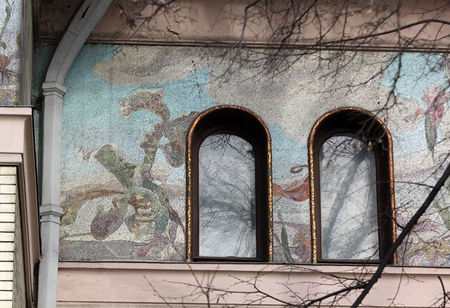
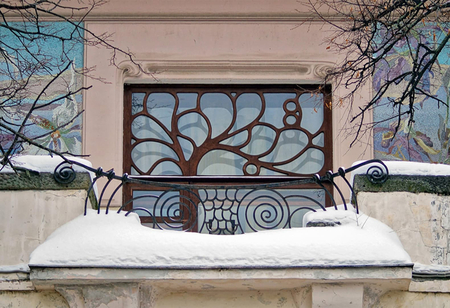
Facade Fragments
The interior of the Ryabushinsky mansion clearly showcases natural motifs, which is another characteristic of modernism. Shekhtel utilizes this theme by organically integrating it into the furniture, ceiling decorations, wrought-iron fence, and color palette. The design of most objects—even the most subtle ones, such as doorknobs resembling seaweed—immediately catches the eye.
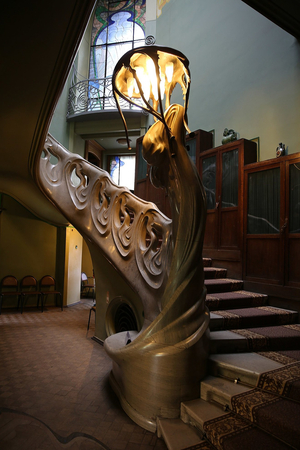
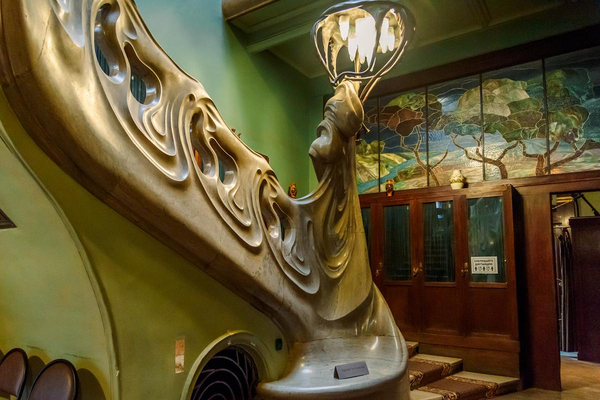
The grand staircase of the Ryabushinsky mansion
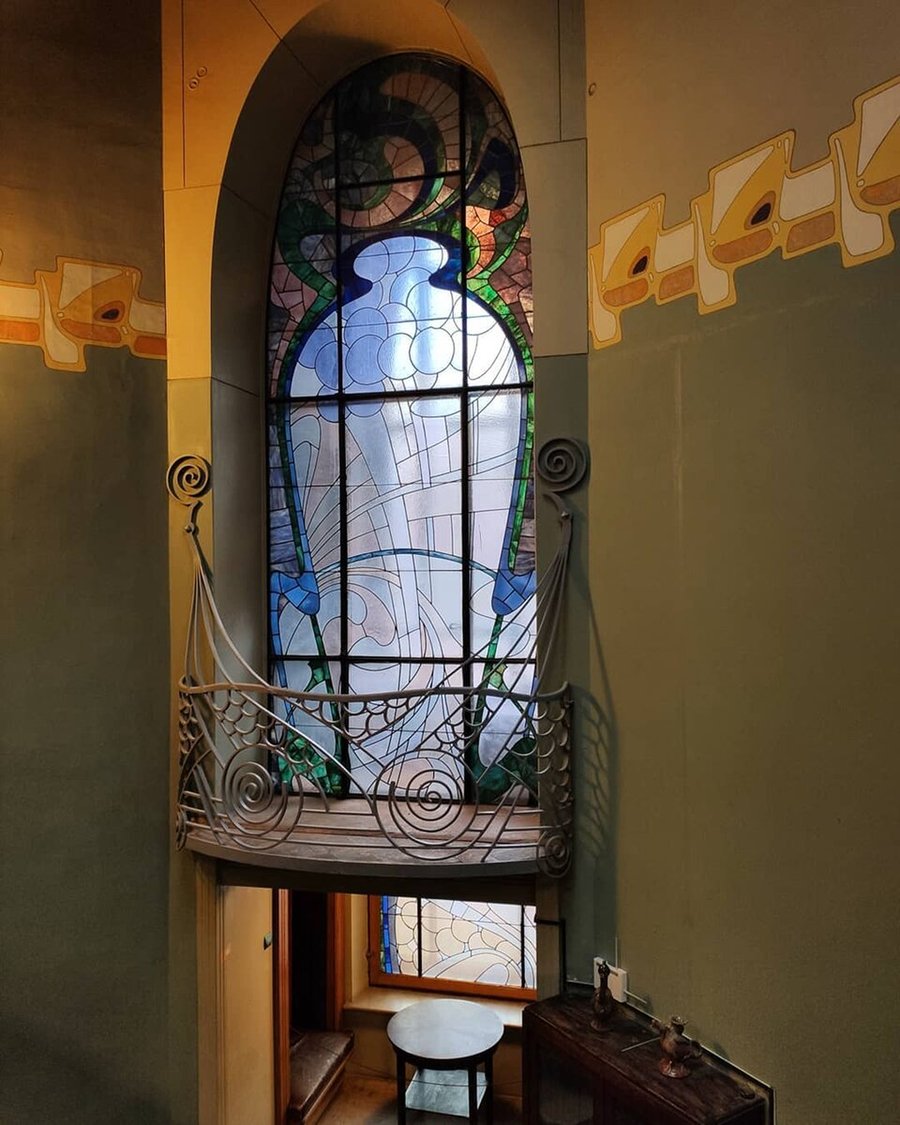
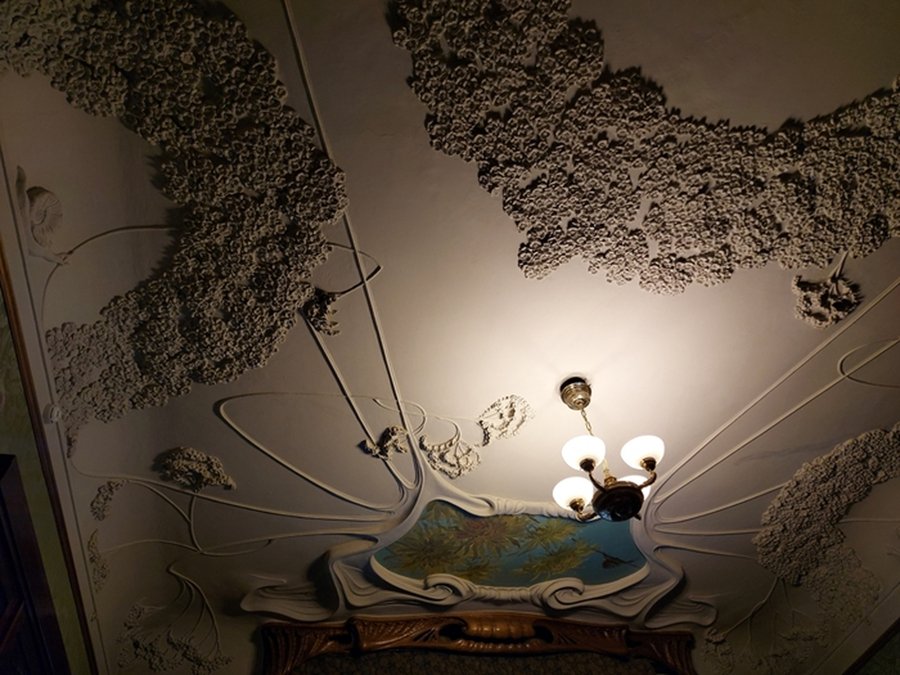
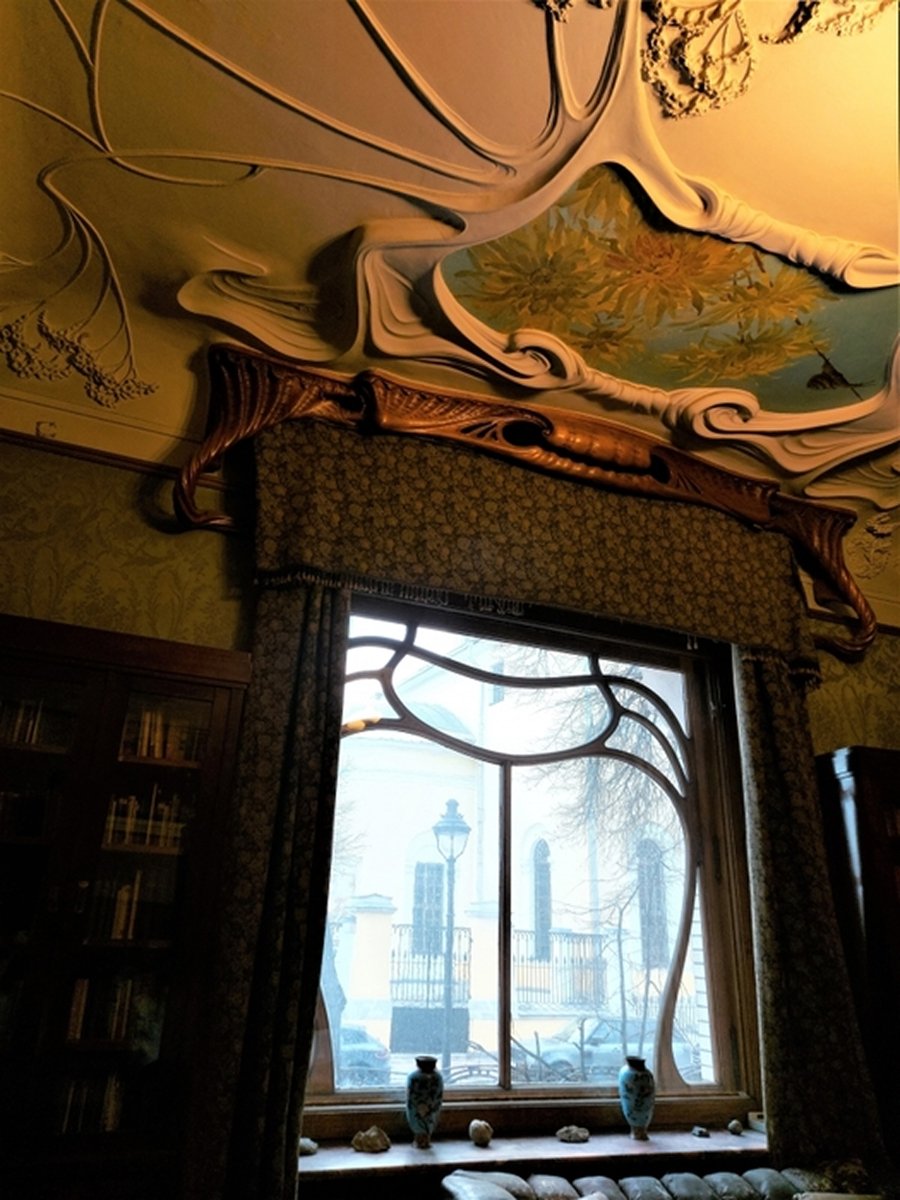
The Library in the Ryabushinsky Mansion
Let’s look at Singer’s company house designed by architect Pavel Syuzor, where decorative elements are concentrated in the upper part of the facade: the glass dome, sculptures, and ornaments emphasize verticality and create an image of progress and new urban culture.
Postcard «St. Petersburg. Nevsky Prospekt. Zinger House.» 1900–1915. Rostov Regional Museum of Local Lore, Rostov-on-Don
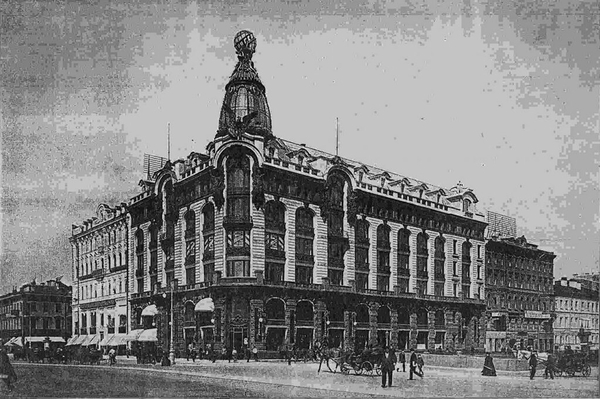
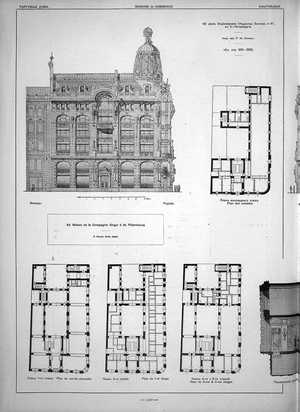
Facade Drawing • Floor Plan
The history of the eagle sculpture is connected to the period of the First World War, when an anti-German campaign was underway in the country. For many Russian residents, the name «Singer» was associated with Germany, and the company was accused of espionage. To emphasize the firm’s American origin, an American consulate was located on the ground floor of the building. The appearance of the eagle sculpture also dates back to that time. The company owners claimed that they had no connection to German authorities.
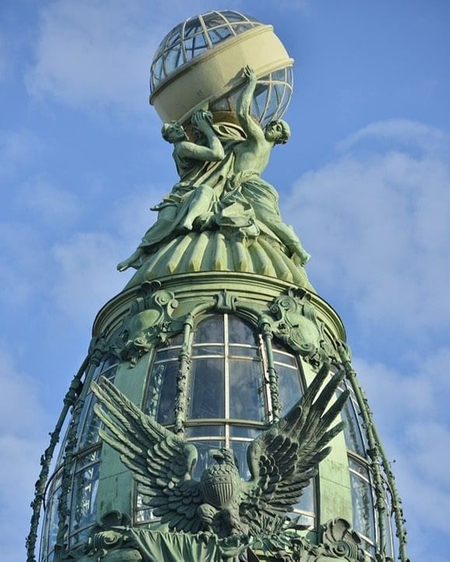
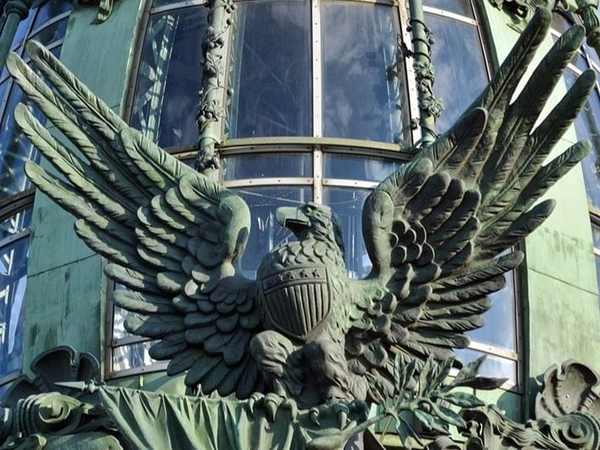
A 2.8-meter globe holds maritime sculptures and an eagle on a glass dome.
The granite facade of the Singer Building was adorned with wrought-iron grilles, botanical ornaments, and sculptures of mythological figures. On the corner section beneath the glass tower, images of winged Valkyries were placed. In Norse mythology, these warrior maidens were considered the daughters of the supreme god Odin and symbolized bravery, honesty, and justice. According to Paul Suzur’s design, they were depicted in full height, standing on prows. One of the Valkyries held a harpoon, a symbol of seafaring—as most trade during that era was connected to maritime travel. The other maiden held a spindle, which represented light industry. By her elbow stood a sewing machine.
The Valkyrie figures on the facade symbolize heavy and light industry.
A Valkyrie with a spear symbolizes heavy industry.
Symbolic elements were also placed on balconies, cornices, and in interiors.
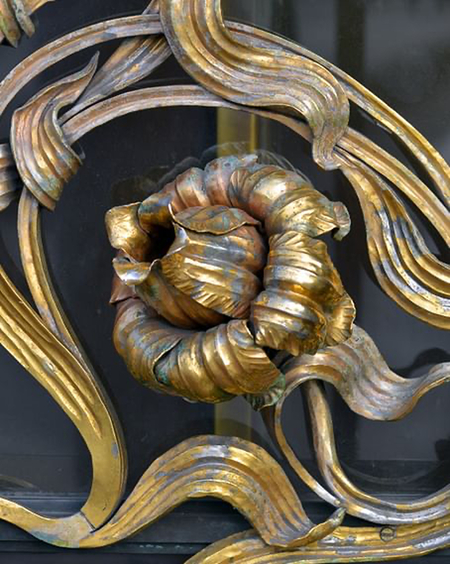
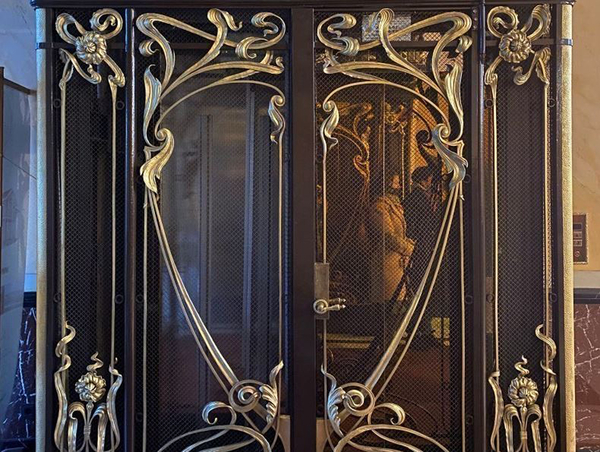
Door Ornaments