This visual study focuses on the scenes of transformation in Asia’s first full-length animated film—“The Iron Fan Princess» (1941) by the Van brothers.
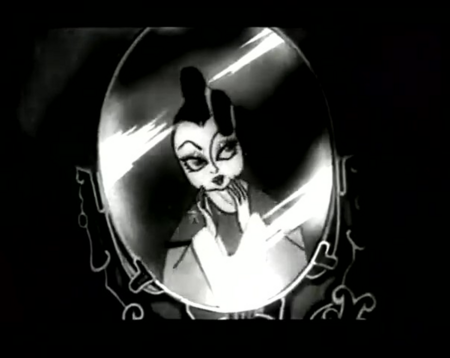
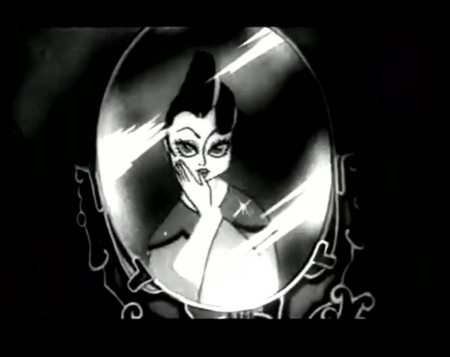
«Iron Fan Princess» / The Van Brothers / 1941
The focus is on the productive conflict between rotoscoping technique, which lends a «lifelike» fluidity to the film, and the fantastic nature of the metamorphoses.
The study is interesting because it reveals that the film is not an «unsuccessful imitation of Disney, ” but rather a deliberate hybridization. Western technique is used as a framework, but during moments of magic, the Vany brothers turn off the rotoscope and transition to a conventional, grotesque, and dynamic aesthetic rooted in folk theater. The analysis will explore exactly how the key transformation scenes are resolved, how they relate to Disney counterparts („Snow White, ” „Pinocchio, ” „Fantasia“), and why the film asserts its own visual logic during transformation sequences.


1. Production Context: Why Rotoscoping Became a Necessity
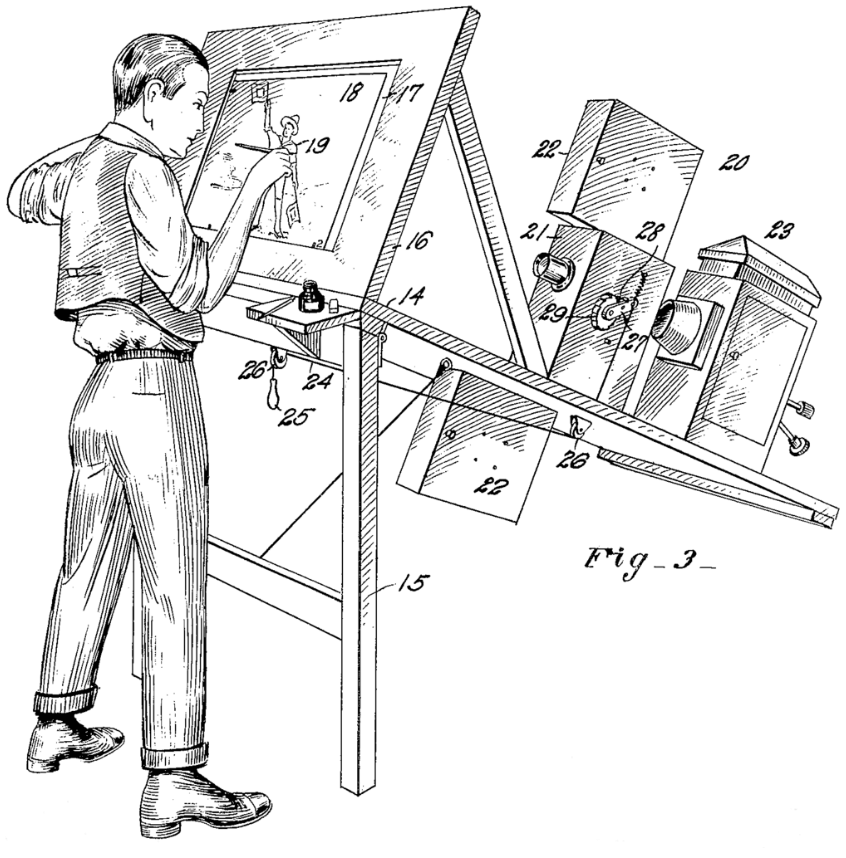
Executing photo-tracing using a special projector—a rotoscope
The film was created between 1939 and 1941 in Shanghai under Japanese occupation and with severe resource scarcity.
Rotoscoping was used not only as an artistic choice but also as a way to save resources: it allowed for «smooth» and «realistic» movement without the lengthy development of animation «from scratch.» Over 200 artists were involved in the film, creating approximately 20,000 frames. This is important for analysis: the «realism» of rotoscoping is not an aesthetic ideal, but a necessary compromise, and it is in the transformation scenes—where rotoscoping becomes unhelpful—that the Vanya brothers gain freedom for a different plasticity.The phototransference using a special projector—the rotoscope
Fluidity and realism of movement
2. Rotoscoping «Stitches» and Stylistic Disruption
Critics and researchers have repeatedly noted that the rotoscoping in the film leaves visible traces: the eyes of the real actors «shine through» the faces of the animated characters, the outlines «shiver, ” and the movements of the non-human characters (animals, grotesque figures) appear noticeably less „fluid“ than human movements.
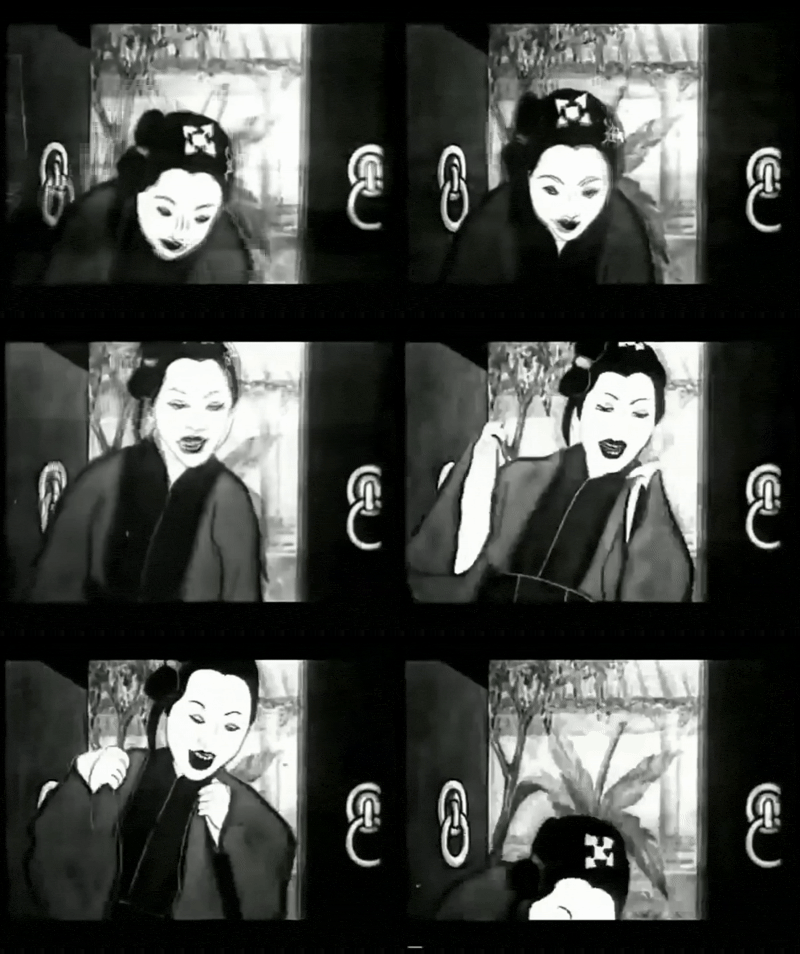
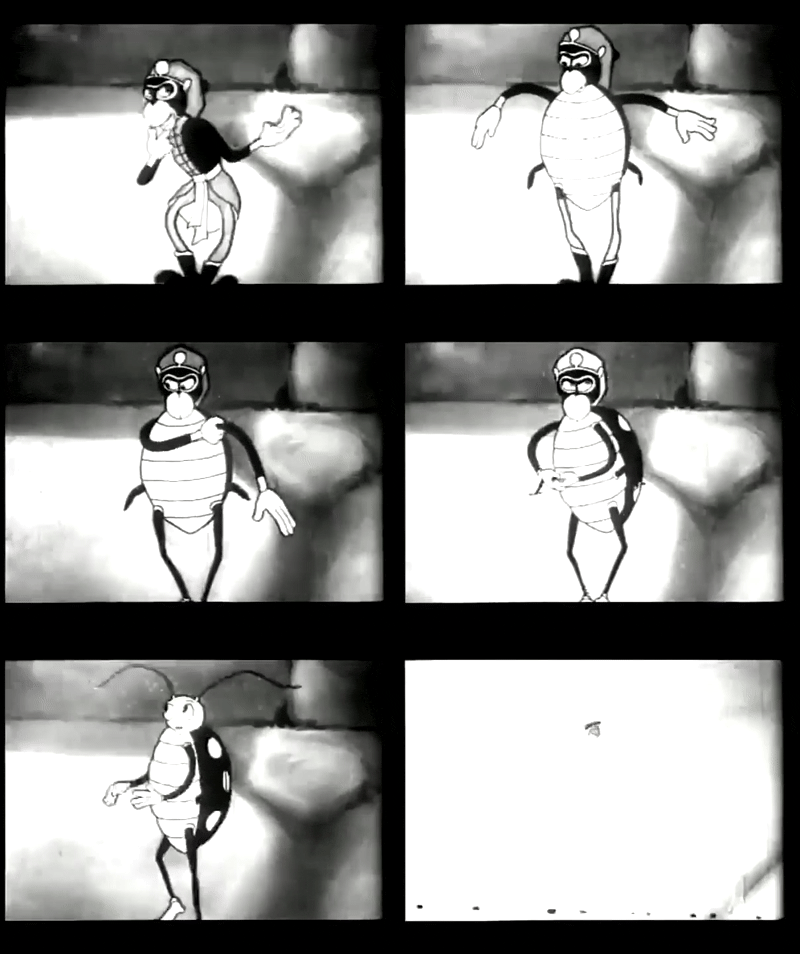
Flickering Contours / Metamorphosis
This isn’t a flaw—it’s an analytical resource: it is at the boundary between «rotoscoped» and «non-rotoscoped» that one can see how the film switches registers.
3. The Aesthetic Program of the Van Brothers: Between the «Orient» and Hollywood
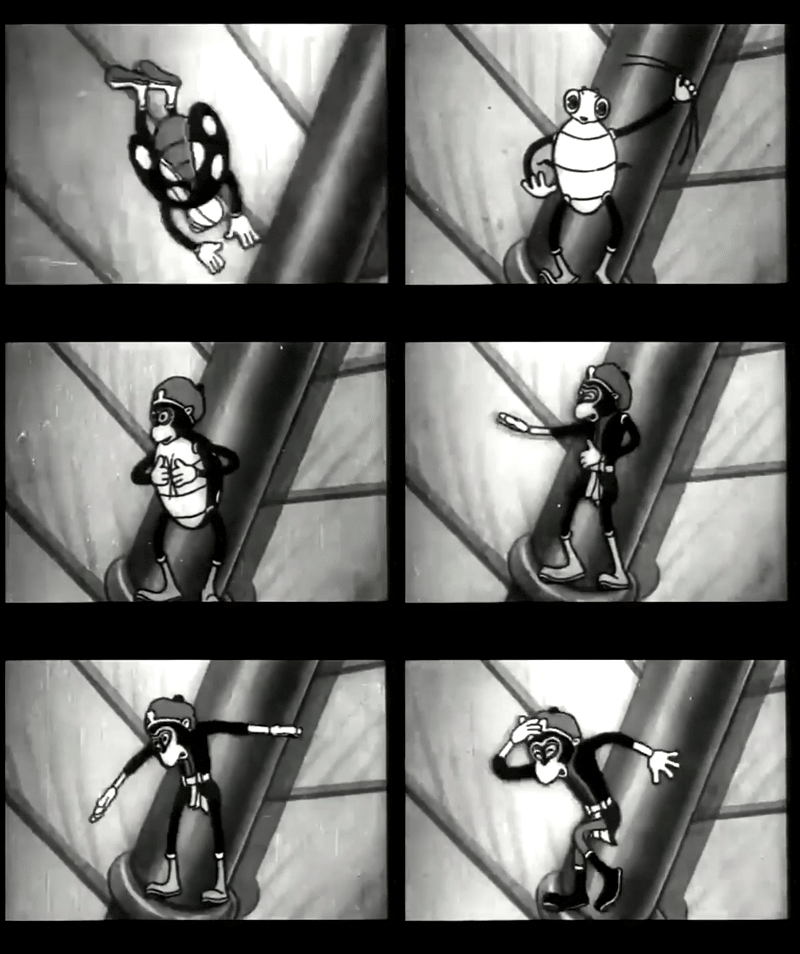
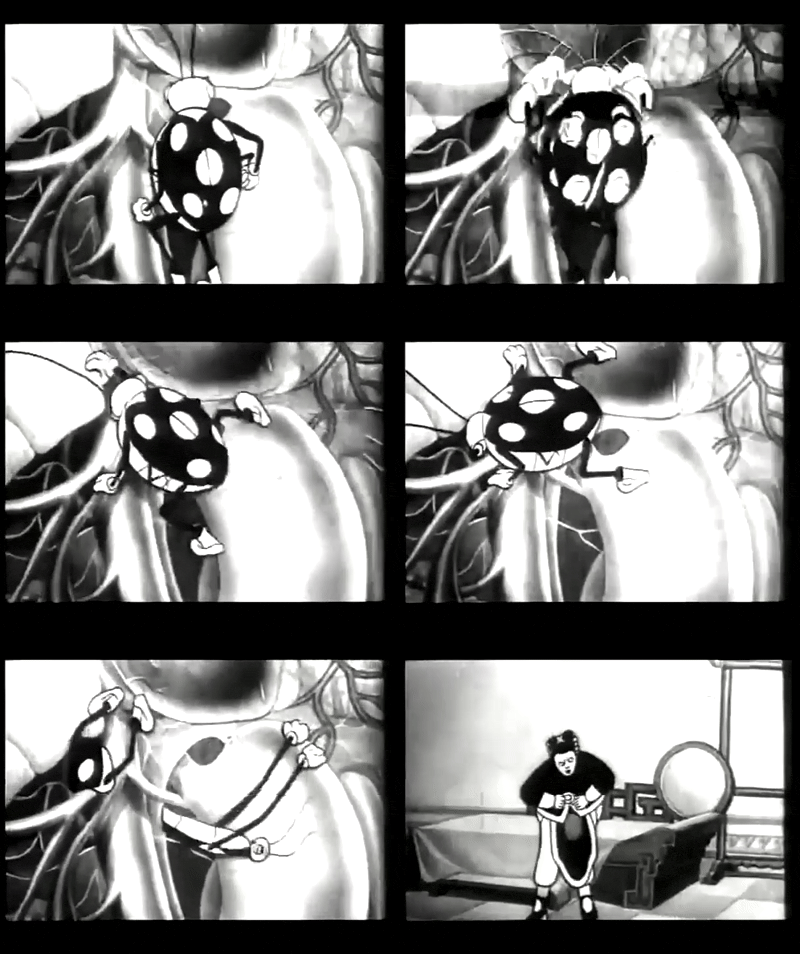
In a 1942 letter, the Vany brothers articulate a position that would prove crucial for interpretation: Eastern cinema should embody the «color and flavor of the East» and should not completely imitate the Hollywood style. However, they do not specify the degree to which they still imitate that style [1]. This ambiguity is not a weakness, but rather an accurate description of the film’s strategy: the selective adoption of Western techniques while preserving a national visual identity. Transformation scenes are the place where this strategy manifests most clearly: rotoscoping is «rented» for storytelling, but during moments of magic, the film reverts to the conventions of Chinese folk theater and «animated painting.»
4. Comparison with Disney: not «better/worse, ” but a different logic
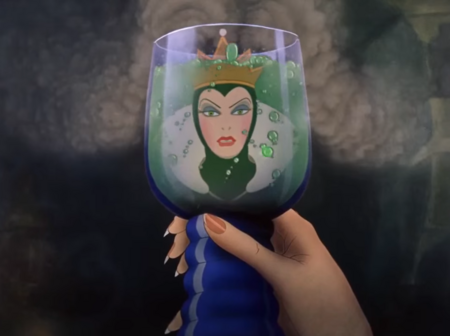
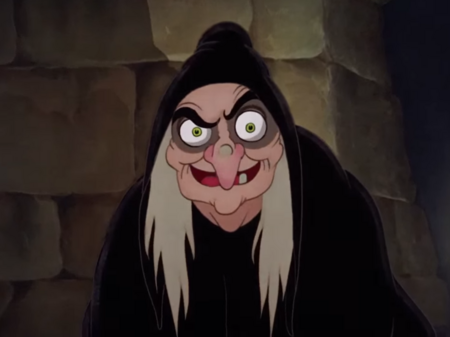
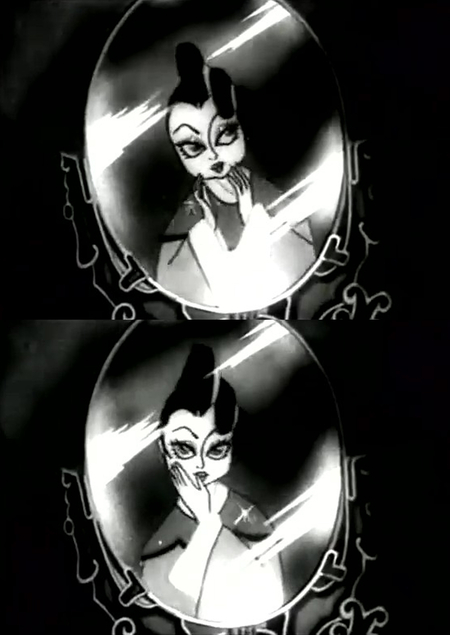
«Snow White» / Disney / 1937 / Witch Transformation
In Disney’s «Snow White,» they also forgo rotoscoping in the witch transformation scene—but this omission works to heighten the horror and create the image of «decaying,» «lifeless» flesh.
The Van brothers reject rotoscoping in their transformations for a different reason: their metamorphoses are playful, carnival-esque, kaleidoscopic changes, where speed and inventiveness matter more than psychological fidelity. If Disney structures a transformation as a protracted, detailed, emotionally saturated act, the Van brothers present theirs as a rapid sequence of shape shifts that prevents the viewer from «analyzing» every form.
«Iron Fan Princess» / Brothers Van / 1941 / transformation
5. The Political Subtext of Transformations
The film was created in occupied Shanghai and, as commonly assumed, contained an allegorical anti-Japanese subtext: the victory over the Bull King and the unification of efforts against a common enemy were interpreted by contemporaries as a call to resistance. In the context of your topic, this means that the cascading transformations in the final battle are not merely a visual spectacle but a metaphor for resistance tactics—the inventiveness, fluidity, and elusiveness of the weak adversary facing a stronger foe. This aspect should not be the main focus, but it deepens the interpretation of the transformation scenes and explains why the «conditional, ” game-like plasticity is so richly loaded with meaning here.
Introduction
«Iron Fan Princess» / Brothers Van / 1941
Relevance and Problem Statement
«Princess Iron Fan» (鐵扇公主, 1941) by the Wan brothers is the first full-length animated film not only from China but from all of Asia, yet it remains on the periphery of research attention.
Created in Shanghai during the Japanese occupation and utilizing rotoscope techniques, the film was long perceived as a «student work» mimicking the Disney school. However, this viewpoint ignores the fact that it is precisely in the transformation scenes—where the rotoscope proves inadequate—that the Vany brothers most radically diverge from the Hollywood model, asserting their own visual logic rooted in folk theater, lubok art, and the tradition of «animated painting.» This conflict between the «realistic» plasticity of the rotoscope and the conventional nature of the fantastical metamorphoses constitutes the core problem of this research.