Table of Contents
Introduction
Fabrication and Cultivation
Growing from Fungal Mycelium
Cultivation in 3D Printing
Growing from Plant Fibers
Conclusion
Bibliography
Image Sources
Introduction
The history of furniture is traditionally constructed around the manufacturing method. Wood is cut, dried, and planed; metal is melted and forged; plastic is shaped under pressure. In all these operations, the material acts as a passive substance to which the master or designer imparts a pre-conceived form. The form itself exists in the design before it is materialized, and the production process is a sequence of operations entirely controlled by humans. However, this study examines an alternative to this standard model within industrial design. We are interested in the method of «growing» and «growing furniture» not as an abstract concept, but as an emerging production logic that seeks a place in industrial design.
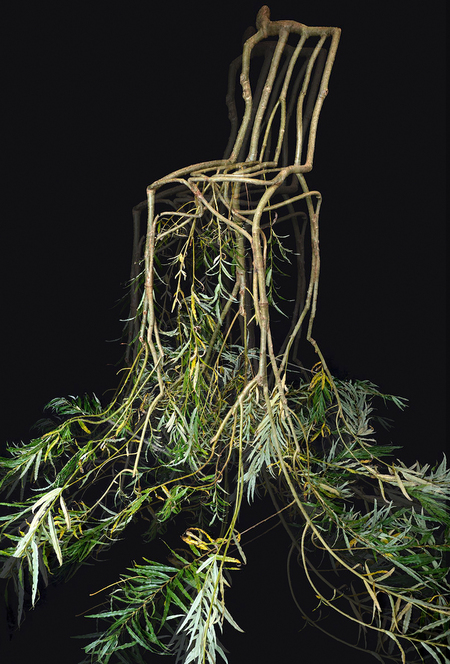
Material Visualization
Over the last fifteen years, an approach has been forming in this field where matter participates in shaping form as a co-creator. Mycelium furniture is not assembled from parts or carved from a solid block; it is grown. 3D-printed furniture is not glued from prototypes; it is built up layer by layer. Plant-based furniture is defined by having the plant’s growth as part of the production process, not just its preceding history. The common thread uniting these practices is the same «growing» methodology. The designer is no longer the sole author of the form.
Research Hypothesis
«Growing» in industrial design is no longer a singular technology but a complete and independent form-making method where the designer’s control shifts from designing the finished form to managing the material’s growth conditions.
Central Research Question
How does the logic of «growing» things differ from traditional «making» at the visual and material levels, and to what extent do the three practices examined—mycelium, 3D printing, and plant-based materials—realize this logic within industrial design? Can we even separate growing as a method within industrial design?
Rationale for Theme Selection
The relevance of this topic is determined not only by the ecological shift in design and the evolution of manufacturing methods but also by a theoretical gap. Existing literature examines mycelium, 3D printing, and plant-based materials largely in isolation—from a technical or engineering perspective. There is virtually no research that compares them as different strategies within a single cultivation logic or analyzes the visual implications of such a choice from the standpoint of industrial design theory. This study fills that gap by proposing that «growing furniture» be considered an emerging object of industrial design, one that requires its own analytical language.
Chronological Framework and Sample Selection
Research scope: 2008 to the present. The lower bound is tied to the beginning of mycelium’s active entry into design practice and the proliferation of 3D printing as a method for creating furniture objects. The sample was selected using a purposive sampling method: three cases represent different degrees of «growing» and belong to the same functional category—in our case, furniture. Each case is analyzed individually before being compared with the others. The products of industrial design considered are:
- mycelium-based—as an example of fully biological cultivation.
- 3D-printed—as an example of programmatically mediated «growing.»
- Plant-based objects—as an example of directed growth. Separately, the concepts of «fabrication» and «cultivation» are examined—their difference, and what precisely falls under the «growing» method in industrial design.
Research Goals and Objectives
Objective: To analyze objects of production design and substantiate «cultivation» as an independent logic of industrial design, distinct from manufacturing.
Objectives:1. Differentiate between the concepts of «making» and «growing»2. Analyze each of the three «growing» case studies separately3. Compare the case studies and formulate a concept such as «growing method» in product design, writing corresponding conclusions
Fabrication and cultivation
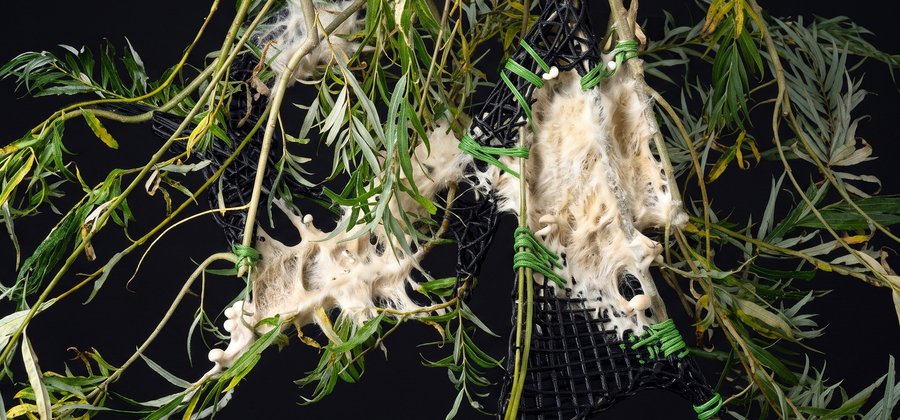
Visualization of three growing methods
Let us begin our exploration with theoretical concepts. Production is the process of creating an object—that is, a purposeful action resulting in a finished product with defined properties from raw materials, components, or other elements [4]. Cultivation, on the other hand, is the process where a person establishes and maintains the conditions necessary for the growth and development of plants, animals, or other organisms [3]. The goal of this intervention is to achieve a specific outcome.
This leads to a key distinction for our research: in fabrication, form is primary, and material is the means of its realization. In cultivation, the process is primary, and form is its result. In the logic of cultivation, the designer does not design an object; they design the conditions under which the object emerges. This shift—from designing a form to designing the conditions—is the essence of the «growth method» in industrial design.
Cultivation from mycelium
Mushroom mycelium (Photo: Kirill Soloveychik’s Telegram channel)
The starting point for our visual research analyzing the first degree of «cultivation» is the practice of Philip Ross, an artist and inventor who was among the first to begin using mycelium as a material to create furniture objects.
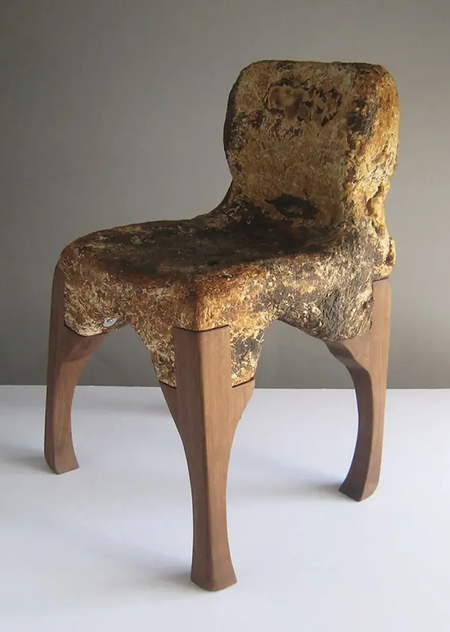
After reading Paul Stamets' book, «Mycelium Running: Growing Medical Mushrooms from Forest Floor to Pharmacy,» Ross decided to apply his knowledge practically and set up a small laboratory right in his apartment. As he studied how the mycelium behaved in different environments, he experimented with light, air, temperature, substrates, and even shapes. Phil began creating barriers for the mushroom growth and cultivated them in the way he desired. The artist gave them complex, curved shapes or more conventional forms, resembling geometric figures.Seeing the mycelium as building material, Phil created an arch and presented it at an exhibition in 2009. The blocks of the exhibit were slowly dismantled and steeped in tea during the presentation. The chairs and stools that comprised his 2012 collection attracted the attention of the media and construction industry companies [8].
Mycelium Blocks. Photo MycoWorks
Having moved on from the construction industry, MycoWorks has begun exploring entirely different markets. They are now producing leather from mycelium and using it to create bags, clutches, hats, and more.
Phil Ross, CTO and Co-founder of MycoWorks
Mushroom Leather. Photo by MycoWorks