A series of photographic works was created as part of the educational project of the «Zotov» Center and the HSE Art and Design School, titled «Architectural Photography and Spatial Research: Experience No. 2,» curated by Vladislav Efimov.
As part of the course, each participant selected a complex of residential buildings from the many surviving Constructivist «workers' settlements» in Moscow. Together, the artists’ works create the relief of a dream city—a city of the working future.
The «Spontaneous Grubbing» project is based on A. Gastev’s work, «How to Work,» from 1922, on the standardization and normalization of human labor. The works reference and interweave with the ideas of Constructivist architecture from the early Soviet Union. The source materials for the photographs were shot in the «Abelmanskaya Zastava» residential block in the Tagansky District of Moscow.
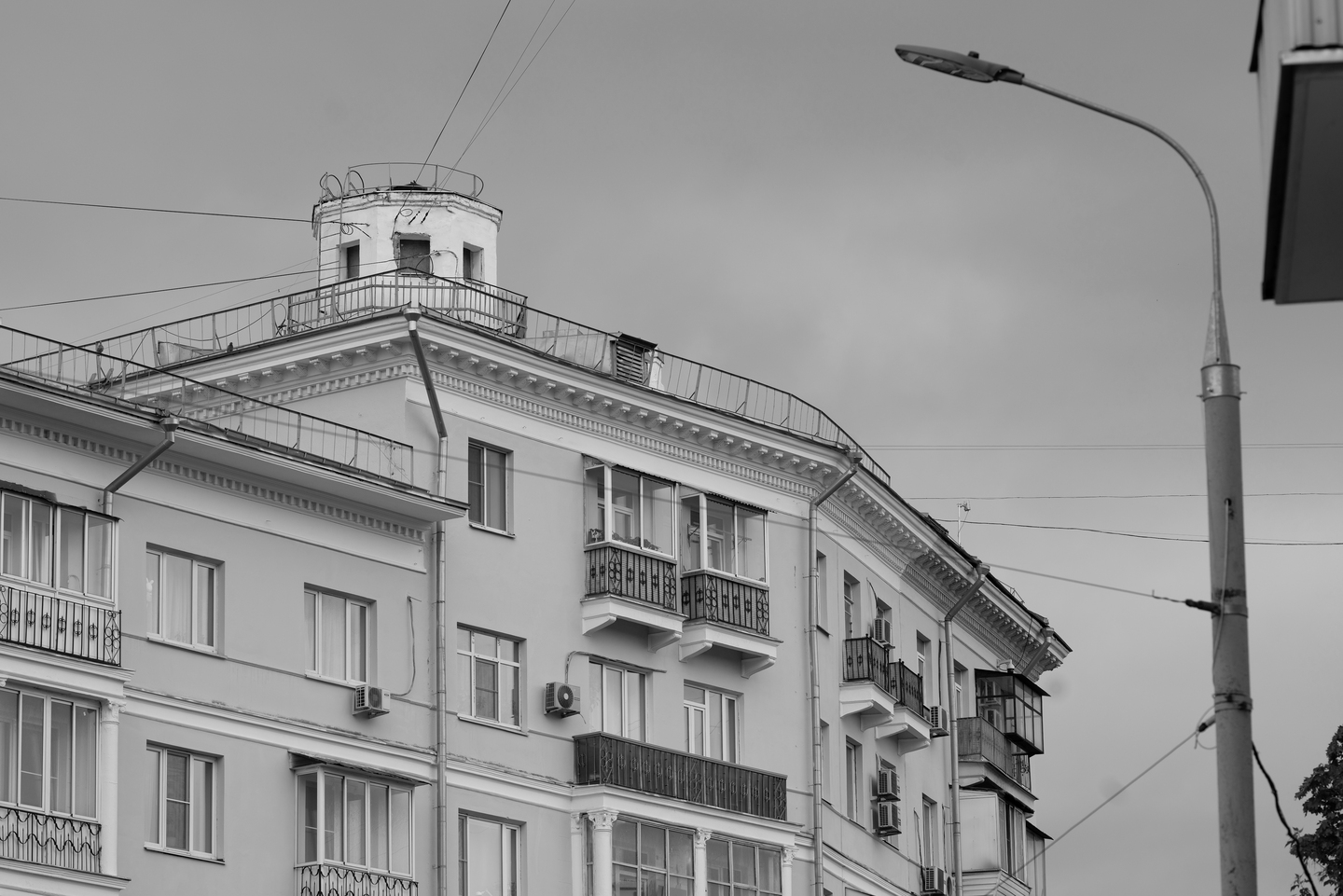
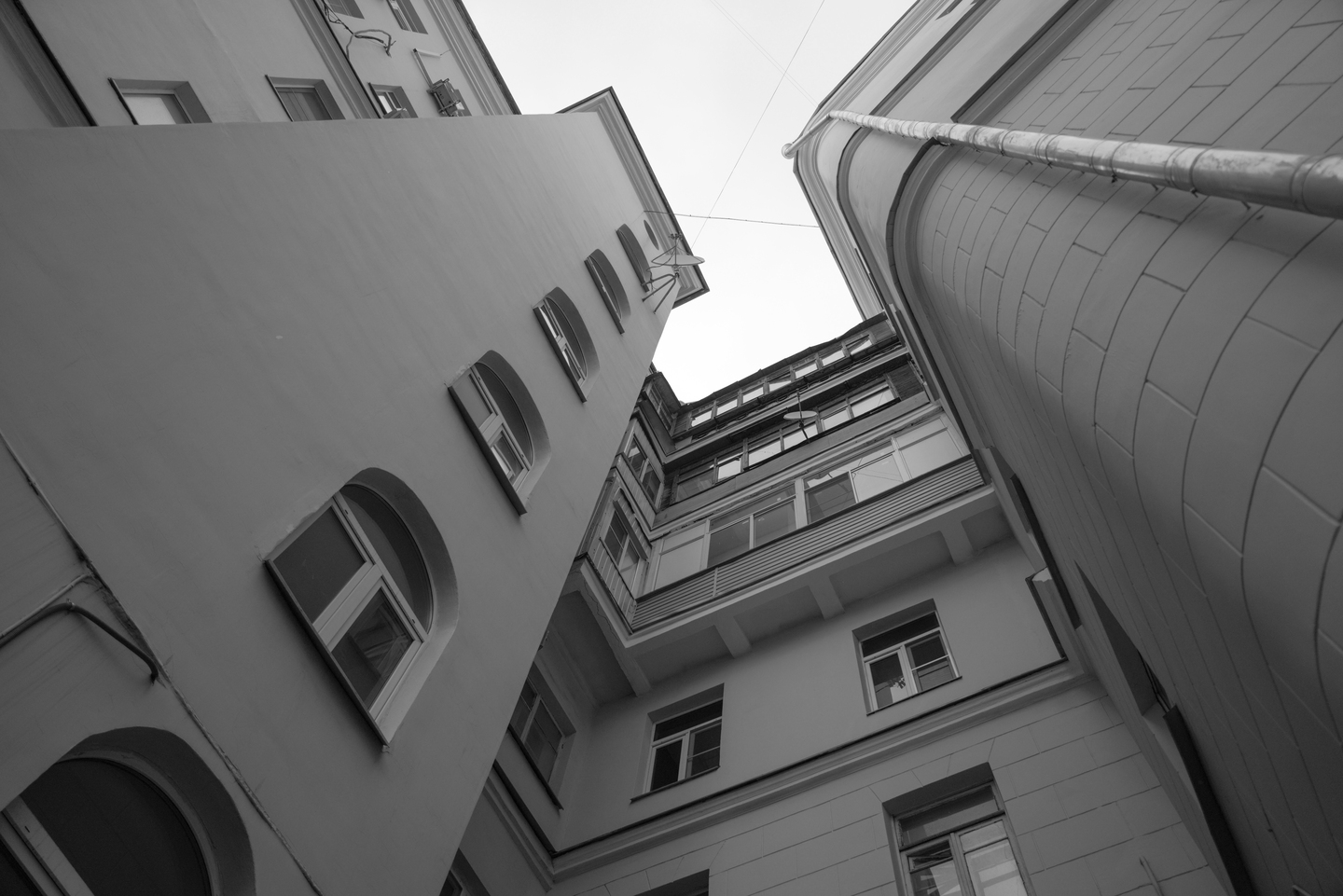
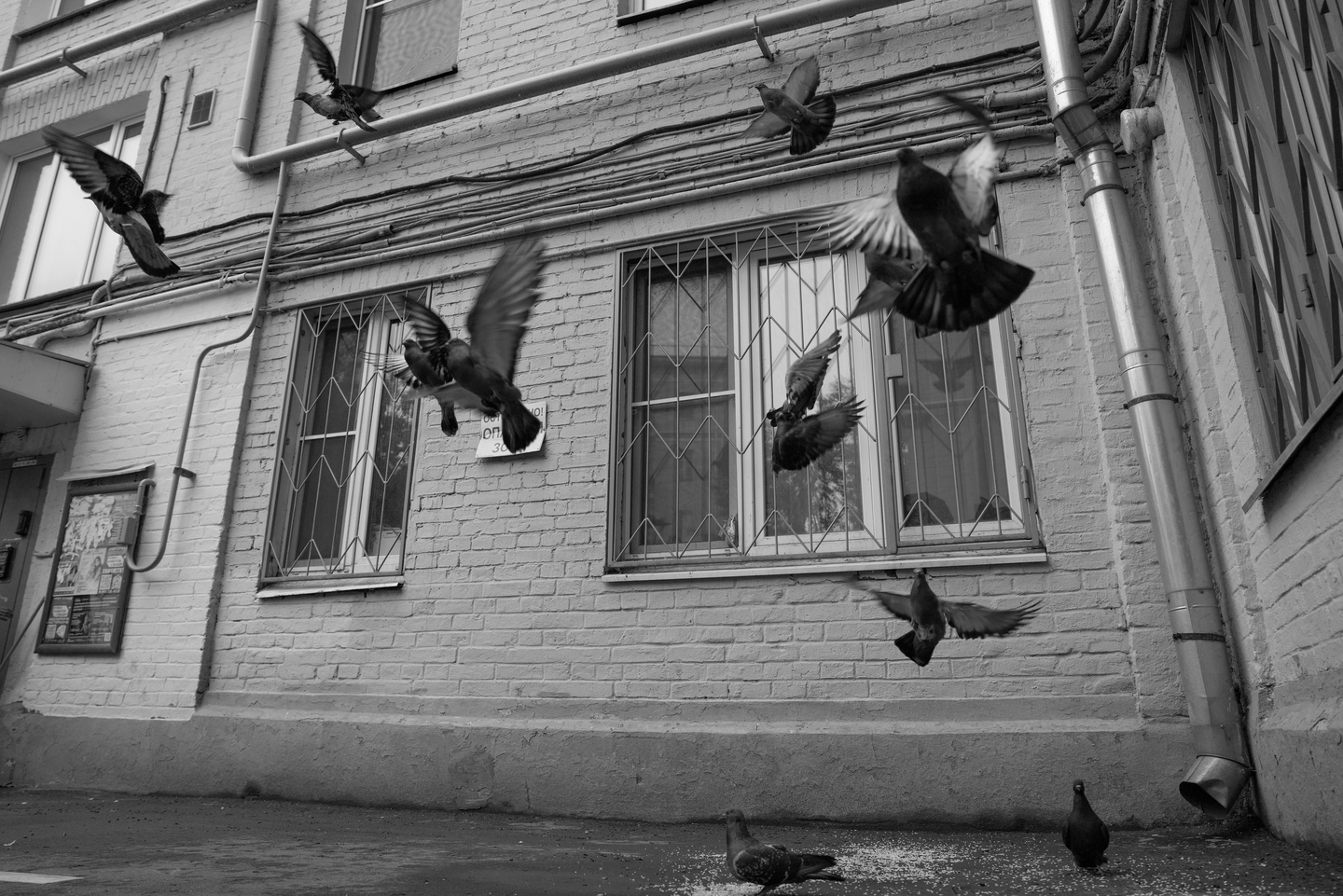
«Abelmanskaya Zastava» Residential Quarter
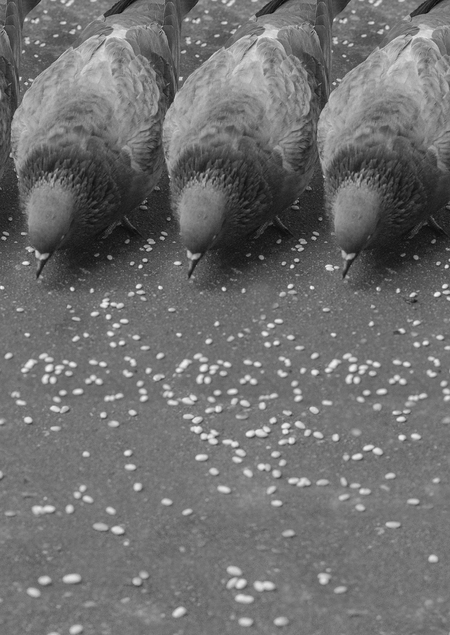
«Our instinctual gluttony, our constant desire to eat as if we were standing at a tavern counter—that must be eliminated and replaced with a proper bourgeois meal, much to the chagrin of all proponents of Russian vagrancy.» [Gastsev A., «How to Work, ” 1922]
In the context of the early Soviet Union, the new housing—the Constructivist settlements—were intended not only to provide shelter for former peasants but also to cultivate the conditions for creating the «New Soviet Man”—a collective, industrious, and conscious citizen of a socialist society. The Constructivists aimed to design residential complexes that would facilitate the socialization and upbringing of individuals in the spirit of collectivism and rationality. The housing was planned with an eye toward optimal domestic organization: minimizing private space while maximizing public areas, shared kitchens, laundries, kindergartens, and clubs—all designed to stimulate collective interaction and mutual aid. Architecture was meant to influence human behavior, shaping new habits and values aligned with socialist ideals, serving as an element of a vast utopian program for forging a new type of personality and society through space and daily life.
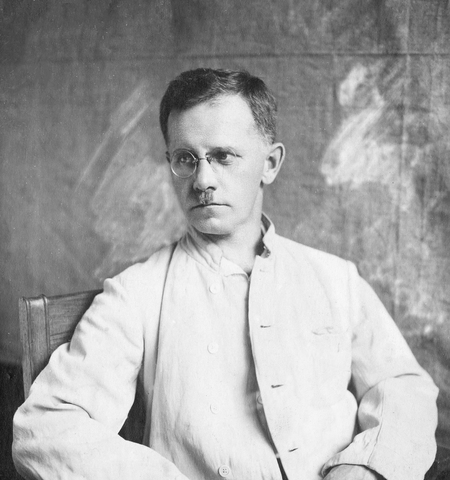
The core idea behind my photographic project stems from Alexey Gastev’s book, «How to Work.» Alexey Gastev was one of the leading ideologues of Scientific Organization of Labor (SOL) and «human engineering.» In «How to Work, ” he championed the standardization and automation not just of labor, but also of behavior, thought, and even emotions. Gastev called for the cultivation of „correct“ work movements and the training of automaticity so that the worker would operate precisely like a machine. His approach was steeped in the idea that the individual is a collection of skills and reflexes that can be shaped, trained, and standardized like parts on an assembly line.
In the 1920s, Gastev was very popular and influential. His books, leaflets, and posters were distributed across the country; his methodologies were implemented in factories, and his name was known to everyone interested in the issues of labor and production. In 1938, like many prominent figures of the 1920s, he was arrested on charges of „counter-revolutionary activity“ and executed.
The idea of the home as a «machine for living, ” rigid organization of time and space, standardized floor plans, and unified interiors—all of this aimed at leveling people, eliminating differences in lifestyle, habits, and even leisure. Individual characteristics were considered relics of the past, hindering the construction of a socialist society. Collectivism was meant to replace individuality.
In my project, I draw upon the style and approach of A. Gastev, but I attempt to tame the elements—to submit that which will never yield. It speaks to the human desire to control everything, to give precise definitions, to impose „order, ” and to attain power. Perhaps order hinders change, while chaos creates opportunities. Often, imposing „order“ is merely an illusion of control; for the world, everything remains the same.
For the technical realization, I used photographic materials based on a preliminary storyboard, employing photo montage with overlaid graphics drawn according to GOST standards. Instructions were written in the style of Central Institute of Labor (CIT) guidelines. Standardization parameters were defined.
This page presents digital sketches of the work as preparation for the „Work Future“ exhibition at the Zotov Center. All drawings are executed „by hand“ using live material overlaid onto printed photographs.
«Droplet Instructions»
«Droplet Guide»
Don’t fly aimlessly—fly according to the schedule. Monitor the size—it is your passport. Air resistance is not an enemy, but an ally. Use it to maintain shape. Land precisely, like a bullet hitting a target: no splash, no loss.
Parameters
Droplet Radius: 0.25 — 2.5 mm Falling Speed: 7 — 10 m/s Fall Distance: 500 — 1000 m Fall Frequency: 120 — 150 droplets/m²/min Landing Accuracy: ±1 cm
«Airflow Rationalization»
Air Exchange Rationalization Guide
Air is not a chaotic flow—it is an organized workflow. Supply—a minimum of 30 cubic meters per person per hour is required to ensure everyone breathes freely. Velocity—must be smooth, not exceeding 0.2 m/s, to avoid drafts and discomfort. Air change rate—2–4 times per hour, to keep the space consistently fresh. Air temperature—must be comfortable, preventing both freezing and overheating. Distribution—must be uniform, with no stagnant zones.
Parameters
Fresh air supply: 30 m³/h per person Air velocity: 0.1 — 0.2 m/s Supply air temperature: 18 — 22°C
«Optimal Pleasure»
«Optimal Pleasure» Instructions
Do not swing chaotically—maintain a steady rhythm. Angle—no more than 35° to prevent body strain. Frequency—even and fluid, without jerks, so muscles work in unison. Hanging length—your control lever; no more than 3 meters for safety. Swing like a factory machine—rhythmically, precisely, and with enjoyment.
Parameters
Maximum Deviation Angle: 30°–35° Swinging Frequency: 0.5–0.7 Hz (cycles per second) Swing Length: 2–3 m Oscillation Amplitude: 0.5–1.0 m Cycle Time: 1.4–2 sec
«Leaf Factory»
«Leaf Factory» Instructions
Don’t waste oxygen—direct it upward. The leaf is the factory, the sun is the engine; Absorb carbon dioxide like a worker absorbing raw material. The production rhythm must be even, without downtime or interruptions. Monitoring and tracking are essential.
Parameters
Oxygen production standard: 1.2 L/hour per 1 m² of leaf surface Oxygen production rate: 0.02 L/minute per 1 dm² of leaf Active working time: 6–8 hours/day
«GOST for the Sun»
«GOST for the Sun» Guidelines
Light should not be chaotic—it must function for the human. Angle of incidence must be within 30–60° so the light penetrates deeply without causing glare. Intensity must be even, without harsh highlights, allowing the eyes and body to rest. The light spot must be large enough to cover the space but not overheat it. Illumination time must be balanced to support biorhythms and conserve resources.
Parameters
Angle of light rays: 30° — 60° Illumination intensity: 300 — 500 lux Light spot length: 1.5 — 3 m Illumination duration: 4 — 6 hrs/day Distance from window to Sun: 146.9 million km
«Spontaneous Consumption»
«Needed»
The word «should» appears 400 times in Gastev’s book. This is approximately 70–140 times more frequently than the average across other Russian texts of similar volume. Word forms derived from «ought to» appear 585 times in the 317-page book.
«Collectivism»
Display Plan.1
Exhibition Layout.