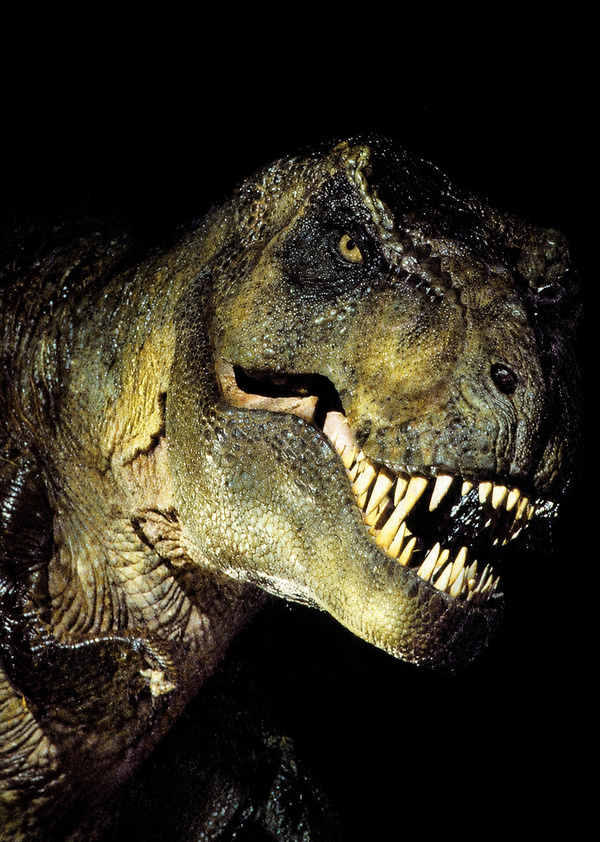
The Tyrannosaurus Rex is one of the most recognizable figures in film history. However, behind its realistic depiction are not only the artists' work but also the evolution of visual effects technology.
When «Jurassic Park» was created in the early 1990s, the challenge for the specialists was to present creatures to the audience that were impossible to film in reality. To achieve this, they integrated several approaches: physical models, mechanical constructions, and computer graphics.
Over the past three decades, technology has changed significantly. Digital models have become more intricate, animation more fluid, and the possibilities for merging real objects with computer-generated imagery have broadened.
In this study, I will trace how the design of the same character—the Tyrannosaurus Rex from the Jurassic Park franchise—has evolved by comparing three films: the 1993, 2015, and 2022 versions.
1993 — «Jurassic Park»
To create the dinosaurs in the original Jurassic Park, the team combined practical effects from Stan Winston Studio with computer graphics from Industrial Light & Magic (ILM).
One of the main production elements was a full-sized animatronic Tyrannosaurus Rex. It was a mechanical structure with a realistic outer shell, capable of moving its head, jaw, and other body parts. Thanks to the physical model, actors could interact with the dinosaur directly on the set.
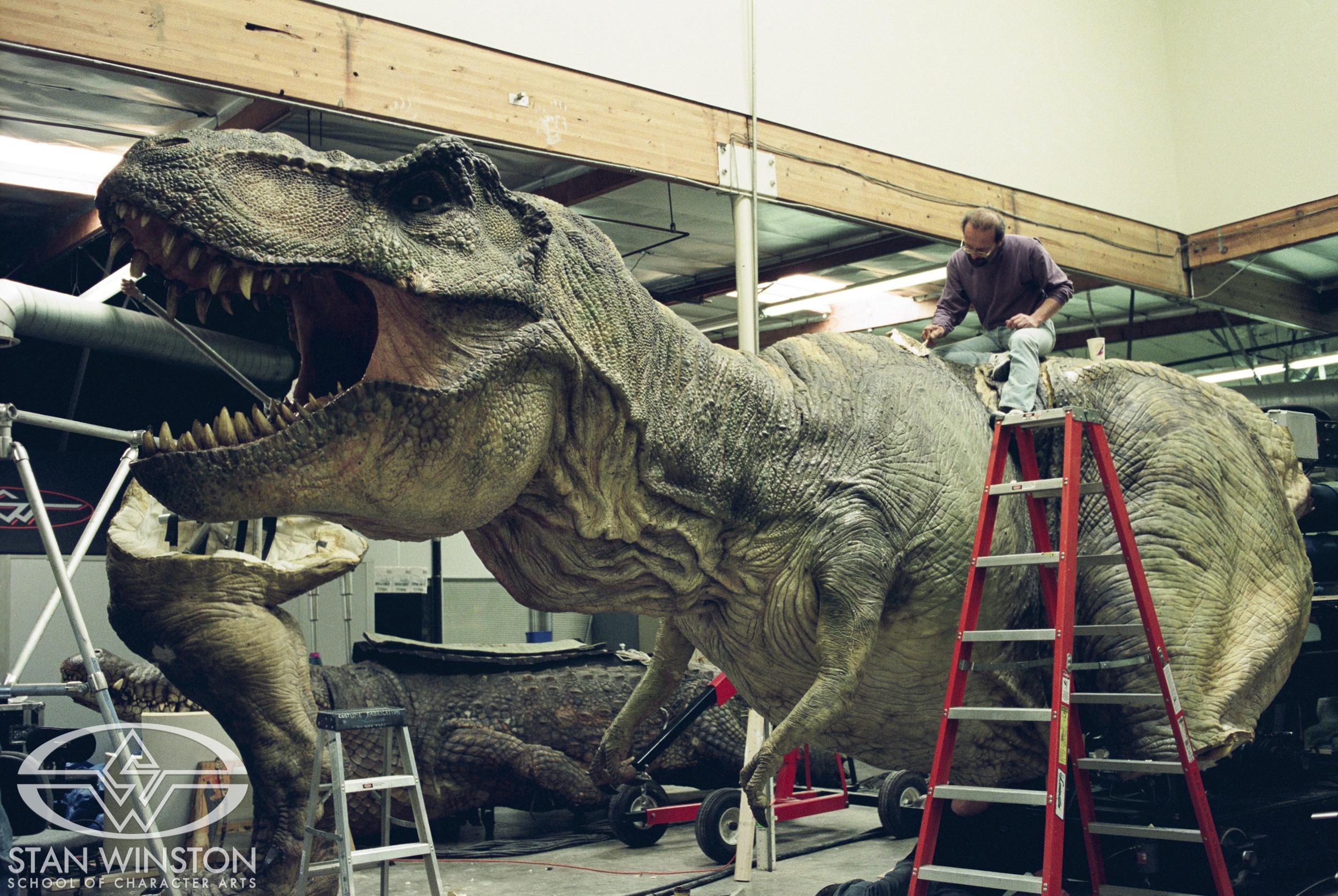
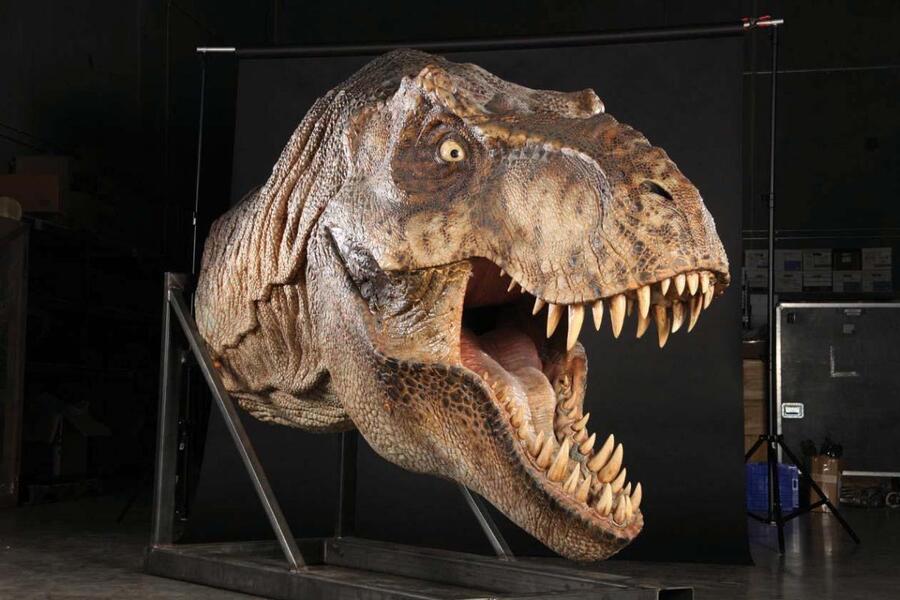
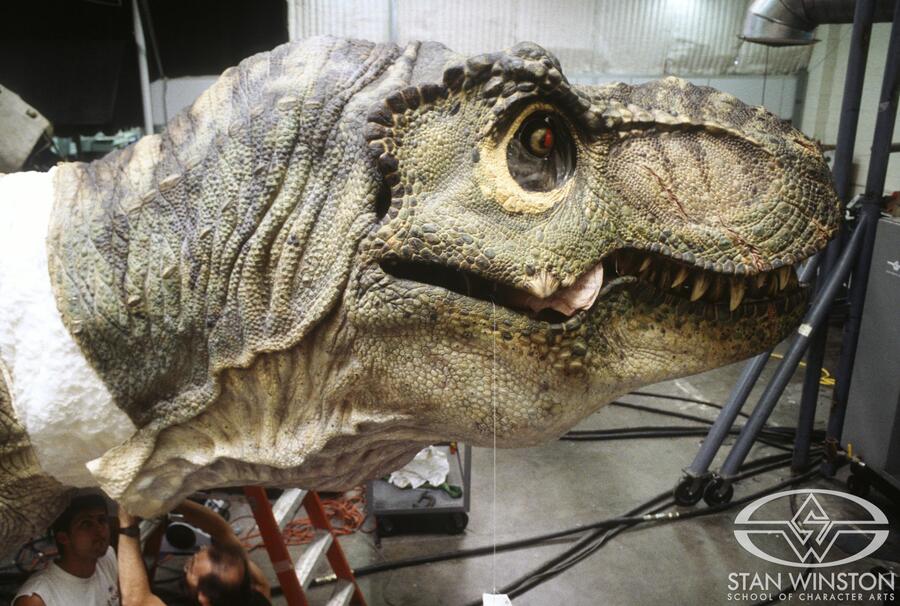
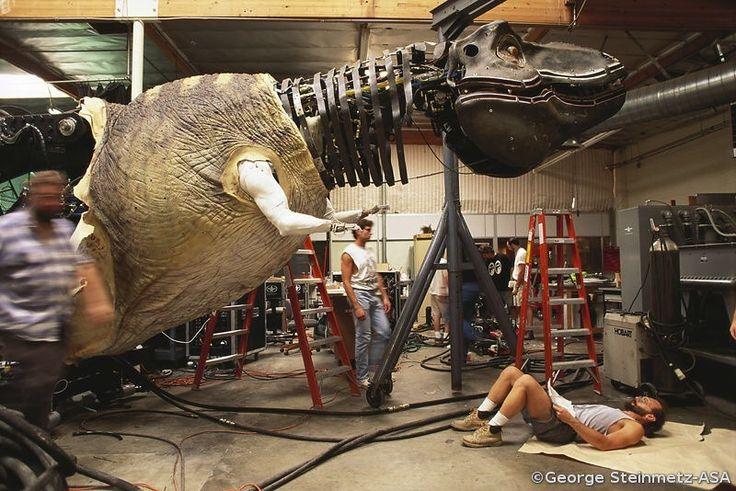
However, the animatronics could not provide all the necessary movements and angles. Computer graphics were used for more fluid animation. ILM specialists created a digital model of the Tyrannosaurus, which could then be animated and integrated into the filmed material.
Initially, stop-motion filming of dinosaur models was planned for the animation. However, after seeing computer tests, director Steven Spielberg decided to pursue the digital approach. Meanwhile, Phil Tippett’s team continued to contribute to developing the technology for transferring principles of traditional animation into the digital medium.
How was movement transferred to the computer?
One of the developments was the Dinosaur Input Device (D.I.D.)—a specialized device that allowed for the recording of movements from a mechanical model and the transmission of data for subsequent computer animation.
This created a sort of bridge between physical animation and CGI. The expertise of stop-motion animators didn’t disappear; rather, it found a new application in digital production.
Two Ways to Create One Character
In the film, practical and digital effects did not entirely replace one another. They served different functions: the animatronic allowed for the physical presence of the dinosaur on set, while CGI enabled it to be shown in motion and in scenes where using a full-scale model was impossible.
The final film featured about six minutes of computer-generated dinosaurs and nearly nine minutes of scenes with physical models. This demonstrates how crucial the combination of both technologies was to the film.
2015 — Jurassic World
Twenty-two years later, the Tyrannosaurus Rex returned to the screen in the film «Jurassic World.» By this time, computer graphics had become the primary tool for creating digital creatures, but the artists faced a separate challenge: preserving the recognizable appearance of the dinosaur from the original film.
To work on the new version, ILM specialists utilized several sources. One of these was a small physical model of a Tyrannosaurus Rex, created for the first film. It was scanned and used as the basis for further modeling.
Furthermore, the team gained access to the archival digital model of the ILM from «Jurassic Park.» This model needed to be adapted to modern tools, as the original was created using earlier modeling technology and differed from the new version in the construction of individual body parts.
Artists combined data from the physical model and the digital original to bring the new image closer to the Tyrannosaurus Rex that viewers remembered from the 1993 film.
Digital Modeling and Detailing
Unlike the physical construction from 1993, the digital model allowed artists to work with the character’s form and surface directly within a three-dimensional environment.
When creating the Tyrannosaurus, specialists utilized digital sculpting, texturing, and a model deformation system for animation. A crucial objective was not merely to add detail to the dinosaur, but to preserve its defining characteristics: the shape of its head, the placement of its eyes, body proportions, and recognizable silhouette.
The new version also accounted for the passage of many years since the events of the first film. Therefore, the Tyrannosaurus Rex’s appearance was changed by adding signs of age and physical deterioration.
2022 — Jurassic World Dominion
Return to Original Design
By the time Jurassic World Dominance was released, the digital models of dinosaurs had become significantly more complex and detailed. However, the film’s team decided not merely to refine the existing Tyrannosaurus Rex model, but to return it to its original appearance.
David Vickers, Head of Visual Effects, shared that ILM specialists accessed the studio archives and reconstructed the original digital model of the Tyrannosaurus Rex from «Jurassic Park.» The old files were successfully opened using newly discovered software and converted into a format suitable for contemporary work.
Next, the artists compared the original model with its current digital version. They discovered differences in the jaw shape, brow ridges, body proportions, and other details. The team also studied photographs of the original Stan Winston animatronic to restore the specifics of the coloring and skin texture. The specialists referred to this process as digital paleontology.