Introduction
In his commissioned portraits, Rembrandt considered the subject’s position in society, their desire to be recognized, and how they wished to be remembered by others. In works where the artist independently selected the model and subject matter, there is greater scope for experimentation with the representation of the body, light, and texture.
Categories
- Commissioned portraiture as a reflection of social status. 1630s
- Self-portraiture as a space for experimentation. 1630s
- The patron’s individuality. 1640s
- Freedom of pictorial style in commissioned portraiture. 1650s
- Late commissions and the limits of artistic freedom. 1660s Conclusion
Commissioned portraits as reflections of social status
In the early 1630s, Rembrandt moved to Amsterdam, where he quickly became a sought-after portraitist. His clientele included wealthy citizens, merchants, and representatives of influential families. The portrait allowed one to preserve not only a person’s physical appearance but also their perceived status in society. Therefore, elements such as clothing, posture, adornments, and even the size of the canvas held significant meaning.
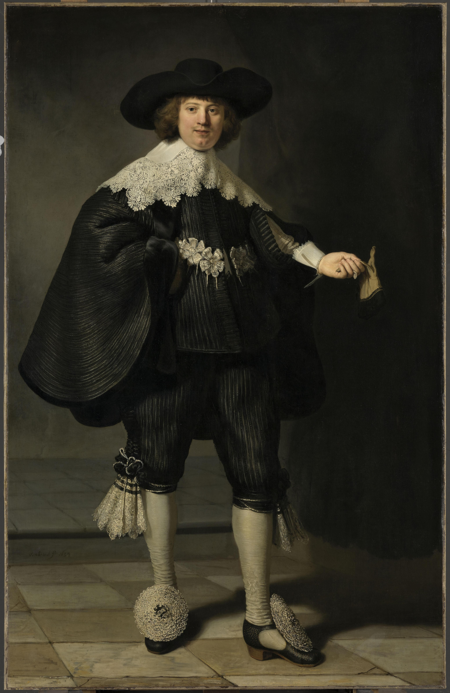
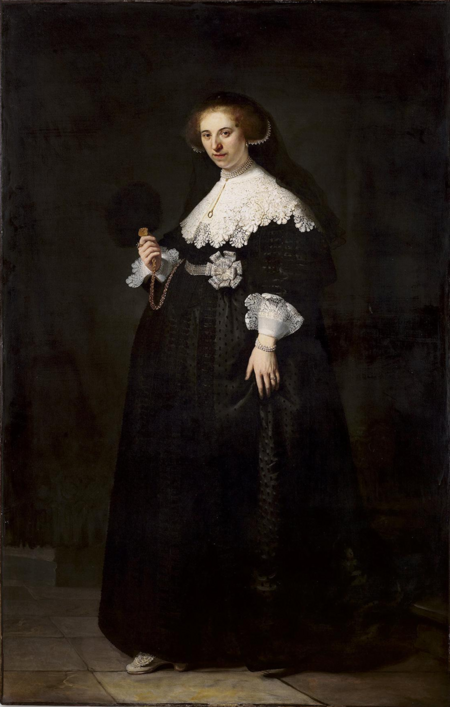
1. Rembrandt van Rijn. «Portrait of Martin Soldmans, ” 2. Rembrandt van Rijn „Portrait of Oyen Coppit“
In 1634, Rembrandt painted portraits of Marten Soldmans and Opjen Coppit, who had married the year before. The artist depicted the couple full-length, nearly life-size. For Dutch portraiture of that era, such a format was unusual. Typically, similar images were reserved for monarchs and the aristocracy. The choice of a large format already spoke volumes about the patrons' ambitions.
Costume and Details
The first thing that catches the eye in both portraits is the clothing. Black fabrics occupy the majority of the composition, while white lace collars and cuffs stand out against the dark background. Rembrandt meticulously renders the differences between the materials—the sheen of the satin, the soft folds of the fabric, the delicate pattern of the lace.
Marten Solmans' lace collar and black suit.
Clothing here becomes an important part of the overall look. Expensive fabrics and jewelry indicate the financial status of the couple. Furthermore, Rembrandt uses them as a pictorial medium, exploring how light falls on different surfaces.
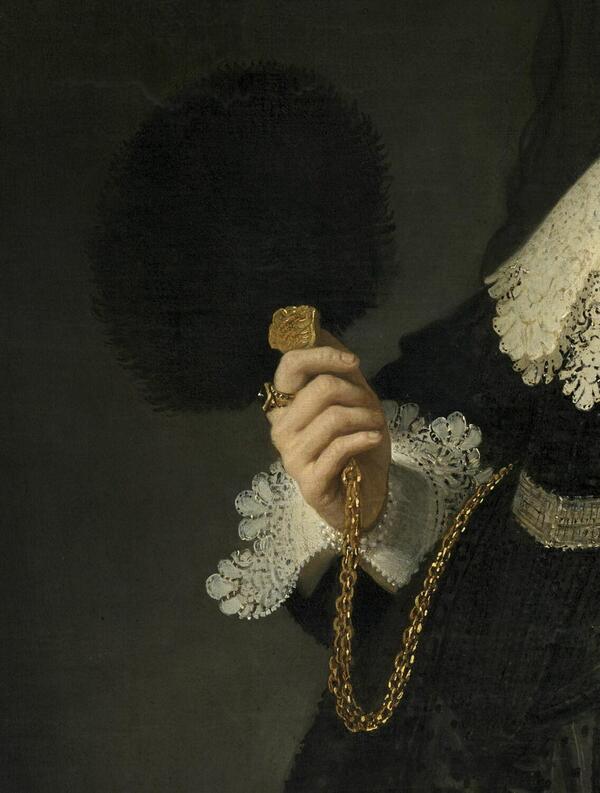
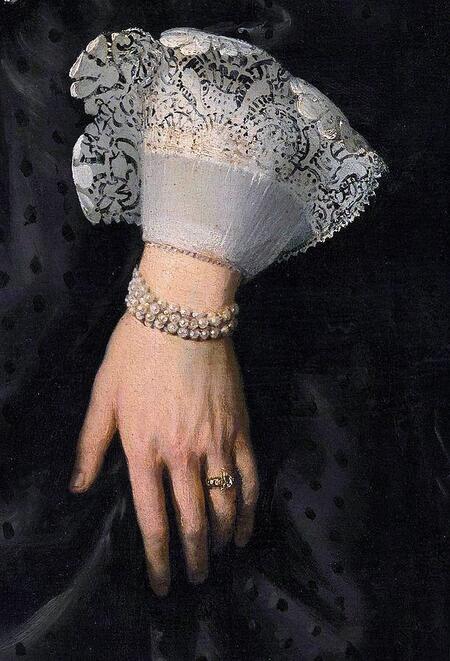
Costume details: Marten’s adornments and Opien’s accessories.
What can be observed in the painting style?
In these portraits, Rembrandt pays great attention to the accuracy of detail. The faces, lace, folds of clothing, and accessories are written with particular care. The light helps to highlight important parts of the image, while the dark background does not distract attention from the figures.It is already noticeable here that the artist works with varying degrees of detail. Some surfaces he renders almost like fine jewelry, while he leaves others more generalized. This allows him to guide the viewer’s gaze and emphasize the details that are significant to the client’s persona.
Costume and Details
The first thing that catches the eye in both portraits is the clothing. Black fabrics occupy most of the composition, while the white lace collars and cuffs stand out against the dark background. Rembrandt meticulously captures the differences between the materials: the sheen of the satin, the soft folds of the fabric, and the delicate pattern of the lace.
Matrena portrait details: lace collar.
The white collars are particularly interesting to examine. Upon close inspection, one can observe the complexity involved in rendering them. Conservator research has shown that in certain areas, the lace was drawn in dark paint over a light ground. Thus, the artist was able to convey the intricate pattern without detailing every single thread.
Oppen Coppit Portrait Details.
Clothing here becomes an important part of the overall look. Expensive fabrics and ornaments indicate the couple’s financial status. At the same time, Rembrandt uses them as a pictorial material, exploring how light falls on different surfaces.
Details of the portrait of Martin Solmans: decorated footwear.
What can be noted about the painting style?
In these portraits, Rembrandt pays close attention to the precision of detail. The faces, lace, drapery, and accessories are rendered with particular care. Light helps highlight the important parts of the image, while the dark background does not distract from the figures.
It is already noticeable here that the artist works with varying degrees of detail. He renders some surfaces almost jewel-like, while leaving others more generalized. This allows him to guide the viewer’s gaze and emphasize the details that are significant to the client’s image.
In the cases of Marten and Ophe, such detail plays a notable role. Their portraits were intended to make an impression and to showcase the couple’s social standing.
Self-Portrait as a Space for Experimentation
Throughout his life, Rembrandt frequently turned to his own image. He created a large number of self-portraits during his youth, when he was actively experimenting with facial expression, lighting, and costume. His own appearance allowed him to study various human conditions and try new pictorial techniques.
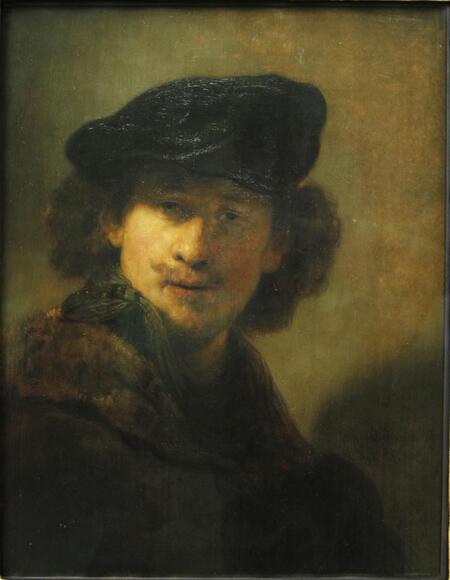
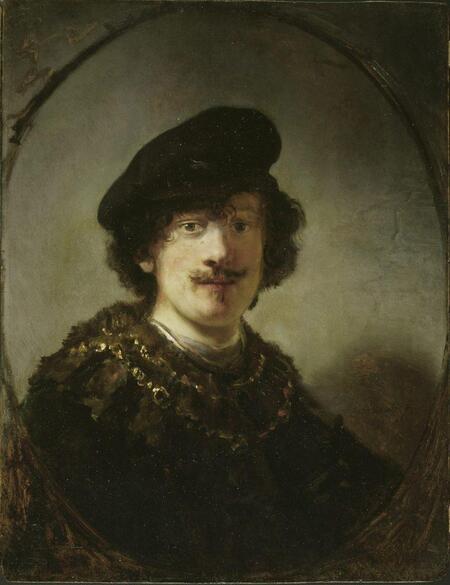
1. Rembrandt van Rijn. «Self-Portrait with Shadowed Eyes, ” 1634. 2. Rembrandt van Rijn. „Self-Portrait in Velvet Beret and Fur Cloak, ” 1634.
Throughout his life, Rembrandt frequently referenced his own image. He created many self-portraits during his youth, when he was actively experimenting with facial expressions, lighting, and costume. His own appearance allowed him to study various human states and test new pictorial techniques.
Light and facial expression