What is the HSE Art and Design School?
The HSE Art and Design School is a leading educational institution dedicated to developing contemporary artistic and design professionals. We believe that design is not just about aesthetics—it’s a powerful tool for solving complex problems and improving the world around us. Our programs blend rigorous academic theory with intense, hands-on studio practice, preparing students for the most innovative roles in the creative industries globally.
Our Philosophy
We foster an environment of critical thinking, experimentation, and fearless creativity. We challenge students to look beyond conventional boundaries, encouraging them to ask «what if?» rather than just «what is.» Our curriculum is intentionally interdisciplinary, breaking down silos between disciplines like graphic design, animation, industrial design, and art history. This holistic approach mirrors the reality of modern creative work.
Program Offerings
We offer comprehensive programs tailored to various stages of artistic development. Whether you are just beginning your creative journey or are ready to tackle advanced, specialized topics, we have a path for you.
- Undergraduate Programs: These programs provide a strong foundation across various design disciplines. Our students immerse themselves in core creative principles while exploring specialized tracks—from UX/UI Design to Visual Arts.
- Graduate Programs: For those seeking to deepen their expertise, our Master’s programs offer advanced research opportunities and intensive project-based learning, preparing graduates for leadership roles in the industry.
- Short Courses & Workshops: We also host specialized workshops for both prospective students and established professionals, covering timely topics in digital media, branding, and conceptual art.
Why Choose the HSE Art and Design School?
The advantages of studying with us are numerous. Firstly, our faculty comprises leading practitioners—artists and designers who are actively shaping the cultural landscape. They don’t just teach theory; they bring current industry practice directly into the classroom.
Secondly, our facilities are state-of-the-art. Students have access to industry-standard software, high-end production equipment, and dedicated studio spaces designed for collaborative experimentation.
Finally, we prioritize a global perspective. Our curriculum integrates international case studies and promotes collaboration with creative partners from around the world, ensuring our graduates are not just locally relevant, but globally competitive.
Join Our Community
Are you ready to transform your passion into profession? Discover the programs that align with your creative vision and start building a future where art and design drive innovation.
Bob Dylan is a figure whose image has always existed on the boundary between reality and myth. His evolving appearance, mannerisms, and complex relationship with the public made the musician one of the most recognizable icons of 1960s photography.
Daniel Kramer and Jerry Schatzberg captured Dylan during one of the most crucial periods of his career, yet they perceived him differently. For one, he became a subject of visual chronicle; for the other, an object of artistic experimentation. In their photo books, one person transforms into two distinct narratives.
This study examines how the photographer’s gaze, the language of the portrait, and the structure of the photo book shape a person’s image—an image that eventually becomes part of cultural memory.
Navigation
Concept
A photograph can capture a moment, but a photobook allows it to have a continuation. On its pages, individual images enter into a dialogue, form sequences, and develop their own narrative. Here, it is not only the photographer’s perspective that matters, but also how the images are organized within the book’s space. It is precisely because of this that the photobook becomes an independent art form—one capable not just of preserving images, but of reinterpreting them.
It is particularly interesting to examine this quality using the example of Bob Dylan, a musician whose image has long since become a cultural icon. In the mid-1960s, as Dylan was transitioning his musical style and public persona, he was photographed by Daniel Kramer and Jerry Schatzberg. Their images, created during a close historical period, later formed the basis of two different books.
For this study, we selected Daniel Kramer’s Bob Dylan: A Year and a Day, published by TASCHEN, and Jerry Schatzberg’s Dylan, published by ACC Art Books. These photobooks share the same subject, yet each offers a unique way of encountering him.
Kramer’s book focuses on the events of 1964–1965. Concerts, rehearsals, studio sessions, and everyday scenes weave together a chronicle of the folk performer’s transformation into a rock icon. The sequence of photographs allows the viewer to observe the passage of time and establish connections between events.
Dylan by Schatzberg offers a different perspective. The book focuses on the diversity of imagery within a single individual. Studio portraits, staged experiments, and informal shots reveal Dylan through various states and modes of self-presentation. The photographs, bound together in the publication, allow the reader to view his personality as a mutable artistic construct.The main hypothesis of this study is that the photobook does more than merely present photographs; its own structure shapes a new perception of the subject. The sequence of images, the scale of the visuals, the composition of the spreads, the typography, and the interplay between text and photograph are capable of altering the meaning of even well-known shots.The research is built upon comparing two editions: from the historical context and visual language of the photographs to the specific details of the book’s design. Particular attention is paid to the covers, page organization, the rhythm of the spreads, the alternation between large and small images, and the role of white space. The visual material is selected based on the principle of comparing similar subjects, portrait series, and compositional solutions.
The foundation of the text comprises publishing materials, interviews with photographers, and publications dedicated to the history of the photographs and photo books. These resources allow us to view the publications not merely as collections of 1960s photographs, but as works of book art created decades later.
Thus, the study engages with two temporal layers: the moment the photographs were created and the moment they were compiled into books. Decades pass between these points—decades in which Dylan becomes a legend and his images become part of the cultural memory.
The goal of this research is to demonstrate how two photo books transform the images of one person into two distinct visual narratives. A book does not simply present images for viewing; it dictates the order in which they are encountered, guides the reader’s gaze, and enables the discovery of new meanings within a familiar image.
01. One Person, Two Perspectives
In the history of photography, the 1960s marked a period when images of musicians began to move beyond newspaper publications, magazine covers, and promotional materials. Photography gradually evolved from a means of documenting celebrity into an independent artistic testament to the era. Decades later, many of these photographs found new life in photo books, where individual shots coalesced into cohesive visual narratives.
Among these publications, Daniel Kramer’s Bob Dylan: A Year and a Day and Jerry Schatzberg’s Dylan by Schatzberg hold a special place. Both books focus on the same subject—Bob Dylan—during a period of his rapid creative transformation. However, each offers a unique approach to engaging with the musician.
Kramer’s images cover the years 1964–1965, a time when Dylan transitioned from acoustic folk to electric sound. Schatzberg photographed the musician between 1965–1966, when he was already actively experimenting not only with music but also with his public image.
The photographs of the two authors were unified in books created significantly after the actual shoots. This temporal distance is fundamentally important: what is presented to the reader is no longer a direct chronology of events, but a curated and organized photographic archive in which the past acquires a new artistic form.
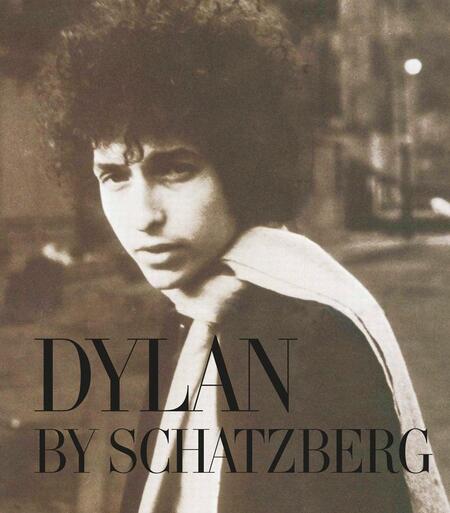
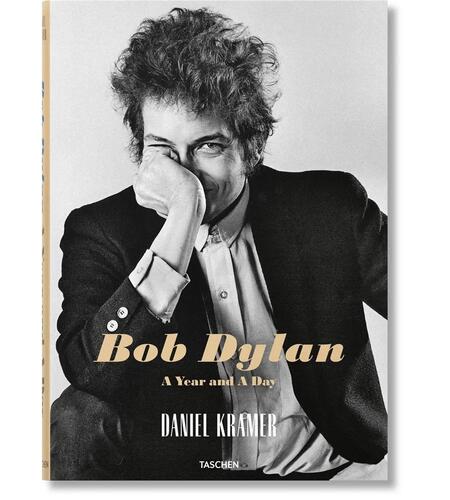
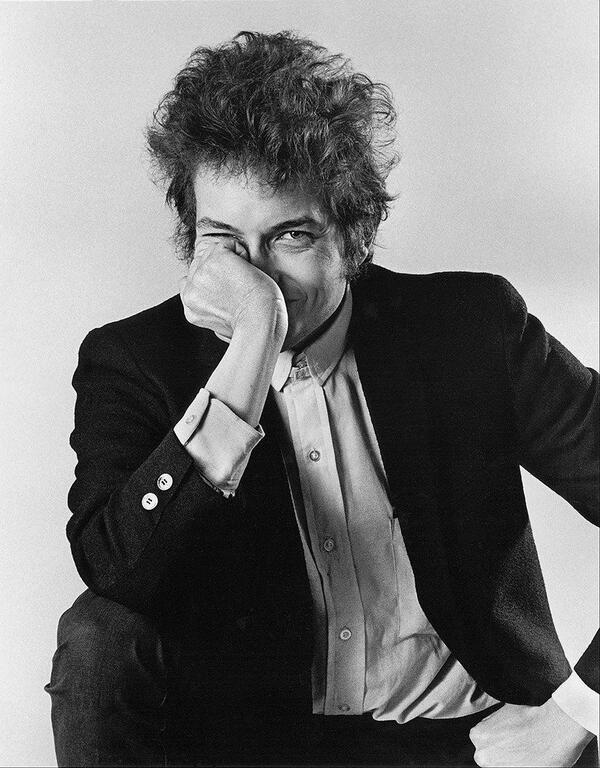
Jerry Schatzberg. Dylan by Schatzberg. Cover, ACC Art Books \ Daniel Kramer. Bob Dylan: A Year and a Day. TASCHEN Edition Cover
The difference between the two editions begins with their titles. Bob Dylan: A Year and a Day defines the narrative time frame. The book invites readers to examine one year of the musician’s life as a standalone story, where every event becomes part of a broader process of change.
Dylan by Schatzberg, on the other hand, foregrounds the photographer’s name. Here, not only the subject is important but also the author’s perspective through which the reader encounters him. The title immediately establishes the book as a personal interpretation of Dylan’s image.
Both covers feature a portrait of the musician, yet the fundamental approach to presenting the material sets different expectations: in the first case, the reader is promised a story of a specific period, while in the second—an encounter with the subject through the photographs of a particular author.
From Event to Sequence
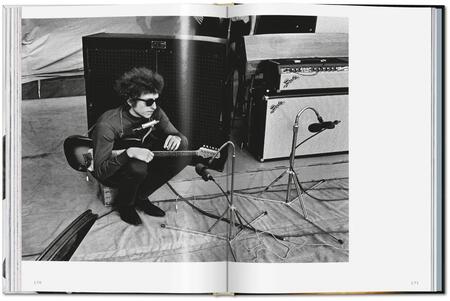
At the core of Kramer’s book is prolonged observation. The photographer accompanied Dylan to performances, rehearsals, recording studios, and his daily life. This resulted in an archive that includes not only landmark moments from his career but also events typically outside the public image of an artist.When these photographs are assembled into a photobook, a sequential narrative emerges. The images cease to exist as isolated documents; instead, they begin to reveal the changes that occurred to the musician over the course of a year. Concert photography is juxtaposed with informal portraits, and scenes of preparation for performances complement Dylan’s on-stage presence.This organizational principle transforms the book into a visual chronicle—a narrative where meaning is generated not just within a single frame, but also between adjacent images.
From portrait to multiple images
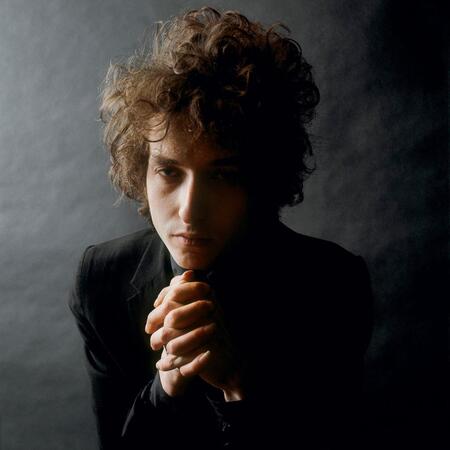
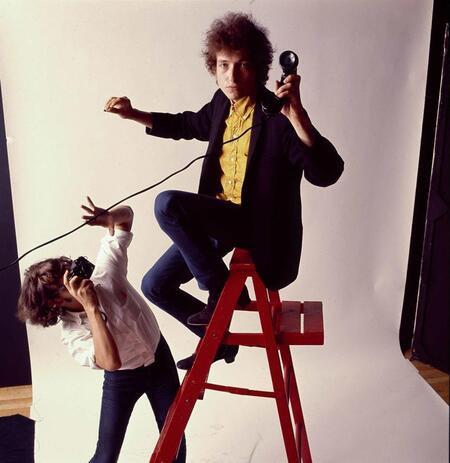
Jerry Schatzberg. Studio Portrait of Bob Dylan, 1965 \ Jerry Schatzberg. Portrait of Bob Dylan, 1965–1966
Schatzberg’s photobook addresses a different nature of photographic material. Working with Dylan between 1965 and 1966, the photographer created both staged portraits and images taken in recording studios and at performances.
Unlike Kramer’s extended chronicle, this archive allows for a focus on the variety of ways a single individual can be depicted. Dylan appears before the camera in different emotional states, changing poses, facial expressions, and the nature of his interaction with the surrounding space.
The photographs gathered in one book acquire additional significance through the repetition of the subject. Each subsequent portrait offers another version of a familiar image, and their totality makes evident the impossibility of reducing the musician’s personality to a single depiction.
Consequently, Dylan by Schatzberg can be seen as a photobook whose central theme is the diversity of the portrait itself.
Daniel Kramer. Bob Dylan’s A Year and a Day spread featuring two portraits of the musician
Both photo books were created decades after the original shoots. During this time, Bob Dylan evolved into one of the central figures of 20th-century musical culture, and many of the photographs became recognizable symbols of the era.
Transferred into the realm of the book, these images acquired new connections and meanings. They are now perceived not only as documents of the past but also as parts of a deliberate artistic work. The selection of images, their sequence, the cover design, and the layout of the spreads determine the image of the musician that the reader takes away.
This is precisely the key difference between a photographic archive and a photo book. An archive preserves numerous images, whereas a book offers a specific journey of encountering them.
Thus, Kramer and Szabberg did not simply leave behind two collections of Bob Dylan’s photographs. Their images became the foundation of two independent narrative books, in which one person appears simultaneously as a subject of historical chronology and an object of artistic inquiry.
02. Between Humanity and Legend
In the mid-1960s, Bob Dylan gradually transformed from a young folk performer into one of the central figures of American musical culture. Alongside the evolution of his sound, his public persona also changed. Photographs from this period capture numerous versions of Dylan: contemplative and ironic, focused and detached, an ordinary person, and an unreachable idol.
Decades later, these images appeared in two photo books, each one constructing the relationship between the individual and their legend in a distinct way.
In Bob Dylan: A Year and a Day, the musician’s image is born from a sequence of events. Daniel Kramer portrays Dylan at various stages of creative change, and the book’s very structure transforms individual shots into a narrative of stardom’s formation.
Dylan by Schatzberg offers a different approach to meeting the subject. Here, the diversity of portraits becomes the basis of the narrative. From page to page, poses, facial expressions, and shooting contexts shift, yet one person remains consistently before the reader—as if trying on different versions of himself.
Thus, the two photo books reveal different mechanisms of cultural image formation: one through a sequence of events, and the other through a multiplicity of photographic interpretations.
Man in History. Daniel Kramer
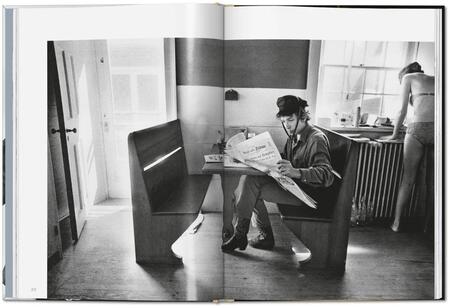
In Kramer’s book, photographs of everyday life hold a special place. On one spread, Dylan is seated in a small room, engrossed in reading a newspaper. The photographer preserves the surrounding space, allowing the viewer to see the musician outside of the concert stage and the usual trappings of fame.
The image dominates a full spread, giving the mundane scene an unexpected significance. A simple action is given the same weight as a performance before a massive audience.
In the context of the book, these types of shots serve as vital pauses between major events. They do not detract from the narrative of the musician’s ascent; rather, they imbue it with a human dimension. Kramer allows the reader to glimpse the legend before it has fully separated itself from everyday life.
Daniel Kramer. Bob Dylan on stage, 1964–1965. Spread: Bob Dylan: A Year and a Day
On the opposing page, Dylan is shown alone on stage, illuminated by a narrow spotlight. His figure appears small against the surrounding darkness. The contrast between the lit musician and the empty space creates an almost theatrical image of solitude.
The photograph placed in the book takes on a symbolic resonance. To the reader, he is no longer simply a performer during a concert, but a figure upon whom the attention of an entire era is focused.
The transition between these types of images and everyday scenes is particularly striking. The alternation between the intimate and the public allows the book to preserve the duality of Dylan’s image: simultaneously an ordinary person and a figure gradually becoming a legend.
Multiple faces of one person. Jerry Schatzberg
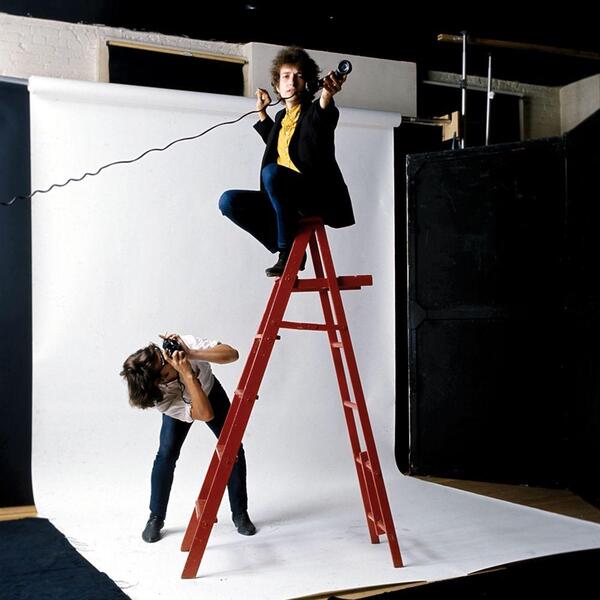
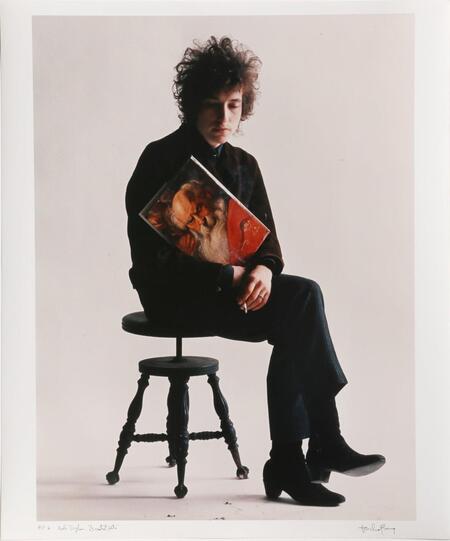
Jerry Schatzberg. Bob Dylan, 1965. Studio portrait with a painting. Jerry Schatzberg. Bob Dylan on the stairs in a photo studio, 1965.
In Shatsberg’s photobook, the image of Dylan is constructed from a multitude of portrait experiments. In one photograph, the musician sits on a stool, holding a painting to his chest and looking down. In another, he is perched atop a red staircase, transforming a typical studio shoot into an almost theatrical performance.What unites these images is the absence of the familiar concert context. There is no need to depict Dylan with a musical instrument or in front of an audience. His personality is revealed through his posture, facial expression, and unusual interaction with objects.Within the space of the photobook, such frames can be perceived as a series of metamorphoses. Juxtaposing them creates the image of a person unwilling to adhere to a single role. Each portrait offers a new interpretation, and together they form a representation of a personality that eludes definitive definition.Unlike Kramer’s chronology, where the photographs are connected by a shared passage of time, the foundation of Shatsberg’s narrative is the diversity of the image itself.
Photobook and the Birth of a Cultural Myth
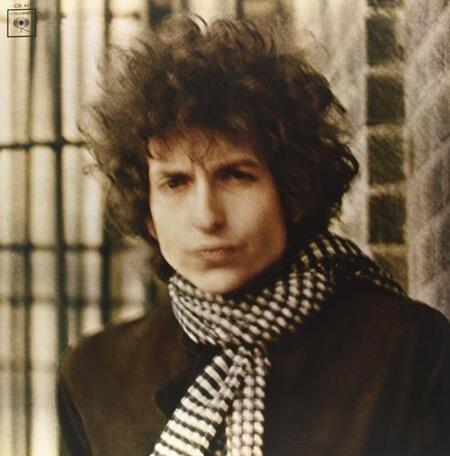
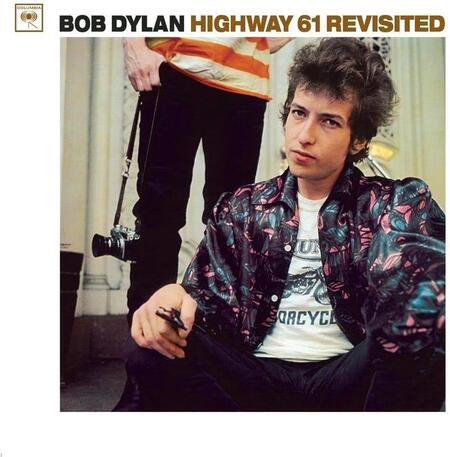
Jerry Schatzberg. Cover photo for Blonde on Blonde, 1966 \ Daniel Kramer. Cover photo for Highway 61 Revisited, 1965