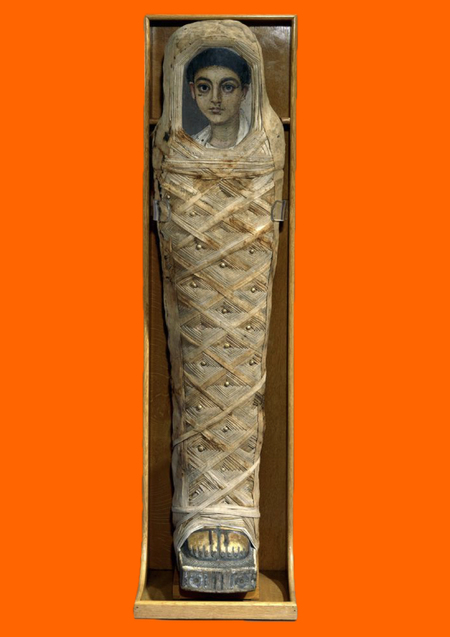
«The Fayum portraits are the earliest known examples of ancient studio portrait painting» [1].
Concept
The theme of Fayum portraits is one of the most unusual phenomena in the history of portraiture. I was intrigued by the fact that these images, created nearly 2,000 years ago, are still perceived as quite modern. Many of the portraits possess highly individual characteristics—each depicted person has unique facial features, eye expressions, hairstyles, clothing, and distinctive physical details.
The Fayum portraits originated in Egypt during the Roman occupation (1st–3rd centuries CE) and acquired their name from the Fayum Oasis, where many of them were discovered. They were created on wooden panels and used in funerary rites: the portraits were placed on the mummy’s face or affixed to the burial wrappings. Thus, the depiction of a person became part of the funerary complex.It follows that the Fayum portrait is simultaneously linked to the real human likeness and to the concept of preserving an image after death.
This precise tension—between the vibrancy of the imagery and the notion of death—became the core theme of my research. I want to explore what characteristics lend the Fayum portraits their distinct recognizability and how they differ from other examples of portraiture. To this end, I am analyzing specific visual indicators. Furthermore, my research draws parallels and makes comparisons between the Fayum portraits and other forms of funerary art from that era in Egypt.
quote
The core idea of the project is to study the characteristic features of the Fayum portrait through the analysis of its visual language. At the center of this visual investigation is the goal of identifying a specific pattern within a large volume of images. Why do the eyes in these portraits draw particular attention? What role do hairstyles, jewelry, and clothing play? Who is depicted, what about the color palette, and other artistic techniques?
The primary material for this research will be Fayum portraits and associated burial objects. When selecting pieces, my focus will be primarily on how well a specific image allows for the examination of a particular artistic or cultural characteristic.The main selection criterion will be the diversity of the visual material. I plan to include portraits of men, women, and children, images representing various age groups.To organize the material, I have chosen three chapters, each exploring a distinct facet of the uniqueness of Fayum portraits.
To prepare this research, I relied on the credibility and relevance of the sources to the chosen topic. For this purpose, I studied and utilized information from museum catalogs, scholarly articles, publications dedicated to the history of ancient art, and materials related to archaeological excavations in Roman Egypt.
The primary venues for sourcing material will include the catalogs of The Metropolitan Museum of Art, the British Museum, the Louvre, the Getty Museum, and other institutions that feature Fayum portraits. Special attention will also be given to comparing information across different sources and verifying their authenticity.
The goal of the research is something something something
quote or question
Ключевой вопрос
What makes Fayum portraits a unique artistic phenomenon, and what distinctive features of their visual language allow them to be differentiated from other forms of portraiture?
Hypothesis: I propose that the distinctiveness of Fayum portraits is determined by a combination of several interrelated features: the expressive portrayal of the face, the composition, the use of decorative elements, and a unique painting technique. Moreover, their uniqueness lies not only in their appearance but also in their connection to the ancient Egyptian funerary cult.
The goal of the project is this, this, this.
Chapter 1. Face and Gaze: Characteristics of Human Representation
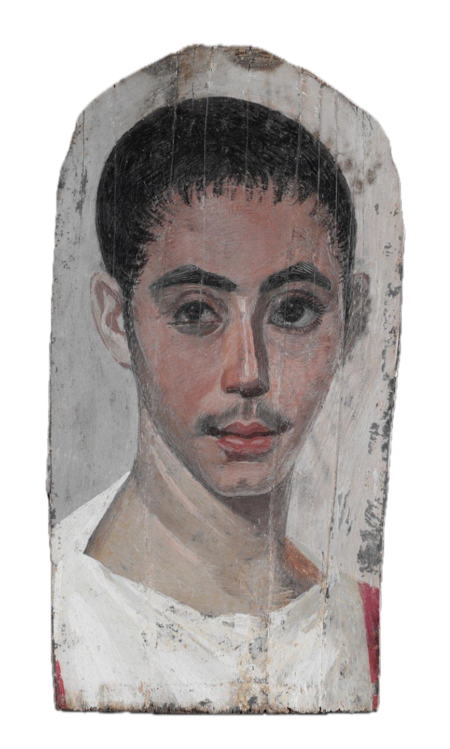
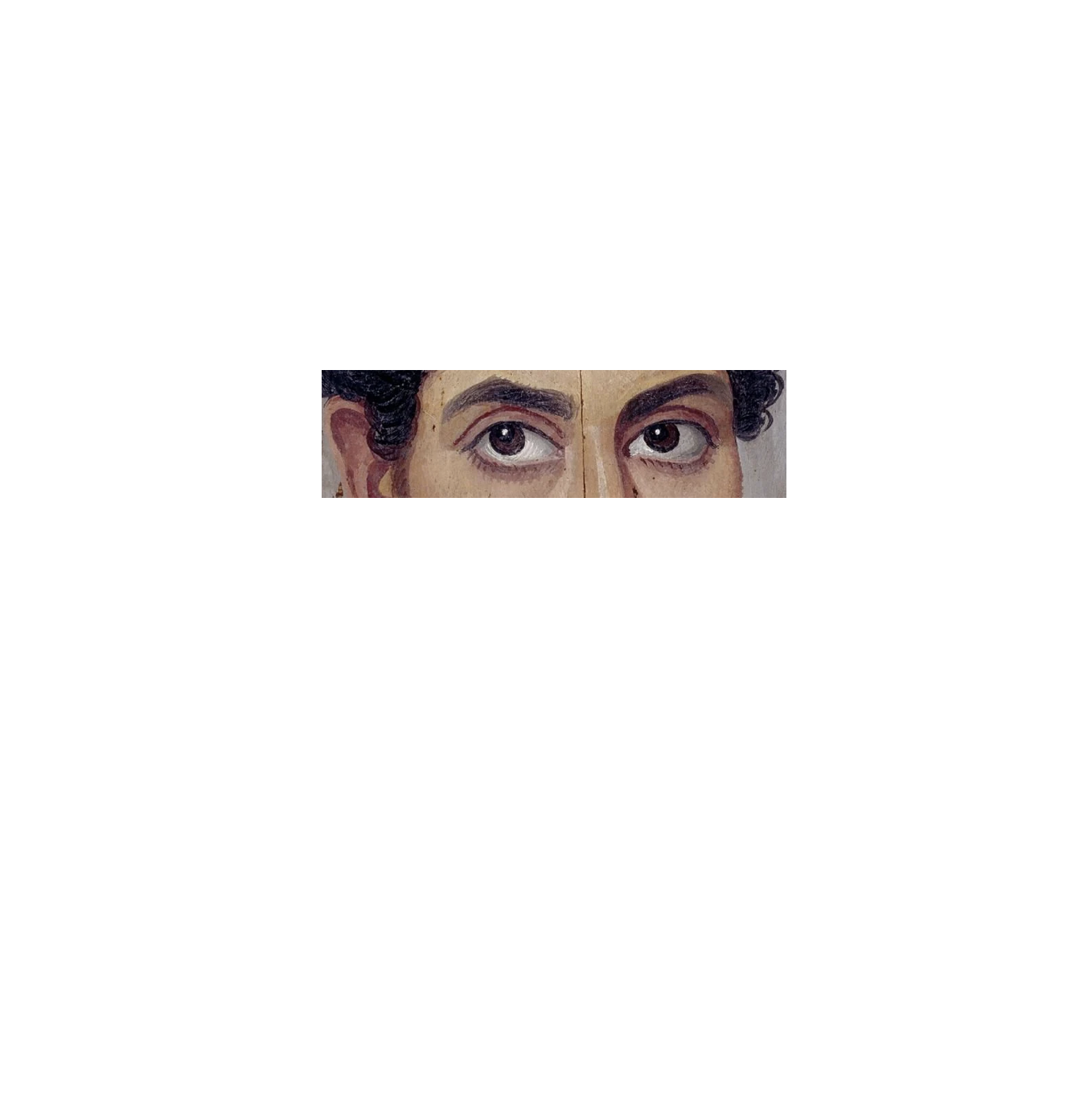
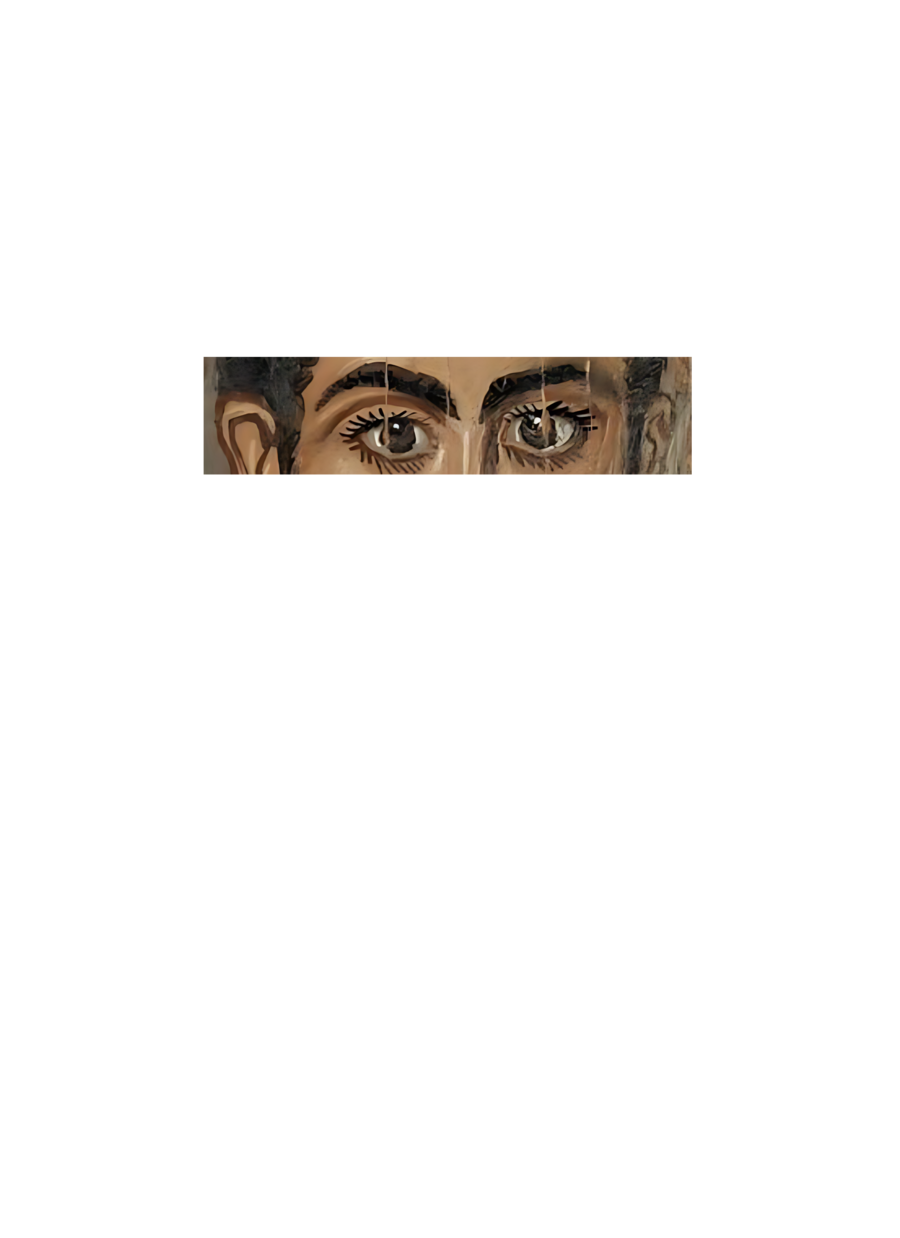
What draws attention in Fayum portraits first and foremost? Correct—the faces! They combine not only common features but also individual peculiarities. Because of this, the images look alive.Using the work «Portrait of a Young Man with a Peculiar Right Eye» as an example, one can see that attention was paid to unique facial features, such as mismatched eyes.
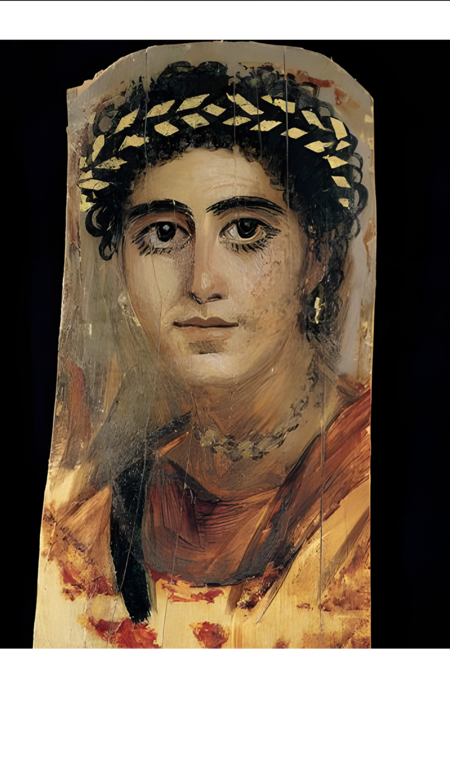
Chapter 2. External Appearance: Composition, Clothing, and Symbolism
Chapter 3. Between Art and Ritual: Technique and Funerary Purpose
Bibliography
- Fayum Portraits // A.S. Pushkin Museum of Fine Arts. — URL: https://pushkinmuseum.art/museum/structure/departments/ancient_east/fayumskie_portreti.pdf (Accessed: 12.11.2026).
Image Sources:
bububububu