Author’s Disclaimer
This study contains photographs of nude figures, including elements that may be perceived as intimate. The materials are used strictly for research purposes.
Concept
For millennia, the nude body has remained one of the most captivating and contentious subjects. In ancient sculpture, nudity signified the divine or heroic nature of a figure; in Renaissance painting, it spoke to a return to ideals; and in classicism, it represented rational beauty. With the advent of photography in the 19th century, the tradition of direct depiction of the nude body only solidified. Previously, nudes photographers copied painterly examples, but in the early 20th century, photographers began showing the body in its entirety, leaving no part of what was visible unseen by the viewer.
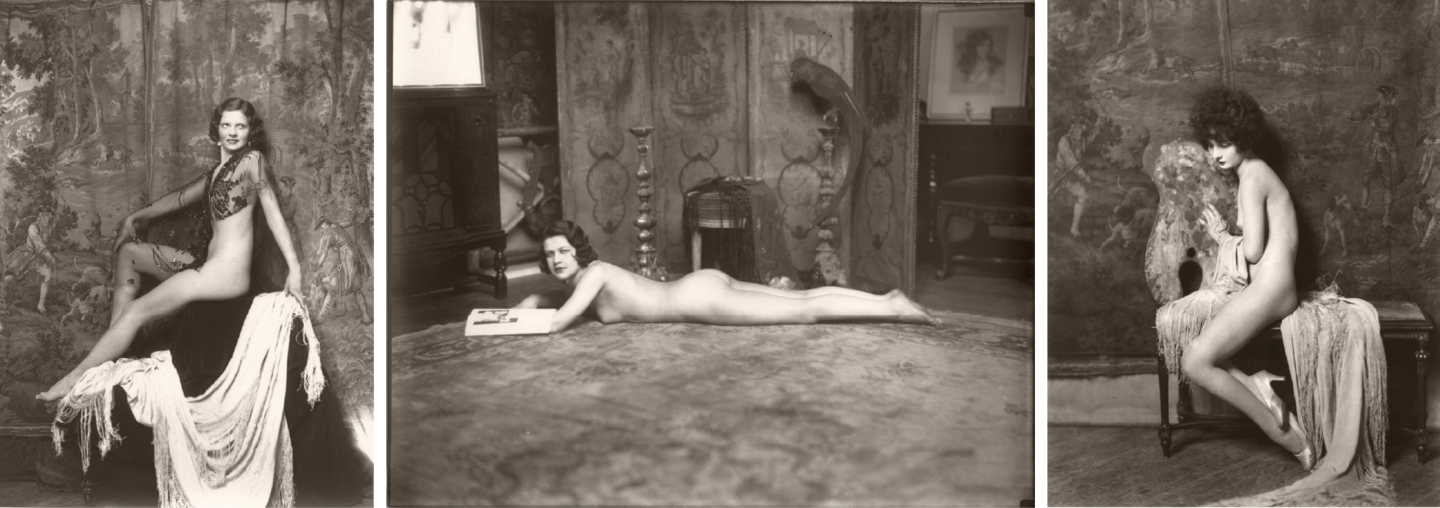
Alfred Chayney Johnston. «Ziegfeld Girls» Series, 1925.
However, there is another principle of presenting nudity—a less obvious one, but one I consider vital. In this approach, the photographer moves away from direct demonstration toward suggesting intimacy: the body remains in the frame, but it is not made fully accessible for viewing. The gaze encounters an obstruction—blur, a subtly visible body part, a sharp angle, or an obscuring gesture.
Hidden nudity is paradoxical. On one hand, the barriers erected by the photographer between the viewer and the body restrict visibility and prevent one from seeing the essential. However, it is precisely these limitations that compel the viewer to engage their imagination and fill in the blanks. This paradox is what generates tension, through which the concealed nude body proves more erotic than an open display.
The question arises: why does «implied» nudity often have a stronger and deeper impact than the most explicit imagery? What strategies are employed to achieve this?
The study will analyze nude photography that does not overtly display the body. It will investigate how a specific technique of concealment alters the viewer’s perception and why veiled nudity proves more interesting and erotic than direct depiction.
The research is structured around four identified strategies of concealment, progressing from the most «technical» forms of concealment (optics, cropping) to the most «corporeal» ones (angle, gesture).
The material was selected based on the principle of its representativeness for each of the four strategies. The study features works by both photography classics (Bill Brandt, Ralph Gibson) and contemporary artists (Mikael Jansson, Eric Marien). Sources included materials from the history of photography course, specialized publications, and articles on the nude genre, as well as thematic publications from professional communities.
The hypothesis is as follows: the barriers between the nude body in the frame and the viewer do not lessen the sensual tension; rather, they intensify it through the effect of an elusive image. Each suggested technique of concealment creates a distinct type of engagement with the viewer, transforming them from a passive observer into a co-conspirator who is compelled to scrutinize, guess, and complete the image.
Occlusion Optics
Sometimes, to render the body unrecognizable, a photographer merely needs to blur the focus, shoot the model through a reflection, or underwater. The camera captures only a blurred trace, and optical distortions leave the viewer with an outline—a form devoid of detail.
Lucien Clergue. From the series «Zebra Nudes, ” 1997.
In the «Zebra Nudes» series shot in New York, the author deliberately anonymizes the model, leaving only the female silhouette upon which light and shadow construct a rhythmic pattern. Intimate areas are either obscured by shadow or, conversely, illuminated. Nudity ceases to be obvious and becomes part of the optical design as the viewer attempts to discern the black-and-white stripes and separate the skin from the shadow.
Lucien Clergue. From the «Zebra Nudes» series, 1997.
In «Urban Nudes, ” Clergue does not present the body for view—it flickers in the reflection of a window. The nude figure is in the frame, but it merges with the architecture outside the window.
Lucien Clergue. From the series «The Urban Nudes, ” 1977.
Klerk also uses the humid air of the greenhouse as a natural diffuser, transforming the body into a melting silhouette. The viewer feels as if they are looking at a model through steamed-up glass—the silhouette is palpable, but the figure’s specific contours slip away.
Lucien Clergue. «Caco at the Grand Herbier, ” 1975.
In Ruth Bernard’s works, nudity is concealed through light. The figure transforms into smoke or an elusive trace, creating a sense of fragility and weightlessness. The skin seems almost immaterial; the body appears to dissolve into the air—sensual tension emerges from this instability, the impossibility of sustaining the image.
Ruth Bernard. «Configuration,» 1962 // Ruth Bernard. «Luminous Body,» 1962.
Photographers often conceal the nude body underwater. The water blurs the silhouette, compelling the viewer to examine the contours, and this effect creates a sense of almost mystical harmony between the body and the natural element.
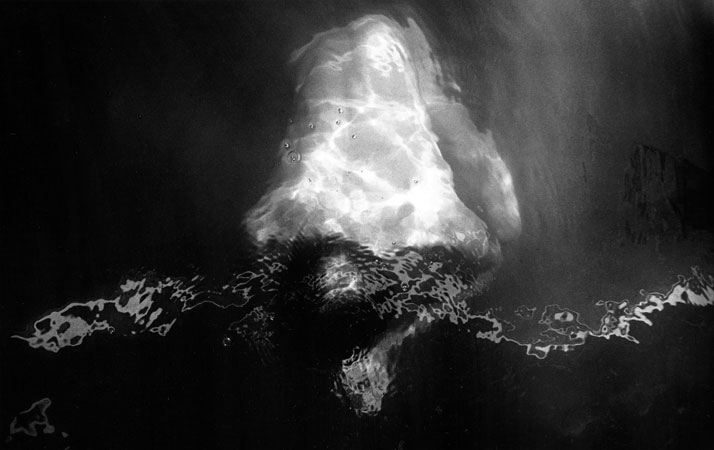
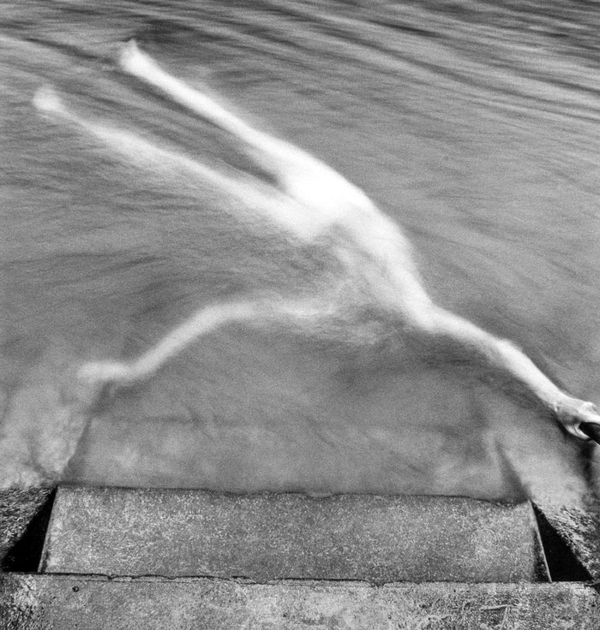
Arno Rafael Mikkinen. From the series «Water and Sky,» 1975.
Hiding Fragment
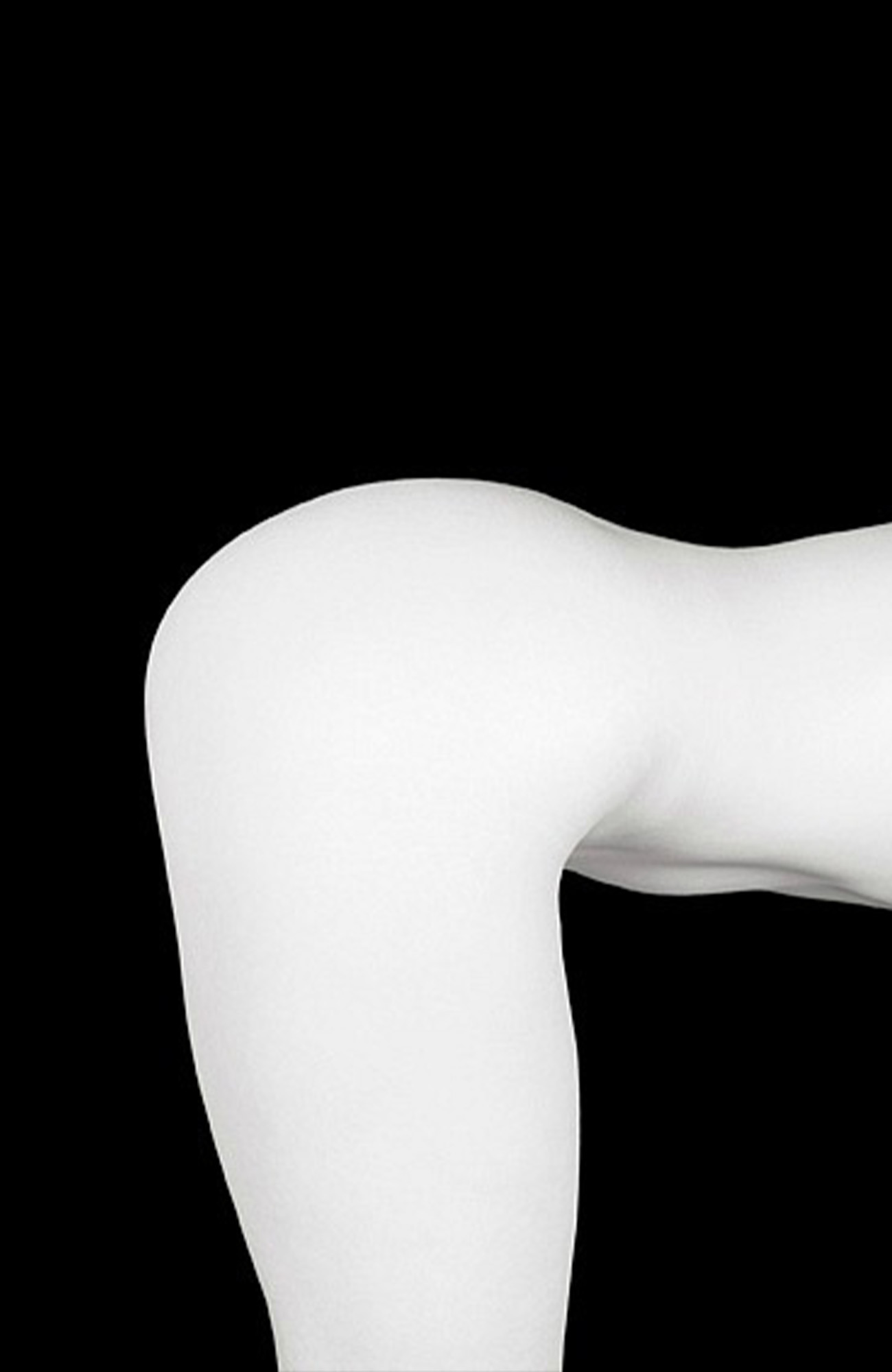
When a nude photograph zooms in too closely, the body ceases to be a body. Instead of a complete figure, there is a fragment of a hip, a mole, and goosebumps on the skin. The photographer seems to «shatter» the model’s body into details—and the viewer cannot reassemble it into a whole. This technique forces the gaze to wander across the fragments in search of familiar contours, only to find none.
Lucien Clergue. «Born from the wave» from the «Sea Nudes» series, 1960s
In «Born of the Sea Wave, ” Clergue presents the viewer with only fragments of the body emerging from the water. By choosing an intimate distance between the camera and the body, Clergue eschews conventional eroticism and instead examines how light falls upon wet skin. The viewer’s attention shifts to texture: goosebumps on the skin and dripping water. The photograph becomes tangible, tactile.
Eric Marian. Untitled, 2005.
In Erik Marian’s work, close-ups of the model’s legs and shoulders are rendered softly. Even when the model is clothed—which is evident in the shots—the viewer notices the light goosebumps on the skin and the scattered hair. The fragment ends up being more intimate than the whole. The clothing creates an additional texture that draws the eye just as much as the exposed body.
Ralph Gibson. Untitled, 2007.
Bill Brandt creates a surreal landscape using camera proximity and a wide-angle lens distortion—where legs resemble stones and the curve of the waist looks like a dune. Only the texture of the skin draws attention to the human form.