The Walls of Pompeii as Media of Daily Life: What the Inscriptions Tell Us About the Inhabitants of the Ancient City
Navigation
1. Concept
2. Historical Context and Geographical Setting of Pompeii
3. Urban Environment and Placement of Inscriptions
4. Political Communication: Elections and Public Notices
5. Personal Messages and Love Inscriptions
6. Graffiti as Part of the City’s Visual Culture
7. Conclusion
8. Sources
Concept
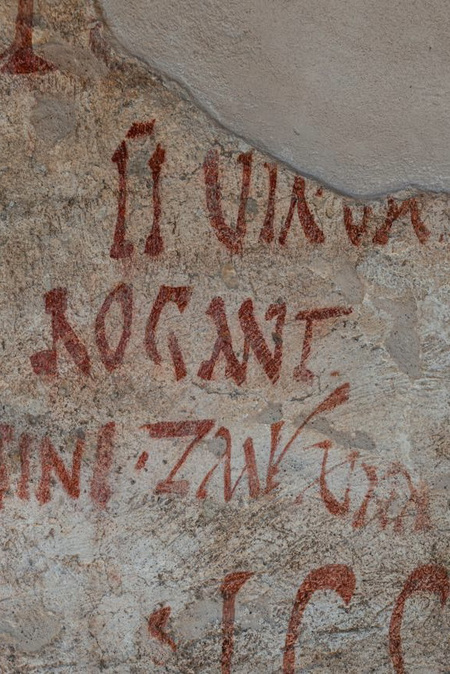
When selecting a theme for my visual research, I focused on Pompeii—an ancient Roman city where not only architecture, frescoes, and artifacts of daily life have been preserved, but also traces of people’s everyday interactions. I found the inscriptions on the walls particularly interesting. They allow one to view the ancient city not just as an archaeological monument, but as a space where people expressed their thoughts, feelings, and attitudes toward current events. Typically, Pompeii is represented through the ruins of houses, columns, squares, and famous wall paintings. However, the city’s walls also hold another visual layer—short inscriptions, drawings, names, political appeals, and personal messages. Many of these traces were not created by professional artists or scribes; many were left by the inhabitants themselves.
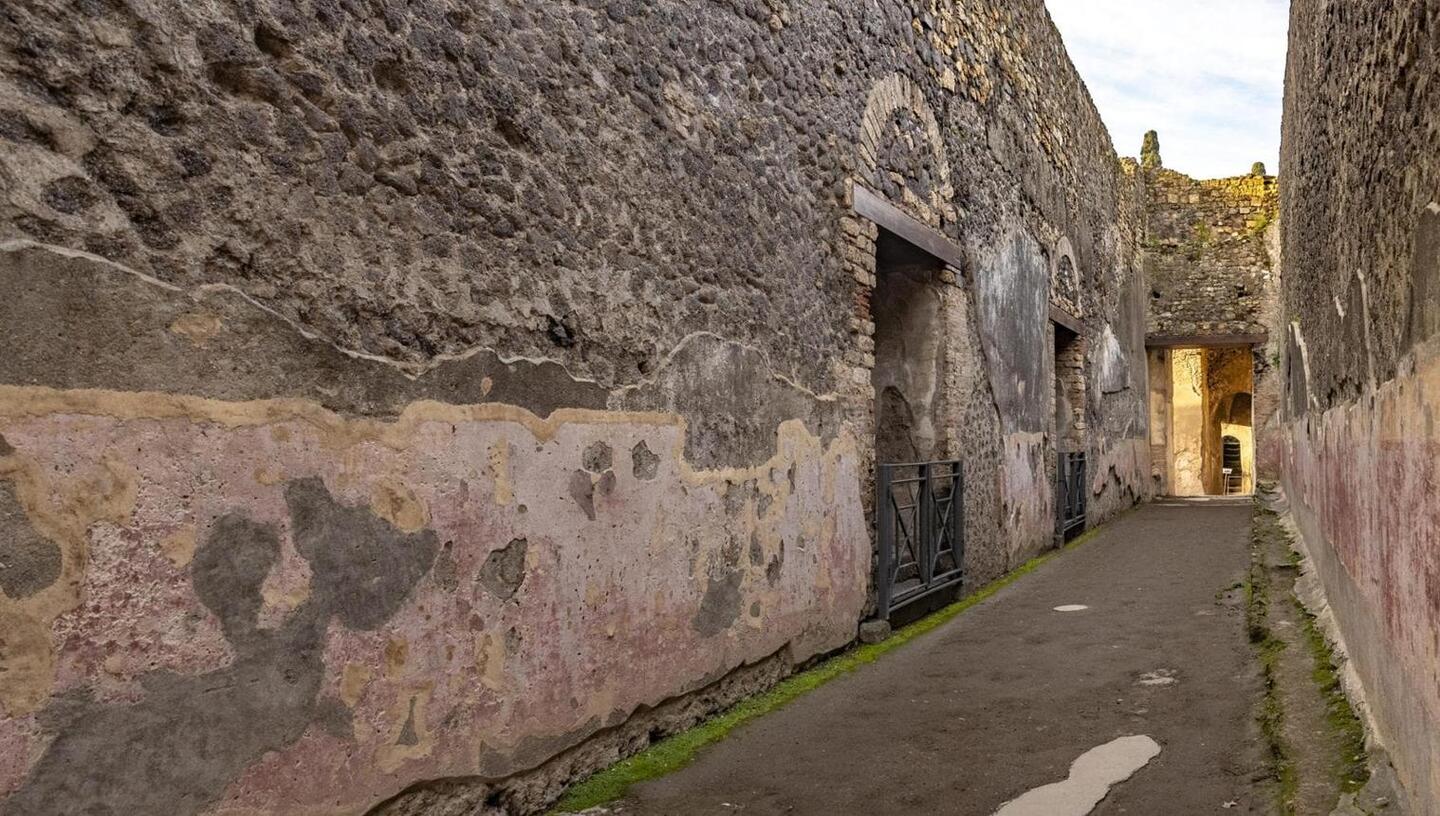
The street environment of Pompeii with preserved wall surfaces. Contemporary photography of the archaeological complex.
Wall inscriptions can be viewed as an early form of public communication. In the modern city, this function is carried out by posters, advertisements, signage, street graffiti, and digital messages. In Pompeii, similar modes of communication existed long before the advent of modern mass media. The central problem of this study is that the walls of Pompeii are often perceived merely as a backdrop for architecture and murals. However, the inscriptions on these walls can be considered a distinct visual and social material. They allow us to reconstruct not only the content of individual messages but also the specific nature of urban life.
Research Question
How did the wall inscriptions of Pompeii transform the city’s walls into a space of daily communication, and what do they tell us about the lives of 1st-century residents?
I propose that the walls of Pompeii functioned as a form of urban media. They simultaneously served as surfaces for political announcements, personal messages, jokes, and the expression of individual emotions. The variations in size, application method, and placement of the inscriptions reflected different communicative goals and different audiences.
The objective of this study is to examine the wall inscriptions of Pompeii as part of the visual culture of the ancient city, illustrating how these inscriptions reflected the public and private lives of its residents.
Examine the historical and geographical context of Pompeii. Study the specific characteristics of the urban environment where the inscriptions were located. Differentiate between the main types of wall texts. Analyze political announcements and personal messages. Correlate the visual form of the inscriptions with their content. Demonstrate the role that walls played in the communication of the residents.
Research Objectives
Wall inscriptions have been selected for this study to examine the various forms of communication in Pompeii. The focus is on two categories: public inscriptions related to political life, and private messages reflecting personal relationships and daily experiences. Specific inscriptions published in epigraphic catalogs and studies of Pompeii are used as examples. Their placement is particularly significant—it matters not only what is written, but also on which wall and in what space the text appeared.
Research Subject
Wall inscriptions from Pompeii that survived the eruption of Vesuvius in 79 AD.
Area of Study
the visual, semantic, and spatial characteristics of these inscriptions, as well as their role in urban communication.
The work employs historical-cultural, visual, and comparative analysis methods. The historical-cultural method allows for the examination of inscriptions within the context of Roman city life. Visual analysis focuses on studying their appearance—the nature of the lines, the size of the letters, the application technique, and the interaction with the architectural surface. The comparative method is used to identify differences between public notices and private graffiti.
To analyze, we selected inscriptions that demonstrate different functions of wall texts. Primary focus is placed on campaign advertisements and personal messages, as these allow for a comparison between public and private communication. Specific examples examined include inscriptions published in the epigraphic catalogs under numbers CIL IV 9918a, CIL IV 8258–8259, CIL IV 8364, and CIL IV 1904.
The research is grounded in the materials of Corpus Inscriptionum Latinarum, the digital catalog of the Ancient Graffiti Project, photographic documentation from Pompeii in Pictures, and scholarly publications focusing on political announcements and wall graffiti in Pompeii. The use of these catalogs allows for the comparison of extant images, Latin transcriptions, translations, and details regarding the original placement of the inscriptions. The study focuses on Pompeii during the 1st century CE, concentrating primarily on inscriptions that existed before the eruption of Vesuvius in 79 CE. This selection enables an examination of the written material within a specific urban environment, preventing the commingling of texts from other periods and regions.
1. Historical Context and Geographic Location
Panorama of the Pompeii and Vesuvius Archaeological Complex. Contemporary Photography.
Pompeii was located in the Campania region in the southern Apennine Peninsula, near the Bay of Naples. The city was situated close to Mount Vesuvius and was integrated into the trade and cultural networks of the Mediterranean. Its geographical position fostered the development of urban life and the formation of a diverse social environment. By the 1st century CE, Pompeii was a developed urban center. It housed residential homes, commercial spaces, workshops, public buildings, temples, bathhouses, and leisure areas. The city’s structure incorporated both private and public spaces, which were connected by a network of streets that residents, merchants, and visitors used daily.
Facades of buildings on a street in Pompeii. Contemporary photograph of the archaeological complex.
The architecture of Pompeii shaped a diverse visual environment. Building facades faced directly onto the streets, and entrances to residential and commercial spaces were often situated side-by-side. Consequently, the walls of the buildings became an integral part of the shared urban space, accessible for observation and interaction. In 79 CE, the eruption of Vesuvius buried Pompeii under volcanic deposits. While the catastrophe devastated the city, it simultaneously ensured the preservation of much of its material culture. Pompeii holds unique value for studying ancient daily life. Unlike official historical texts, wall inscriptions often capture the direct expressions of ordinary people. They allow us to examine the city not only through the activities of political and social institutions but also through the everyday actions of individual residents.
3. Urban Environment and Sign Placement
Via Pompeii with preserved building facades. Contemporary photograph.
The streets of Pompeii were a place of constant movement and interaction among residents. Since the entrances to homes, shops, and businesses were located here, the building facades were within the view of a large number of people. Placing inscriptions on such surfaces allowed written messages to be integrated directly into the everyday urban environment.